Drug Traceability Scanner Market Set to Hit 341 Million USD by 2026 – What Industry Leaders Are Doing Differently


Drug Traceability Scanner Product Introduction
The drug traceability scanner is a special device that integrates optical recognition, data processing and network communication functions. It is mainly used to read the traceability mark on the drug packaging (such as one-dimensional code, two-dimensional code or RFID tag that complies with the GS1 standard). By parsing the production batch number, expiration date, manufacturer, circulation path and other information contained in the mark, it can realize the traceability and supervision of the entire chain of drugs from production, warehousing, circulation to terminal sales. It usually supports offline storage and online real-time data upload, can be connected to the national drug traceability platform and the internal management system of the enterprise, and is widely used in drugstores, hospital pharmacies, drug wholesale enterprises and regulatory departments. By quickly verifying the authenticity of drugs and tracking circulation records, it provides key technical support for combating counterfeit and inferior drugs, ensuring drug safety, and meeting the requirements of the Drug Administration Law and other regulations.
Picture. Drug Traceability Scanner Product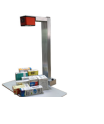
Source: Secondary Sources and QYResearch, 2025
According to the new market research report “Global Drug Traceability Scanner Market Report 2025-2031”, published by QYResearch, the global Drug Traceability Scanner market size is projected to reach USD 0.51 billion by 2031, at a CAGR of 8.4% during the forecast period.
Figure. Global Drug Traceability Scanner Market Size (US$ Million), 2025 VS 2031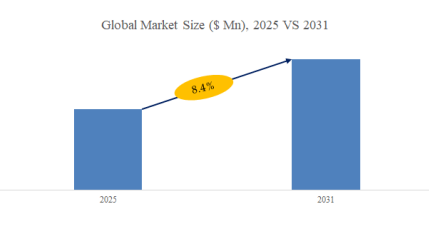
Above data is based on report from QYResearch: Global Drug Traceability Scanner Market Report 2025-2031 (published in 2024). If you need the latest data, plaese contact QYResearch.
Figure. Global Drug Traceability Scanner Top 13 Players Ranking and Market Share (Ranking is based on the revenue of 2024, continually updated)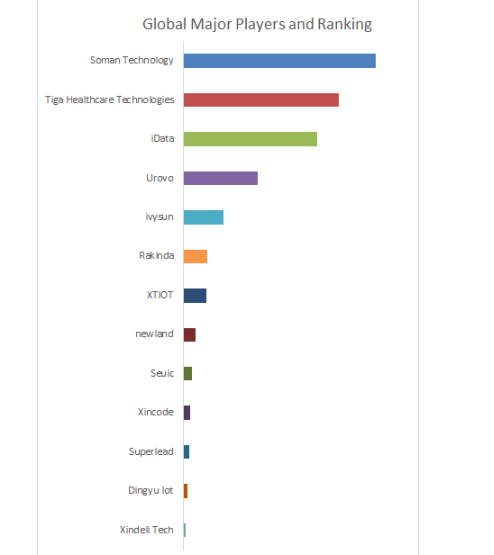
Above data is based on report from QYResearch: Global Drug Traceability Scanner Market Report 2025-2031 (published in 2024). If you need the latest data, plaese contact QYResearch.
According to QYResearch Top Players Research Center, the global key manufacturers of Drug Traceability Scanner include Soman Technology, Tiga Healthcare Technologies, iData, Urovo, ivysun, Rakinda, XTIOT, newland, Seuic, Xincode, etc. Drug Traceability Scanner manufacturing is mainly concentrated in East Asia (especially China) and parts of Southeast Asia, where strong electronics and barcode-imaging supply chains, high-density OEM/ODM manufacturing capacity, cost-effective embedded hardware and IoT module production, and close alignment with rapidly expanding pharmaceutical traceability policy implementation and retail healthcare digitization enable fast product iteration and large-scale deployment.
Table 1. Drug Traceability Scanner Industry Chain Analysis
Item Description
Upstream Core Component Suppliers - High-Precision Scanning Module Suppliers: Manufacture 2D/QR code imaging modules with <0.3s scan speed, high recognition accuracy for damaged/wrinkled drug packaging codes, and compliance with GS1/ISO 15415 traceability code standards.
- Electronic Component Suppliers: Provide embedded microcontrollers, low-power memory chips, and power management units.
- Communication Module Suppliers: Supply 4G/5G/Wi-Fi/Bluetooth modules to enable real-time uploads to national drug traceability platforms.
Raw Material & Structural Part Suppliers - Casing Suppliers: Produce flame-retardant ABS+PC plastic casings with anti-scratch surface treatment for pharmacy/warehouse use.
- Internal Part Suppliers: Provide shock-absorbent silicone gaskets and corrosion-resistant metal brackets.
Midstream Equipment manufacturers Conduct pre-assembly component quality validation (e.g., 10,000+ scan accuracy tests); program custom firmware to support national drug traceability code standards (e.g., China’s GS1-compliant codes); perform GSP/GMP compliance testing (audit trail functionality, data encryption certification); package finished scanners with anti-vibration, electrostatic-protective materials for logistics
Downstream Pharmaceutical Companies Deploy scanners at production end-of-line stations (scan traceability codes to bind with batch numbers, expiry dates, and manufacturing locations in enterprise ERP systems); use in warehouse outbound processes (verify code consistency before shipping to distributors); integrate with serialization systems to meet regulatory traceability reporting requirements (e.g., submitting batch-level data to national drug authorities)
Pharmacies Deploy at retail counters (scan drug packaging codes during checkout to query authenticity, production information, and circulation records via the national drug traceability collaborative platform); use for inventory management (scan codes to auto-update stock levels, flag expired drugs, and generate restock alerts); submit daily scanned sales data to local drug regulatory agencies to fulfill GSP compliance obligations
Source: Secondary Sources, Press Releases, Expert Interviews and QYResearch, 2025
Table 2. Drug Traceability Scanner Industry Policy Analysis
Policy Description
1 China: Updated Drug Traceability Management Measures (2024) Mandates scanners to support moisture/dust-resistant scan modules (for cold-chain drug packaging); requires real-time data upload to the National Drug Traceability Platform (even in remote areas via 4G backup); and mandates 5+ years of audit trail retention for scanner operation records.
2 EU: FMD Enforcement & Scanner Accuracy Update (2023) Enforces mandatory 99.9% recognition accuracy for scanners (including damaged/wrinkled drug codes); requires 72-hour offline data caching for scanners (to avoid disruptions in low-network areas); and mandates annual third-party validation of scanner performance.
3 U.S.: DSCSA Post-Serialization Compliance Rule (2024) Requires scanners to integrate automated batch-data reconciliation (matching incoming/outgoing drug serial numbers); mandates AI-powered counterfeit code pattern detection (to flag tampered identifiers); and requires compatibility with FDA’s Drug Supply Chain Security System (DS3) for real-time reporting.
Source: Secondary Sources, Press Releases, Expert Interviews and QYResearch, 2025
Table 3. Drug Traceability Scanner Industry Development Trends
Development Trends Description
1 Multi-Technology Recognition Integration Scanners are integrating 2D barcode/QR code, RFID, and even near-field communication (NFC) recognition capabilities — supporting global standards (GS1, DSCSA SPI) to adapt to diverse drug packaging formats (e.g., glossy blister packs, cold-chain RFID-tagged meds). This enables seamless scanning across high-value, cold-chain, and standard drug categories.
2 AI-Enhanced Intelligent Functionality Scanners are embedded with AI algorithms for intelligent post-scan analysis: auto-detecting tampered/counterfeit codes (via pattern recognition), automating batch serial number reconciliation (matching incoming/outgoing drug stock), and triggering real-time alerts for expired/recalled drugs. This reduces manual compliance work for pharmacies and pharma firms.
3 Edge Computing & Offline-Online Synergy Scanners adopt edge computing for local data processing (lowering network latency and data transmission pressure), paired with extended offline caching (72+ hours of scan records storage). Data is encrypted at the edge, and automatic sync with traceability platforms activates once network connectivity resumes — ideal for remote rural pharmacies or low-network logistics hubs.
4 Industry-Specific Environmental Adaptation Scanners are customized for niche supply chain scenarios: cold-chain-resistant models (operating at -20°C to 5°C for refrigerated drugs), IP65+ dust/moisture-proof units (for warehouse logistics), and shock-resistant designs (for frequent handling in distribution centers). These adaptations meet regulatory requirements for stable performance across the drug supply chain’s harsh environments.
Source: Secondary Sources, Press Releases, Expert Interviews and QYResearch, 2025
Table 4. Drug Traceability Scanner Industry Development Opportunities
Development Opportunities Description
1 Rural & Remote Pharmacy Equipment Upgrading Underpenetrated rural/remote pharmacy markets (e.g., in emerging economies) have growing demand for cost-effective, offline-capable traceability scanners — driven by regional policies mandating full drug traceability coverage, paired with government rural healthcare infrastructure funding to equip these under-resourced terminals.
2 Cold-Chain Drug Traceability Specialization The expansion of cold-chain drug segments (biologics, vaccines, temperature-sensitive meds) creates demand for specialized scanners: models with -20°C to 5°C operating temperature resistance, integrated RFID for cold-chain tag reading, and sync capabilities with temperature-monitoring systems (aligned with regulatory cold-chain safety requirements).
3 Retail Pharmacy Digital System Integration Chain pharmacies and modern retail terminals are upgrading to integrated digital operations (POS, inventory WMS, member systems) — creating opportunities for scanners that natively integrate with these platforms, enabling seamless post-scan data sync (automatic stock updates, compliance reporting) to reduce manual workload.
4 Global Cross-Standard Scanner Export The spread of regional traceability mandates (EU FMD, U.S. DSCSA, Singapore NPTS) drives demand for scanners compatible with multiple international standards (GS1, DSCSA SPI, FMD 2D codes). Manufacturers can penetrate global markets by supplying multi-compliant, regulatory-validated scanner models.
Source: Secondary Sources, Press Releases, Expert Interviews and QYResearch, 2025
Table 5. Drug Traceability Scanner Obstacles/Challenges to Industry Development
Obstacles/Challenges Description
1 Fragmented Regional Regulatory & Standard Compatibility Different global regions (EU, U.S., China) enforce distinct traceability code standards (e.g., FMD 2D barcodes, DSCSA SPIs, national unified codes) and compliance rules. Manufacturers must design scanners to support multiple standards, raising R&D costs, production complexity, and time-to-market for cross-regional models.
2 Cost Barriers for Small-Scale End-Users Advanced scanners (with AI recognition, multi-technology support) carry high price points. Small independent pharmacies, rural clinics, and small pharma distributors (prevalent in emerging markets) face budget constraints, slowing full traceability coverage in under-resourced segments despite policy mandates.
3 Technical Limitations in Complex Packaging Scenarios Drug packaging varies widely (glossy blister packs, cold-chain frosted bags, wrinkled cardboard) and codes may be damaged/worn. Ensuring ≥99.9% recognition accuracy across these scenarios (while maintaining durability in harsh environments like cold chains) requires continuous technical optimization, increasing manufacturing/calibration costs.
4 Data Security & Cross-Platform Interoperability Risks Scanners transmit sensitive drug data (batch numbers, circulation records) across national traceability platforms, enterprise ERPs, and retail POS systems. Balancing end-to-end data encryption (to meet HIPAA/GSP standards) with seamless interoperability between disparate, protocol-incompatible systems poses persistent operational and technical challenges.
Source: Secondary Sources, Press Releases, Expert Interviews and QYResearch, 2025
About QYResearch
QYResearch founded in California, USA in 2007.It is a leading global market research and consulting company. With over 17 years’ experience and professional research team in various cities over the world QY Research focuses on management consulting, database and seminar services, IPO consulting (data is widely cited in prospectuses, annual reports and presentations), industry chain research and customized research to help our clients in providing non-linear revenue model and make them successful. We are globally recognized for our expansive portfolio of services, good corporate citizenship, and our strong commitment to sustainability. Up to now, we have cooperated with more than 60,000 clients across five continents. Let’s work closely with you and build a bold and better future.
QYResearch is a world-renowned large-scale consulting company. The industry covers various high-tech industry chain market segments, spanning the semiconductor industry chain (semiconductor equipment and parts, semiconductor materials, ICs, Foundry, packaging and testing, discrete devices, sensors, optoelectronic devices), photovoltaic industry chain (equipment, cells, modules, auxiliary material brackets, inverters, power station terminals), new energy automobile industry chain (batteries and materials, auto parts, batteries, motors, electronic control, automotive semiconductors, etc.), communication industry chain (communication system equipment, terminal equipment, electronic components, RF front-end, optical modules, 4G/5G/6G, broadband, IoT, digital economy, AI), advanced materials industry Chain (metal materials, polymer materials, ceramic materials, nano materials, etc.), machinery manufacturing industry chain (CNC machine tools, construction machinery, electrical machinery, 3C automation, industrial robots, lasers, industrial control, drones), food, beverages and pharmaceuticals, medical equipment, agriculture, etc.
Global Drug Traceability Scanner Market Outlook, In‑Depth Analysis & Forecast to 2032

Published Date: 2026-03-12

Pages: 169

Report ld: 6240633
Price:USD 4900.00
(Single User License)
Global Drug Traceability Scanner Sales Market Report, Competitive Analysis and Regional Opportunities 2026-2032
Published Date: 2026-03-12
Pages: 99
Report ld: 6236031
Price:USD 4250.00
(Single User License)
Global Drug Traceability Scanner Market Research Report 2026
Published Date: 2026-03-12
Pages: 142
Report ld: 6231438
Price:USD 2900.00
(Single User License)
Drug Traceability Scanner- Global Market Share and Ranking, Overall Sales and Demand Forecast 2026-2032
Published Date: 2026-03-09
Pages: 115
Report ld: 6090098
Price:USD 3950.00
(Single User License)
Global Drug Traceability Scanner Market Research Report 2025
Published Date: 2025-07-07
Pages: 99
Report ld: 4786775
Price:USD 2900.00
(Single User License)
Drug Traceability Scanner - Global Market Share and Ranking, Overall Sales and Demand Forecast 2025-2031
Published Date: 2025-07-07
Pages: 121
Report ld: 4786769
Price:USD 3950.00
(Single User License)


Competition
Key players, new entrants,acquisitions, mergers and expansions,development trends and challenges.

Industry Analysis
Rawmaterial, application, product type, demand,supply,downstream, supply chain etc.

Market Size
Capacity, production, sales, revenue, price, cost etc.

Customized Information
We can offer customized survey and information to meet ourclient's need.
