Permeable Pavements Market Size to Expand to 2085 Million USD by 2026 – A Critical Growth Milestone


1.Definition of Permeable Pavement
Permeable pavement is a ground system that utilizes permeable materials to allow rainwater infiltration, reduce urban flooding, and improve water circulation. This system uses materials such as permeable bricks, permeable concrete, and permeable asphalt to create a highly permeable surface that allows rainwater to quickly seep into the ground, reducing surface runoff. Permeable garden pavements not only aid in rainwater management but also enhance the aesthetics and ecological functions of landscaping. They are widely used in urban parks, squares, sidewalks, and other locations, offering advantages such as environmental friendliness, energy conservation, and flood resistance.
Figure 1.Product Picture 
2.Global Market Size, Type and Application Market Status and Forecast (2021-2032)
According to the new market research report “Global Permeable Pavement Market Report 2026-2032”, published by QYResearch, the global Permeable Pavement market size is projected to reach USD 2.45 billion by 2032, at a CAGR of 3.9% during the forecast period.
Figure 2.Global Permeable Pavement Market Size (US$ Million), 2021-2032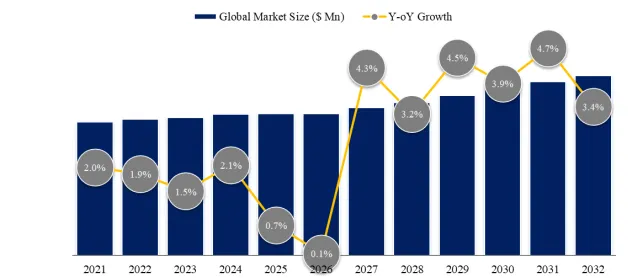
Above data is based on report from QYResearch: Global Permeable Pavement Market Report 2026-2032
Figure 3.Global Permeable Pavement Top 12 Players Ranking and Market Share 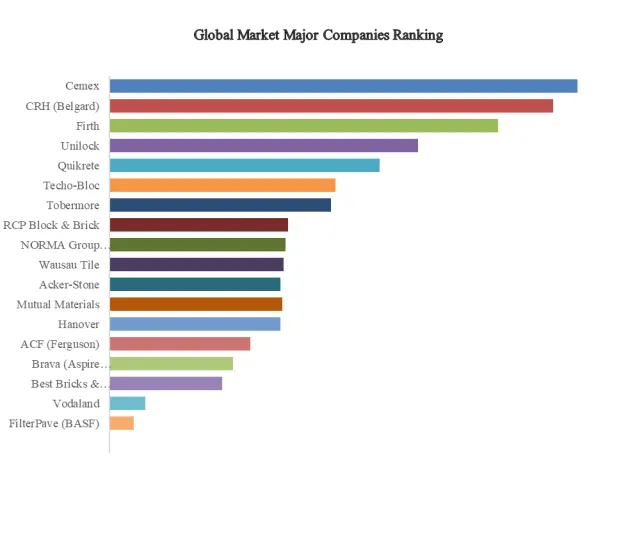
Above data is based on report from QYResearch: Global Permeable Pavement Market Report 2026-2032
According to QYResearch Top Players Research Center, the global key manufacturers of Permeable Pavement include Cemex, CRH (Belgard), Firth, Unilock, Quikrete, etc. In 2025, the global top five players had a share approximately 34.0% in terms of revenue.
Figure 4.Permeable Pavement, Global Market Size, Split by Product Type Segment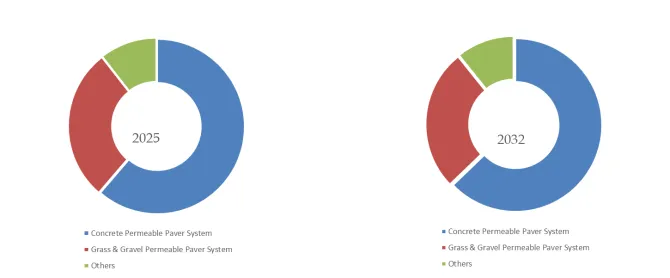
Based on research from QYResearch: Global Permeable Pavement Market Report 2026-2032.
In terms of product type, currently Concrete Permeable Paver System is the largest segment, hold a share of 61.9%.
Figure 5.Permeable Pavement, Global Market Size, Split by Product Segment Application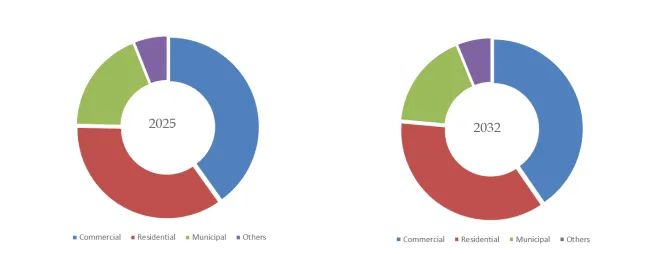
Based on research from QYResearch: Global Permeable Pavement Market Report 2026-2032.
In terms of product application, currently Commercial is the largest segment, hold a share of 40.2%.
Figure 6.Scale of Permeable Pavement in major global markets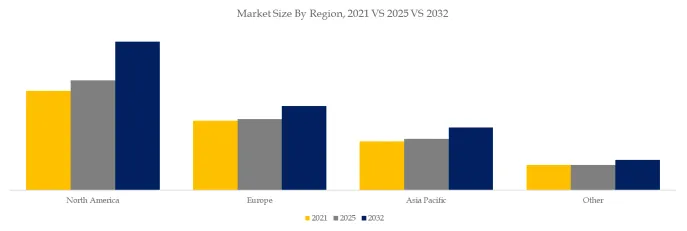
Based on research from QYResearch: Global Permeable Pavement Market Report 2026-2032.
3.Market Development Trend of Permeable Pavement
3.1 Industry Development Trends
Table 1. Market Trends
Key Trends Description
Deeper integration with sponge city and climate-resilient infrastructure Permeable pavement is evolving from a simple drainage material into part of broader urban stormwater and climate-resilience infrastructure. EPA and FHWA note that it can reduce peak runoff, lower runoff volume, filter pollutants, recharge groundwater, and reduce thermal impacts, supporting wider use in urban renewal, parking lots, sidewalks, and supporting roads.
Shift toward higher-performance and multifunctional systems The market is moving beyond basic permeable bricks and pervious concrete toward solutions that combine permeability, load-bearing capacity, cooling effects, and water-quality benefits. Recent reviews show that permeable pavements offer long-term value in runoff control, infiltrated water quality improvement, and urban heat mitigation, encouraging continued upgrades in materials and structural design.
Design moving from rule-of-thumb to climate-sensitive and scenario-based approaches Future designs are increasingly tailored to rainfall intensity, groundwater level, freeze-thaw exposure, and traffic loading. A 2025 review highlights that permeable pavement performance is highly climate-dependent, meaning extreme rainfall, freeze-thaw cycles, and high groundwater levels are pushing the industry toward more location-specific design.
Stronger focus on recycled materials and life-cycle performance The sector is placing more emphasis on recycled aggregates, construction waste utilization, and life-cycle value. A 2025 review notes growing exploration of recycled construction and demolition waste in permeable pavement layers, while life-cycle assessment indicates that long-term environmental benefits can outweigh part of the initial material impacts.
Source: Secondary Sources, Expert Interviews and QYResearch, 2026
3.2 Market Drivers
Table 2. Market Drivers
Key Drivers Description
Rising demand for urban flood mitigation and stormwater management The strongest driver is the need to control runoff at the source and reduce pressure on drainage systems. EPA and FHWA both state that permeable pavements can reduce runoff volume, lower peak flows, filter pollutants, and enhance groundwater recharge, supporting adoption in sponge city, green infrastructure, and SuDS programs.
Stronger environmental regulation and green building requirements Tightening stormwater rules, green building standards, and sustainability targets are accelerating adoption. Technavio identifies stricter environmental regulation and stronger water-conservation awareness as major growth drivers, while USGBC includes permeable paving within stormwater-related credit frameworks.
Growing attention to urban heat island mitigation and co-benefits Permeable pavements are gaining attention not only for drainage but also for thermal benefits. EPA notes reduced runoff temperature and improved local comfort, while recent 2025 research points to positive effects on urban thermal environments, making these systems more attractive for plazas, walkways, and parking areas.
Urbanization and infrastructure renewal creating incremental demand Municipal upgrades, parking-lot reconstruction, community roads, and public-space projects continue to create demand. Technavio forecasts a 4.6% CAGR for the pervious pavement market from 2025 to 2029 and links growth to ongoing urbanization and infrastructure development worldwide.
Source: Secondary Sources, Expert Interviews and QYResearch, 2026
3.3 Market Challenges
Table 3. Market Challenges
Key Challenges Description
Clogging and maintenance requirements One of the most common long-term issues is pore clogging, which can significantly reduce infiltration if maintenance is inadequate. EPA recommends avoiding high-sediment-loading areas and carrying out periodic sediment removal, while a 2025 review identifies clogging as the main threat to efficiency and longevity.
Limits in structural capacity and durability Permeable pavements still face constraints in heavy-load and high-speed traffic applications. FHWA states that they are generally not suitable for main highway driving surfaces because of concerns including structural capacity, rutting, saturated conditions, freeze-thaw effects, and durability.
Higher upfront construction costs Compared with conventional impermeable pavements, permeable pavement often requires higher initial investment and more complex design and construction. Technavio lists high installation cost as a market challenge, and a 2025 review also identifies upfront cost as a key barrier to wider adoption.
Difficult adaptation to climate and site conditions Permeable pavement is not suitable for every climate or site. Extreme rainfall, freeze-thaw cycles, high groundwater tables, and saturated soils can all increase design and operating risks. FHWA, EPA, and the 2025 review all indicate that careful siting and adaptive design measures are necessary to maintain long-term performance.
Source: Secondary Sources, Expert Interviews and QYResearch, 2026
About QYResearch
QYResearch founded in California, USA in 2007.It is a leading global market research and consulting company. With over 18 years’ experience and professional research team in various cities over the world QY Research focuses on management consulting, database and seminar services, IPO consulting (data is widely cited in prospectuses, annual reports and presentations), industry chain research and customized research to help our clients in providing non-linear revenue model and make them successful. We are globally recognized for our expansive portfolio of services, good corporate citizenship, and our strong commitment to sustainability. Up to now, we have cooperated with more than 60,000 clients across five continents. Let’s work closely with you and build a bold and better future.
QYResearch is a world-renowned large-scale consulting company. The industry covers various high-tech industry chain market segments, spanning the semiconductor industry chain (semiconductor equipment and parts, semiconductor materials, ICs, Foundry, packaging and testing, discrete devices, sensors, optoelectronic devices), photovoltaic industry chain (equipment, cells, modules, auxiliary material brackets, inverters, power station terminals), new energy automobile industry chain (batteries and materials, auto parts, batteries, motors, electronic control, automotive semiconductors, etc.), communication industry chain (communication system equipment, terminal equipment, electronic components, RF front-end, optical modules, 4G/5G/6G, broadband, IoT, digital economy, AI), advanced materials industry Chain (metal materials, polymer materials, ceramic materials, nano materials, etc.), machinery manufacturing industry chain (CNC machine tools, construction machinery, electrical machinery, 3C automation, industrial robots, lasers, industrial control, drones), food, beverages and pharmaceuticals, medical equipment, agriculture, etc.

Global Permeable Pavements Sales Market Report, Competitive Analysis and Regional Opportunities 2026-2032

Published Date: 2026-03-09

Pages: 108

Report ld: 6062053
Price:USD 4250.00
(Single User License)
Permeable Pavements- Global Market Share and Ranking, Overall Sales and Demand Forecast 2026-2032
Published Date: 2026-03-06
Pages: 146
Report ld: 5542694
Price:USD 3950.00
(Single User License)
Global Permeable Pavements Market Research Report 2026
Published Date: 2026-03-06
Pages: 154
Report ld: 5542692
Price:USD 2900.00
(Single User License)
Global Permeable Pavements Sales Market Report, Competitive Analysis and Regional Opportunities 2025-2031
Published Date: 2025-11-09
Pages: 102
Report ld: 5402027
Price:USD 4250.00
(Single User License)
Global Permeable Pavements Market Outlook, In‑Depth Analysis & Forecast to 2031
Published Date: 2025-11-09
Pages: 178
Report ld: 5388699
Price:USD 4900.00
(Single User License)
Permeable Pavements- Global Market Share and Ranking, Overall Sales and Demand Forecast 2025-2031
Published Date: 2025-01-16
Pages: 139
Report ld: 3563300
Price:USD 3950.00
(Single User License)


Competition
Key players, new entrants,acquisitions, mergers and expansions,development trends and challenges.

Industry Analysis
Rawmaterial, application, product type, demand,supply,downstream, supply chain etc.

Market Size
Capacity, production, sales, revenue, price, cost etc.

Customized Information
We can offer customized survey and information to meet ourclient's need.
