Evaporation Monitor Market Expansion Report 2026: Effective Strategies and Market Expansion


1. Market Overview
According to the latest report, "Global Evaporation Monitor Market Report 2025-2031," by the QYResearch team, the global evaporation monitor market is projected to reach US$260 million in 2031, with a compound annual growth rate (CAGR) of 7.0% over the next few years.
Policy Support: With the increasing demand for refined water resource management and modern meteorological monitoring, many countries have introduced policies to promote the standardization and popularization of evaporation monitoring technology. For example, China's "14th Five-Year Plan for National Meteorological Development" explicitly calls for strengthening the monitoring of land surface water cycle elements, improving the ability to obtain key parameters such as evaporation and evapotranspiration, and promoting scientific decision-making capabilities for agricultural irrigation, water conservancy scheduling, and ecological and environmental protection. This provides policy support for the promotion and application of evaporation monitors in meteorology, water conservancy, and agriculture.
Market Expansion: In arid, semi-arid, and water-stressed regions such as Central Asia, the Middle East, North Africa, and Northwest China, the demand for water-saving agriculture, smart irrigation, and regional water resource regulation is rapidly growing, driving market demand for high-precision evaporation monitoring equipment. In particular, in scenarios such as unified water resource allocation in irrigation areas, water volume assessment in plateau lakes, and reservoir evaporation loss control, traditional empirical estimation methods are gradually being replaced by intelligent monitoring equipment. Evaporation monitors are becoming a crucial component of refined water resource management.
In terms of corporate strategy, relevant equipment companies are transitioning from being single evaporation sensor suppliers to a "multi-parameter joint monitoring platform + data service provider" model. By integrating data such as wind speed, temperature and humidity, solar radiation, and evaporation pan water level changes, intelligent evaporation monitoring systems based on the Internet of Things and big data technologies are being built. This enables real-time data collection, remote visualization management, and historical trend analysis. This system facilitates the digital upgrade of agricultural water-fertilizer integration, reservoir regulation, and eco-hydrological research, providing new momentum for companies to expand into the ecological monitoring and smart water conservancy markets.
Figure. Global Evaporation Monitor Market Size (US$ Million), 2020-2031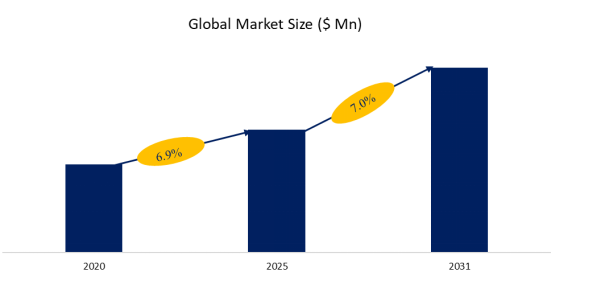
Above data is based on report from QYResearch: Global Evaporation Monitor Market Report 2025-2031 (published in 2025). If you need the latest data, plaese contact QYResearch.
2. Industry Chain Analysis Flowchart
Above data is based on report from QYResearch: Global Evaporation Monitor Market Report 2025-2031 (published in 2025). If you need the latest data, plaese contact QYResearch.
The current industry chain faces two issues:
1. Insufficient coordination between midstream and downstream system integration and data services
Currently, many companies are still primarily focused on hardware delivery, lacking the ability to coordinate midstream and downstream data platforms, remote operations and maintenance, and value-added services. This leads to fragmented customer experiences and significant duplication, impacting industry efficiency and service value. Promoting the development of integrated product, platform, and service capabilities has become a key direction for enhancing market competitiveness.
2. Inconsistent standards across the industry chain lead to poor system compatibility
Currently, in many emerging technology industries, upstream and downstream companies use different communication protocols, interface standards, or data formats. This makes device integration difficult and platform integration complex, increasing system development costs and project implementation cycles. Therefore, promoting industry standardization, open interfaces, and data interoperability are key to improving overall collaborative efficiency.
3.Key Drivers:
1. Continuously Strengthened Policy Support Creates a Synergistic Development Force
The country has introduced numerous policies to promote the digital economy, intelligent manufacturing, modern agriculture, and environmental protection. For example, China's 14th Five-Year Plan, the Digital Rural Construction Plan, and the Intelligent Manufacturing Development Strategy all explicitly call for strengthening the promotion of smart monitoring and intelligent equipment in grassroots applications. Furthermore, local governments have set aside special funds to encourage enterprises to retrofit equipment and upgrade systems, creating a multi-level policy synergy from the central to local levels, effectively stimulating industry demand.
2. Prominent Industry Efficiency Pain Points Promote Intelligent Alternatives
Traditional industries such as agriculture, sanitation, and environmental monitoring have long suffered from labor-intensiveness, low efficiency, and delayed data collection, hindering the improvement of overall management capabilities. These issues are particularly pronounced in the context of large-scale operations or intensive management. Through automated data collection, remote monitoring, and data linkage, smart devices can significantly reduce manual labor, lower operating costs, improve response speed, and enhance refined management, becoming a key driver of industry upgrades.
3. Deepening integration of digital technologies is accelerating product innovation.
With the maturity and widespread penetration of core technologies such as 5G, the Internet of Things, big data, edge computing, and artificial intelligence, traditional hardware devices are being redefined. These devices not only sense and record data but also enable local prediction, remote control, and collaborative collaboration. For example, AI-based solutions such as evaporation prediction, garbage truck route optimization, and automatic early warning systems are moving from the laboratory to the field, accelerating the development of differentiated, intelligent solutions and driving continuous iteration and upgrading of the industry.
Major Obstacles
1. High Initial Investment and Low Adoption Among Small and Medium-sized Users
Although intelligent devices can improve efficiency and save costs over the long term, their initial acquisition costs, system integration fees, and training expenses remain high, presenting a significant burden, particularly for small and medium-sized enterprises and individual users. Furthermore, limited financing channels and inadequate equipment loan products in some regions further hinder potential customers' willingness to purchase.
2. Limited user technical knowledge makes system implementation difficult.
Smart monitoring systems require a certain level of user operational skills and understanding. This is particularly true in rural areas, at the grassroots level, or in settings where there are many non-professional operators. Problems such as inability to use the equipment after installation, frequent misoperations, and slow maintenance responses often lead to poor performance and even "idle equipment." This not only impacts customer satisfaction but also creates after-sales pressure for companies, hindering the spread of market reputation.
3. Lack of industry standards and poor data and platform interoperability.
Currently, many companies operate independently, using different data interfaces, communication protocols, and platform architectures. This leads to poor compatibility and interoperability between devices and platforms, making it difficult to form a unified industry ecosystem. This fragmentation not only increases the difficulty and cost of system integration, but also complicates government oversight, industry benchmarking, and data sharing, hindering the overall industry's progress towards efficient collaboration and resource integration.
Industry Development Opportunities
1. Explosive demand for green monitoring under the "Dual Carbon" Initiative
With the increasing pressure of global climate change, the "Dual Carbon" strategy is reshaping the development logic of many industries. Green monitoring and governance technologies, exemplified by water resource monitoring, agricultural water-saving irrigation, and waste reduction, are rapidly emerging. Intelligent monitoring equipment, as a key tool for visualizing emission reduction, controlling processes, and evaluating performance, is widely used in hydrological monitoring, tailwater treatment, and agricultural water management. It will become an indispensable link in the green industry chain in the future.
2. Overseas emerging markets have weak foundations but huge potential.
Emerging markets in Southeast Asia, Africa, and Latin America, despite relatively underdeveloped infrastructure and technology, are experiencing rapid development and industrial restructuring, creating a strong demand for intelligent, integrated equipment and solutions. These regions are commonly faced with water shortages, low agricultural efficiency, and irregular urban waste disposal, creating a strong fit with the system solutions that Chinese companies excel at. Export and project collaboration opportunities are rapidly growing.
3. Platform-based operations and service-oriented transformation create value-added opportunities.
With the increasing intelligence of hardware equipment, companies are moving beyond simply selling products and are shifting to a comprehensive "equipment + platform + service" operating model. For example, monitoring equipment manufacturers can offer value-added services such as remote data platforms, early warning notification services, customized analysis reports, and equipment health diagnostics, generating sustainable service revenue and retaining users. This business model transformation not only enhances profitability, but also increases customer lifetime value and expands the company's growth space.
4: Downstream Industry Analysis
1. Smart Agriculture: Precision Irrigation and Water Resource Allocation Become Core Demands
In the field of smart agriculture, especially in arid and semi-arid regions such as Northwest China and North China, evaporation monitoring, soil moisture monitoring, and meteorological data integration are becoming core components of water-saving irrigation systems. According to data from the Ministry of Agriculture and Rural Affairs, China's water-saving irrigation area has exceeded 560 million mu (by 2024), and the construction of high-standard farmland requires the installation of intelligent monitoring facilities. Evaporation monitors can help determine crop water requirements and optimize irrigation frequency. When combined with integrated water and fertilizer systems, they can improve water resource utilization efficiency by 15%-30%. Downstream users primarily include agricultural demonstration parks, large-scale planting cooperatives, and irrigation district management units, with policy subsidies and project bidding being the primary procurement drivers.
2. Urban Sanitation and Solid Waste Management: Intelligent Supervision Becomes a Must
With the continued advancement of urban waste sorting and the development of "zero-waste cities," urban sanitation systems are rapidly upgrading towards intelligence, visualization, and automation. In open-air work areas such as landfills, transfer stations, and leachate treatment ponds, evaporation monitors, as a key component of microclimate data collection systems, can be used to monitor water surface evaporation intensity, assist in leachate production assessment, and determine odor diffusion trends. For example, in leachate regulating pond management, combining precipitation, evaporation, and liquid level change data enables accurate liquid balance analysis, optimizes emergency storage scheduling, and prevents overflow pollution during the rainy season. Furthermore, some cities have begun incorporating evaporation monitoring data into summer sanitation operations such as watering for cooling and wet sweeping for dust suppression. By building local microclimate models, they can scientifically schedule watering frequency and operation times, improving water resource utilization efficiency and operational accuracy. According to statistics, by 2024, there will be more than 260,000 garbage collection and transportation vehicles nationwide, of which over 30% will have installed operational monitoring systems. However, the coverage rate of high-level smart sanitation platforms with multi-parameter environmental monitoring capabilities remains less than 20%, providing significant growth potential for intelligent sensing equipment, including evaporation monitors.
3. Water Conservancy, Water Affairs, and Environmental Protection Supervision: Automated Monitoring Accelerates to Replace Manual Monitoring
In industries like water conservancy and environmental protection, downstream operators focus on key parameters such as evaporation losses, reservoir operation, and water quality safety. Taking evaporation monitoring as an example, data from this monitoring system serves as a key input into reservoir operation models and water resource allocation plans. Traditional manual monitoring, with its low frequency and high error rates, is no longer sufficient for real-time operation and scientific supervision. According to public information from the Ministry of Water Resources, over 120,000 water conservancy information monitoring stations have been established nationwide, but less than 10% of these stations have automated evaporation/evapotranspiration monitoring capabilities, leaving significant room for technological substitution. The market for hydrological and environmental monitoring systems will continue to expand, particularly in key areas such as the South-to-North Water Diversion Project, the Yellow River Basin Management Project, and the Yangtze River Conservancy Project.
About QYResearch
QYResearch founded in California, USA in 2007.It is a leading global market research and consulting company. With over 17 years’ experience and professional research team in various cities over the world QY Research focuses on management consulting, database and seminar services, IPO consulting (data is widely cited in prospectuses, annual reports and presentations), industry chain research and customized research to help our clients in providing non-linear revenue model and make them successful. We are globally recognized for our expansive portfolio of services, good corporate citizenship, and our strong commitment to sustainability. Up to now, we have cooperated with more than 60,000 clients across five continents. Let’s work closely with you and build a bold and better future.
QYResearch is a world-renowned large-scale consulting company. The industry covers various high-tech industry chain market segments, spanning the semiconductor industry chain (semiconductor equipment and parts, semiconductor materials, ICs, Foundry, packaging and testing, discrete devices, sensors, optoelectronic devices), photovoltaic industry chain (equipment, cells, modules, auxiliary material brackets, inverters, power station terminals), new energy automobile industry chain (batteries and materials, auto parts, batteries, motors, electronic control, automotive semiconductors, etc.), communication industry chain (communication system equipment, terminal equipment, electronic components, RF front-end, optical modules, 4G/5G/6G, broadband, IoT, digital economy, AI), advanced materials industry Chain (metal materials, polymer materials, ceramic materials, nano materials, etc.), machinery manufacturing industry chain (CNC machine tools, construction machinery, electrical machinery, 3C automation, industrial robots, lasers, industrial control, drones), food, beverages and pharmaceuticals, medical equipment, agriculture, etc.

Global Evaporation Monitor Market Outlook, In‑Depth Analysis & Forecast to 2032

Published Date: 2026-03-10

Pages: 165

Report ld: 6125045
Price:USD 4900.00
(Single User License)
Global Evaporation Monitor Sales Market Report, Competitive Analysis and Regional Opportunities 2026-2032
Published Date: 2026-03-10
Pages: 96
Report ld: 6121463
Price:USD 4250.00
(Single User License)
Global Evaporation Monitor Market Research Report 2026
Published Date: 2026-03-10
Pages: 142
Report ld: 6117887
Price:USD 2900.00
(Single User License)
Evaporation Monitor- Global Market Share and Ranking, Overall Sales and Demand Forecast 2026-2032
Published Date: 2026-03-10
Pages: 117
Report ld: 6114312
Price:USD 3950.00
(Single User License)
Evaporation Monitor - Global Market Share and Ranking, Overall Sales and Demand Forecast 2025-2031
Published Date: 2025-10-15
Pages: 112
Report ld: 5182728
Price:USD 3950.00
(Single User License)
Global Evaporation Monitor Market Outlook, In‑Depth Analysis & Forecast to 2031
Published Date: 2025-10-15
Pages: 162
Report ld: 5182727
Price:USD 4900.00
(Single User License)


Competition
Key players, new entrants,acquisitions, mergers and expansions,development trends and challenges.

Industry Analysis
Rawmaterial, application, product type, demand,supply,downstream, supply chain etc.

Market Size
Capacity, production, sales, revenue, price, cost etc.

Customized Information
We can offer customized survey and information to meet ourclient's need.
