Evaporation Rate Meter Market Expansion Report 2026: Effective Strategies and Market Expansion


1. Market Overview
According to the latest report, "Global Evaporation Rate Meter Market Report 2025-2031," by the QYResearch research team, the global evaporation rate meter market is projected to reach US$260 million in 2031, with a compound annual growth rate (CAGR) of 7.0% over the next few years.
In terms of policy support, as countries increasingly prioritize refined water resource management and modern meteorological measurement, evaporation measurement technology is being incorporated into numerous national development plans and standards. For example, China's "14th Five-Year Plan for National Meteorological Development" explicitly calls for strengthening observations of land surface water cycle elements and improving real-time measurement capabilities for evaporation and evapotranspiration parameters, providing a scientific basis for water-saving irrigation, water conservancy scheduling, and ecological and environmental protection. This policy direction has accelerated the adoption of evaporation rate meters in meteorological, hydrological, and agricultural applications.
In terms of market expansion, the increasing focus on water resource efficiency in arid and semi-arid regions is driving rapid demand for high-precision evaporation measurement equipment. In areas such as Central Asia, the Middle East, North Africa, and Northwest China, automated measurement equipment is gradually replacing traditional empirical estimation methods in water-saving agriculture, smart irrigation, and lake water volume assessment. With the advancement of projects such as "Smart Water Conservancy" and "Digital Agriculture," evaporation rate meters are becoming key technical equipment for refined regional water resource management and ecological balance assessment.
In terms of corporate strategy, industry companies are shifting from solely manufacturing sensor hardware to an integrated model of "comprehensive measurement systems + data analysis services." By integrating multiple sources of information, such as wind speed, temperature and humidity, solar radiation, and liquid level changes, they are building an IoT-based evaporation measurement network, enabling remote data collection, real-time transmission, and trend analysis. This shift from hardware to a "data + services" model not only improves measurement efficiency and accuracy but also provides continued growth momentum for companies exploring emerging markets such as ecological and environmental monitoring, agricultural water and fertilizer management, and smart water conservancy.
Figure. Global Evaporation Rate Meter Market Size (US$ Million), 2020-2031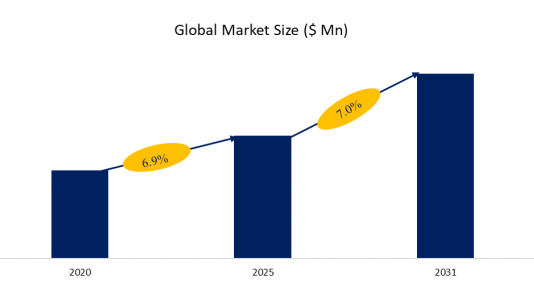
Above data is based on report from QYResearch: Global Evaporation Rate Meter Market Report 2025-2031 (published in 2025). If you need the latest data, plaese contact QYResearch.
2. Industry Chain Analysis Flowchart
Above data is based on report from QYResearch: Global Evaporation Rate Meter Market Report 2025-2031 (published in 2025). If you need the latest data, plaese contact QYResearch.
The main challenges facing the current Evaporation Rate Meter industry chain lie in core technology dependency and market application bottlenecks:
1.Midstream and downstream collaboration and data service system development lag behind.
Currently, most companies still focus on equipment manufacturing and hardware sales, lacking a systematic linkage mechanism from measurement instruments to data platforms, remote operations and maintenance, and service support. This fragmented development model leads to severe information silos and inconsistent customer experiences, making it difficult to comprehensively apply and mine measurement data. In the future, strengthening the integrated collaboration of "hardware + software + services" will become a key breakthrough for companies to enhance their overall competitiveness and market share.
2.A lack of unified standards system hinders industry interoperability.
In the evaporation measurement and related intelligent instrumentation industries, different manufacturers often use their own communication protocols, data interfaces, and format standards. This results in poor system compatibility, difficult secondary integration, and increased project implementation time and costs. Promoting the development of unified industry standards, open interface protocols, and data interoperability and sharing will be essential for improving overall industry chain collaboration and promoting deep integration between upstream and downstream industries.
3. Key Drivers:
1.Strengthening policy guidance and optimizing the industrial development environment.
In recent years, the national government has continuously increased policy support for digitalization, intelligent manufacturing, and ecological governance. Documents such as the 14th Five-Year Plan, the "Overall Layout Plan for Digital China Construction," and the "Medium- and Long-Term Development Strategy for Intelligent Manufacturing" all clearly emphasize the need to increase the application coverage of intelligent measurement equipment and promote the implementation of key technologies and equipment in agriculture, water conservancy, meteorology, and environmental protection. Furthermore, governments in many regions have introduced special funds and subsidies for technological transformation to encourage enterprises to carry out intelligent equipment upgrades and system integration innovations. This has gradually formed a policy support system with central coordination and local collaboration, providing a solid foundation for the accelerated development of the industry.
2.Traditional industries face significant efficiency bottlenecks and urgently need intelligent alternatives.
In traditional industries such as agricultural irrigation, environmental monitoring, and water resource measurement, high manual labor rates, delayed data collection, and fragmented management methods have long plagued these industries, making them unable to meet the demands of modern, refined, and real-time management. With the increasing demand for large-scale operations and optimized resource allocation, intelligent equipment, with its capabilities of automated measurement, remote operation and maintenance, and data sharing, can effectively reduce labor costs, shorten response times, and improve operational efficiency, becoming a key driver of digital transformation in these industries.
3.Deep integration of digital technologies accelerates intelligent product innovation.
The rapid application of cutting-edge technologies such as 5G communications, the Internet of Things, big data analytics, and artificial intelligence is profoundly changing the functional boundaries of traditional measurement equipment. The new generation of instruments not only possesses high-precision data acquisition capabilities but also enables local intelligent recognition, remote control, and cross-platform collaboration. For example, AI algorithms enable dynamic prediction of evaporation rates, optimized water resource scheduling, and early warning of environmental anomalies. These devices are transforming from "data recording terminals" to "intelligent decision-making nodes," accelerating the digital and intelligent upgrade of the entire industry.
Major Obstacles
1.High initial investment costs limit adoption among small and medium-sized users.
Although smart measurement equipment can significantly improve management efficiency and reduce long-term operating costs during its initial operation, high purchase and system integration costs remain a major barrier to market adoption. For small and medium-sized enterprises, research institutes, and grassroots organizations, equipment procurement, software deployment, and personnel training all require significant expenditures. In some regions, financing services are underdeveloped, lacking flexible leasing or installment plans. This leads potential users to be concerned about the return on investment (ROI), slowing market adoption.
2.Insufficient technical understanding limits application effectiveness.
The operation and maintenance of intelligent systems require users to possess a certain level of technical understanding and digital management skills. In frontline applications such as agriculture, water conservancy, and environmental measurement, due to a shortage of specialized personnel or inadequate technical training, some users are unable to correctly configure and use the equipment after installation, resulting in misoperation, delayed maintenance, or long periods of unused equipment. This not only impacts the effectiveness of the equipment but also undermines the company's brand reputation and service efficiency, becoming a significant constraint to system adoption.
3.An incomplete industry standards system leads to prominent data silos.
The industry currently lacks unified data standards and interface specifications. Communication protocols and platform structures vary significantly across vendors, leading to difficulties in interoperability and poor compatibility between devices. Data closures and platform fragmentation not only complicate project integration and maintenance but also hinder cross-regional and cross-departmental data sharing and collaborative management. Establishing a unified industry standards system and promoting open data interfaces and platform compatibility will be key directions for future industry standardization and ecosystem integration.
Industry Development Opportunities
1.Driven by the "Dual Carbon" strategy, green intelligent measurement is experiencing a period of rapid growth.
Amid the global low-carbon transition and climate governance, energy conservation, emission reduction, and ecological and environmental measurement are becoming key areas of focus for both policymakers and the market. Demand for intelligent, low-energy measurement equipment is rapidly increasing in areas such as optimizing water resource allocation, efficient agricultural water use, and waste reduction. Environmental measurement equipment such as evaporation rate meters, which enable quantification of emissions and traceability of energy efficiency assessments, are being widely used in water conservancy, agriculture, and environmental protection, becoming a key supporting technology for digital management of the green industrial chain.
2.Emerging overseas markets have a low starting point and strong growth potential.
Regions such as Southeast Asia, South Asia, Africa, and Latin America are at a critical stage of infrastructure construction and industrial modernization, resulting in a rapid surge in demand for equipment for hydrological measurement, water-saving irrigation, and environmental governance. While the overall technological level of these markets remains limited, governments are increasing digital investment and actively introducing intelligent measurement systems to improve resource management efficiency. For Chinese companies with system integration and project delivery capabilities, these regions offer not only new growth opportunities for product exports but also broad opportunities for engineering collaboration and localized operations.
3.Business Upgrade from Equipment Manufacturing to Data and Services
With the widespread adoption of the Internet of Things and cloud computing technologies, the focus of corporate competition is shifting from pure hardware manufacturing to platform-based operations and data-driven services. By building remote measurement platforms and providing customized data analysis, maintenance diagnostics, and early warning services, manufacturers can achieve a shift from one-time sales to sustainable revenue. This "equipment + data + services" model not only enhances customer loyalty but also extends the industry value chain, giving companies greater competitive differentiation and profit flexibility.
4: Manufacturer Competition Landscape
1.Smart Agriculture: Precision irrigation and water resource optimization become core drivers.
In arid and semi-arid regions, such as Northwest China and North China, smart agriculture development is increasingly driven by the need for real-time measurement of evaporation, soil moisture, and meteorological data. Evaporation rate meters can help determine crop water requirements and optimize irrigation strategies. Linked to integrated water and fertilizer management systems, they are expected to improve irrigation water efficiency by 15%-30%. Major downstream users include large plantations, agricultural demonstration zones, and irrigation district management agencies. Policy subsidies, agricultural project bidding, and demonstration zone development are key drivers of purchase.
2.Urban Sanitation and Solid Waste Management: Intelligent Measurement Becomes Necessary.
With the advancement of urban waste sorting and the development of "zero-waste cities," sanitation operations are moving toward visualization, intelligence, and automation. Evaporation rate meters can be used to measure evaporation in landfill leachate ponds and regulating tanks, assisting with liquid level control and overflow prevention during rainy seasons. Furthermore, they can be combined with micrometeorological data to optimize watering and dust suppression operations, improving water resource utilization efficiency. Although garbage collection and transportation vehicle monitoring systems have been adopted at over 30% of the population, the coverage rate of high-level smart sanitation platforms with multi-parameter environmental measurement capabilities remains less than 20%, creating significant market potential for intelligent sensing equipment.
3.Water Conservancy and Environmental Supervision: Automation is clearly replacing manual work.
The water conservancy and environmental protection industries are increasingly reliant on evaporation data for reservoir operation, water resource allocation, and water quality management. Manual observation methods, with their low frequency and high error rates, cannot meet the demands of real-time management and scientific scheduling. Currently, there are over 120,000 water conservancy information measurement stations nationwide, but less than 10% have automated evaporation/evapotranspiration measurement capabilities, demonstrating significant potential for technological substitution. The market for evaporation measurement equipment continues to expand, particularly in key areas such as the South-to-North Water Diversion Project, the Yellow River Basin Management Project, and the Yangtze River Conservancy Project.
About QYResearch
QYResearch founded in California, USA in 2007.It is a leading global market research and consulting company. With over 17 years’ experience and professional research team in various cities over the world QY Research focuses on management consulting, database and seminar services, IPO consulting (data is widely cited in prospectuses, annual reports and presentations), industry chain research and customized research to help our clients in providing non-linear revenue model and make them successful. We are globally recognized for our expansive portfolio of services, good corporate citizenship, and our strong commitment to sustainability. Up to now, we have cooperated with more than 60,000 clients across five continents. Let’s work closely with you and build a bold and better future.
QYResearch is a world-renowned large-scale consulting company. The industry covers various high-tech industry chain market segments, spanning the semiconductor industry chain (semiconductor equipment and parts, semiconductor materials, ICs, Foundry, packaging and testing, discrete devices, sensors, optoelectronic devices), photovoltaic industry chain (equipment, cells, modules, auxiliary material brackets, inverters, power station terminals), new energy automobile industry chain (batteries and materials, auto parts, batteries, motors, electronic control, automotive semiconductors, etc.), communication industry chain (communication system equipment, terminal equipment, electronic components, RF front-end, optical modules, 4G/5G/6G, broadband, IoT, digital economy, AI), advanced materials industry Chain (metal materials, polymer materials, ceramic materials, nano materials, etc.), machinery manufacturing industry chain (CNC machine tools, construction machinery, electrical machinery, 3C automation, industrial robots, lasers, industrial control, drones), food, beverages and pharmaceuticals, medical equipment, agriculture, etc.

Global Evaporation Rate Meter Market Outlook, In‑Depth Analysis & Forecast to 2032

Published Date: 2026-03-10

Pages: 160

Report ld: 6127075
Price:USD 4900.00
(Single User License)
Global Evaporation Rate Meter Sales Market Report, Competitive Analysis and Regional Opportunities 2026-2032
Published Date: 2026-03-10
Pages: 93
Report ld: 6123494
Price:USD 4250.00
(Single User License)
Global Evaporation Rate Meter Market Research Report 2026
Published Date: 2026-03-10
Pages: 138
Report ld: 6119917
Price:USD 2900.00
(Single User License)
Evaporation Rate Meter- Global Market Share and Ranking, Overall Sales and Demand Forecast 2026-2032
Published Date: 2026-03-10
Pages: 118
Report ld: 6116341
Price:USD 3950.00
(Single User License)
Global Evaporation Rate Meter Market Outlook, In‑Depth Analysis & Forecast to 2031
Published Date: 2025-11-10
Pages: 158
Report ld: 5433606
Price:USD 4900.00
(Single User License)
Global Evaporation Rate Meter Sales Market Report, Competitive Analysis and Regional Opportunities 2025-2031
Published Date: 2025-11-10
Pages: 96
Report ld: 5432754
Price:USD 4250.00
(Single User License)


Competition
Key players, new entrants,acquisitions, mergers and expansions,development trends and challenges.

Industry Analysis
Rawmaterial, application, product type, demand,supply,downstream, supply chain etc.

Market Size
Capacity, production, sales, revenue, price, cost etc.

Customized Information
We can offer customized survey and information to meet ourclient's need.
