Holographic Grating Market Strategies for Expansion Analysis Report: Opportunities and Challenges Ahead


Holographic Grating Product Definition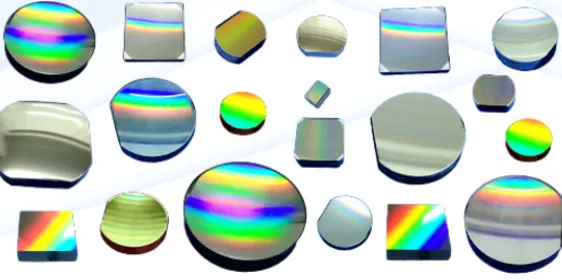
Holographic Grating is a type of diffraction grating formed by an interference-fringe field of two laser beams whose standing-wave pattern is exposed to a polished substrate coated with photoresist. Processing of the exposed medium results in a pattern of straight lines with a sinusoidal crosssection. A diffraction grating is an optical element that diffracts energy into its constituent wavelengths. The groove density, depth and profile of a diffraction grating dictate the spectral range, efficiency, resolution and performance of the diffraction grating. There are typically two different types of diffraction grating – the ruled grating and the holographic grating. A ruled diffraction grating is produced by a ruling engine that cuts grooves into the coating on the grating substrate (typically glass coated with a thin reflective layer) using a diamond tipped tool. A holographic diffraction grating is produced using a photolithographic technique. The most common type of holographic diffraction grating are plane gratings and concave gratings.
Holographic Grating Market Summary
Research Background:
The holographic grating market is an emerging segment within the broader field of advanced optics, driven by the growing demand for high-precision components in spectroscopy, laser systems, telecommunications, and optical data storage. Holographic gratings, produced using interference lithography rather than mechanical ruling, offer superior performance in terms of reduced stray light, higher diffraction efficiency, and improved wavelength accuracy. These advantages make them a preferred choice for applications requiring precise light manipulation, including monochromator and spectrometer, optical communication and stronomy. However, high manufacturing complexity and cost remain key challenges, while ongoing innovation in nanofabrication techniques and demand for miniaturized, high-performance optical systems present significant opportunities for expansion.
Development Status:
The holographic grating market is currently in a phase of steady development, characterized by expanding adoption across high-precision optical applications and continuous innovation in fabrication techniques. Leading manufacturers are investing in advanced lithography, nanofabrication, and coating technologies to improve diffraction efficiency, spectral resolution, and durability, enabling broader use in spectroscopy, laser tuning, and telecommunications. Geographically, North America and Europe maintain strong positions due to established research infrastructure and early technology adoption, while Asia-Pacific is emerging as a fast-growing hub, driven by rapid advancements in photonics and electronics manufacturing. Despite challenges such as high production costs and the need for specialized expertise, the market is benefiting from rising demand for compact, high-performance optical devices and the integration of holographic gratings into next-generation photonic systems.
Future Trends:
Integration with Photonic Devices: Holographic gratings will increasingly be embedded into compact photonic circuits and optical chips, supporting the growth of integrated optics for telecommunications, quantum computing, and next-generation data transmission.
Advancements in Nanofabrication: Emerging nanolithography and laser-writing techniques will enable the production of gratings with higher precision, customized geometries, and improved efficiency, lowering the barriers for broader commercial applications.
Rising Adoption in Asia-Pacific: Driven by rapid advancements in electronics and photonics manufacturing, Asia-Pacific is expected to become the fastest-growing market, with significant investments from both private and government sectors.
Sustainability and Cost Efficiency: Future development will focus on reducing material waste and production costs, with manufacturers exploring new substrates, scalable fabrication methods, and eco-friendly processes to meet sustainability goals.
SWOT Analysis:
Strengths
High Precision & Efficiency: Superior performance in terms of diffraction efficiency, stray light suppression, and wavelength accuracy compared to ruled gratings.
Versatile Applications: Widely used in spectroscopy, laser tuning, telecommunications and scientific research.
Technological Advancement: Continuous improvements in nanofabrication and lithography enhance product capabilities and expand use cases.
Weaknesses
High Manufacturing Costs: Complex fabrication processes and specialized equipment increase production expenses.
Limited Commercial Awareness: Broader industrial markets remain less familiar with holographic gratings compared to conventional optical components.
Specialized Expertise Required: Design and application demand skilled professionals, restricting large-scale adoption in some sectors.
Opportunities
Growth in Photonics & Quantum Technologies: Rising demand for high-precision optical components in integrated photonic circuits and quantum research.
Expansion in Medical & Environmental Sensing: Increasing adoption in portable spectroscopy devices for diagnostics, pharmaceutical testing, and pollution monitoring.
Emerging Asia-Pacific Market: Rapid industrialization, government investments in optics and electronics, and a growing R&D base fuel regional growth potential.
Threats
Competition from Alternative Technologies: Advancements in other optical components (e.g., metamaterials, diffractive optics) may limit market share.
Supply Chain Constraints: Dependence on specialized substrates and coatings can be disrupted by material shortages or geopolitical issues.
Price Sensitivity in Mass Markets: High costs may restrict penetration into price-sensitive industries and slow adoption beyond niche applications.
According to the new market research report "Global Holographic Grating Market Report 2025-2031", published by QYResearch, the global Holographic Grating market size is projected to grow from USD 224.61 million in 2024 to USD 298.40 million by 2031, at a CAGR of 4.20% during the forecast period.
Figure. Global Holographic Grating Market Size (US$ Million), 2020-2031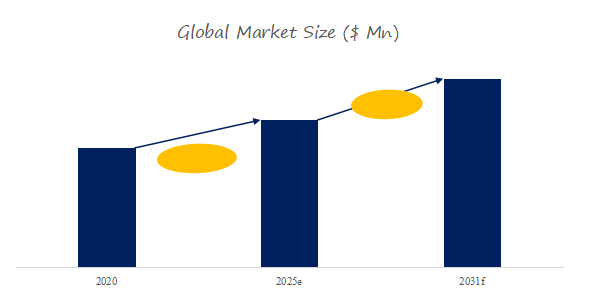
Above data is based on report from QYResearch: Global Holographic Grating Market Report 2025-2031 (published in 2025). If you need the latest data, plaese contact QYResearch.
Figure. Global Holographic Grating Top 15 Players Ranking and Market Share (Ranking is based on the revenue of 2024, continually updated)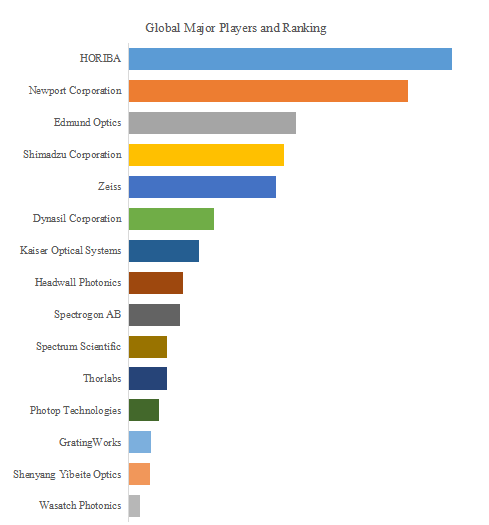
Above data is based on report from QYResearch: Global Holographic Grating Market Report 2025-2031 (published in 2025). If you need the latest data, plaese contact QYResearch.
This report profiles key players of Holographic Grating such as HORIBA, Newport Corporation, Edmund Optics, Shimadzu Corporation, Zeiss, etc.
In 2024, the global top five Holographic Grating players account for 59.21% of market share in terms of revenue. Above figure shows the key players ranked by revenue in Holographic Grating.
Plane-type holographic gratings are the most widely used category, consisting of a flat substrate with precisely recorded interference patterns. They are valued for their ability to deliver high spectral resolution and low stray light, making them ideal for applications in analytical instruments such as spectrophotometers, monochromators, and laser systems. Their relatively simple design and stable performance support mass production and integration into a wide range of optical devices, particularly in laboratory and industrial environments.
Concave-type holographic gratings integrate both dispersion and focusing functions within a single optical element, eliminating the need for additional lenses or mirrors in many setups. This design advantage simplifies optical systems, reduces alignment errors, and enhances efficiency. Concave gratings are especially useful in compact spectroscopic instruments, space-limited optical systems, and high-precision scientific research. Although more complex and costly to produce than plane types, their multifunctionality and ability to optimize system performance make them increasingly valuable in advanced optical applications.
In terms of product type, Concave Type Holographic Grating is the largest segment, hold a share of 64.77%.
Holographic gratings play a critical role in laser tuning, wavelength selection, and beam shaping. Their high diffraction efficiency and low stray light characteristics enable stable laser operation, making them essential in fields ranging from medical devices and materials processing to defense and communications.
In astronomical instrumentation, holographic gratings are used in spectrographs to analyze light from celestial bodies with high accuracy. Their ability to deliver high-resolution spectral data supports the study of stellar composition, redshifts, and exoplanet detection, making them indispensable in modern space and ground-based observatories.
The growing demand for high-speed data transmission drives the use of holographic gratings in wavelength division multiplexing (WDM) and other photonic communication systems. Their precise control over light dispersion supports greater bandwidth efficiency, lower crosstalk, and improved signal quality in fiber-optic networks.
Holographic gratings are widely applied in laboratory and industrial analytical instruments. They enhance the performance of spectrometers and monochromators by providing accurate wavelength separation and high resolution, supporting applications in pharmaceuticals, environmental monitoring, and materials science.
Beyond traditional fields, holographic gratings are finding use in emerging areas such as environmental sensing, biomedical diagnostics, semiconductor inspection, and laser-based manufacturing. Their adaptability to compact and high-performance optical systems position them as a key enabler of next-generation photonics technologies.
In terms of product application, currently Laser is the largest segment, hold a share of 47.12%.
About QYResearch
QYResearch founded in California, USA in 2007.It is a leading global market research and consulting company. With over 17 years’ experience and professional research team in various cities over the world QY Research focuses on management consulting, database and seminar services, IPO consulting (data is widely cited in prospectuses, annual reports and presentations), industry chain research and customized research to help our clients in providing non-linear revenue model and make them successful. We are globally recognized for our expansive portfolio of services, good corporate citizenship, and our strong commitment to sustainability. Up to now, we have cooperated with more than 60,000 clients across five continents. Let’s work closely with you and build a bold and better future.
QYResearch is a world-renowned large-scale consulting company. The industry covers various high-tech industry chain market segments, spanning the semiconductor industry chain (semiconductor equipment and parts, semiconductor materials, ICs, Foundry, packaging and testing, discrete devices, sensors, optoelectronic devices), photovoltaic industry chain (equipment, cells, modules, auxiliary material brackets, inverters, power station terminals), new energy automobile industry chain (batteries and materials, auto parts, batteries, motors, electronic control, automotive semiconductors, etc.), communication industry chain (communication system equipment, terminal equipment, electronic components, RF front-end, optical modules, 4G/5G/6G, broadband, IoT, digital economy, AI), advanced materials industry Chain (metal materials, polymer materials, ceramic materials, nano materials, etc.), machinery manufacturing industry chain (CNC machine tools, construction machinery, electrical machinery, 3C automation, industrial robots, lasers, industrial control, drones), food, beverages and pharmaceuticals, medical equipment, agriculture, etc.

Global Holographic Grating Sales Market Report, Competitive Analysis and Regional Opportunities 2026-2032

Published Date: 2026-01-04

Pages: 93

Report ld: 5557035
Price:USD 4250.00
(Single User License)
Global Holographic Grating Market Research Report 2026
Published Date: 2026-01-04
Pages: 138
Report ld: 5534615
Price:USD 2900.00
(Single User License)
Holographic Grating- Global Market Share and Ranking, Overall Sales and Demand Forecast 2026-2032
Published Date: 2026-01-04
Pages: 126
Report ld: 5495005
Price:USD 3950.00
(Single User License)
Global Holographic Grating Market Outlook, In‑Depth Analysis & Forecast to 2031
Published Date: 2025-09-11
Pages: 159
Report ld: 5043963
Price:USD 4900.00
(Single User License)
Global Holographic Grating Market Size, Manufacturers, Supply Chain, Sales Channel and Clients, 2025-2031
Published Date: 2025-03-28
Pages: 146
Report ld: 4675555
Price:USD 5900.00
(Single User License)
Global Holographic Grating Sales Market Report, Competitive Analysis and Regional Opportunities 2025-2031
Published Date: 2025-03-19
Pages: 93
Report ld: 4682972
Price:USD 4250.00
(Single User License)


Competition
Key players, new entrants,acquisitions, mergers and expansions,development trends and challenges.

Industry Analysis
Rawmaterial, application, product type, demand,supply,downstream, supply chain etc.

Market Size
Capacity, production, sales, revenue, price, cost etc.

Customized Information
We can offer customized survey and information to meet ourclient's need.
