Transcutaneous Bilirubin Meters Research:CAGR of -0.3% during the forecast period


Transcutaneous Bilirubin Meters Market Summary
A transcutaneous bilirubin meters is a device that measures the yellowish pigmentation of the skin and other mucous membranes caused by hyperbilirubinemia (increased levels of bilirubin in the blood). This device is widely used in hospital nurseries and clinics because it provides instant, painless results, reducing the need for repeated, invasive blood draws (Total Serum Bilirubin or TSB), which is the traditional "gold standard" for measurement.
Market Development Opportunities & Main Driving Factors
Worldwide neonatal jaundice screening is shifting from visual assessment to standardized clinical pathways, with many pediatric societies and hospital protocols requiring bilirubin assessment within 24–48 hours after birth and recommending transcutaneous measurement as the first-line screening tool to cut down blood draws and readmission rates while improving bed turnover. Against this backdrop, Transcutaneous Bilirubin Meters are moving from “nice-to-have” devices to standard equipment in obstetrics, pediatrics and neonatal intensive care units.
Market Challenges, Risks, & Restraints
Despite their advantages in being non-invasive, fast and cost-efficient, Transcutaneous Bilirubin Meters have well-recognized limitations: accuracy decreases in infants with darker skin, following phototherapy, and at very high bilirubin levels, which is why guidelines consistently recommend confirmation with serum bilirubin testing at defined thresholds. For manufacturers, this translates into continuous investment in optics, calibration algorithms and clinical validation to satisfy regulators’ and hospitals’ demanding requirements for accuracy, traceability and quality systems. At the same time, relatively low global market concentration and intense tender-driven price competition in many regions mean that smaller players face mounting pressure to balance channel development, after-sales service and sustained R&D with limited resources.
Downstream Demand Trends
On the demand side, general hospitals and maternal–child health centers remain the core customers, and the standardization of neonatal jaundice care pathways is driving deployment of Transcutaneous Bilirubin Meters across delivery rooms, outpatient/emergency departments and follow-up clinics. New-generation devices from leading suppliers not only support rapid bedside screening, but also integrate with hospital information systems to help departments reduce labor and consumables costs. In parallel, telemedicine and home follow-up are emerging as new growth vectors: industry leaders are partnering with digital-health companies to build smartphone-based remote jaundice management solutions, while clinical studies show that novel wearable bilirubin meters can achieve strong correlation with commercial devices and serum measurements at a fraction of the size and cost. Market analyses generally expect North America to benefit from premium-device replacement and faster telehealth adoption, while Asia–Pacific, with its large birth cohorts and ongoing primary-care investment, is poised to be the fastest-growing region for Transcutaneous Bilirubin Meter penetration.
According to the new market research report “Global Transcutaneous Bilirubin Meters Market Report 2025-2031”, published by QYResearch, the global Transcutaneous Bilirubin Meters market size is projected to reach USD 0.1 billion by 2031, at a CAGR of -0.3% during the forecast period.
Figure00001. Global Transcutaneous Bilirubin Meters Market Size (US$ Million), 2020-2031
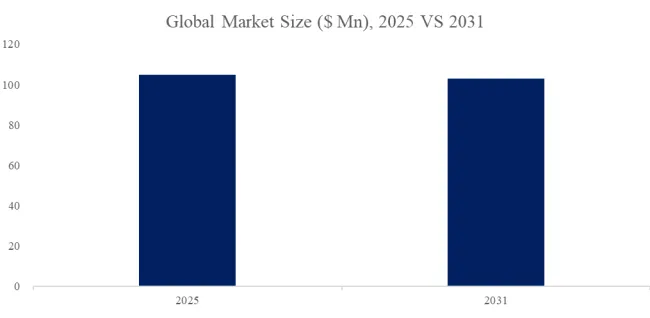
Above data is based on report from QYResearch: Global Transcutaneous Bilirubin Meters Market Report 2025-2031 (published in 2024). If you need the latest data, plaese contact QYResearch.
Figure00002. Global Transcutaneous Bilirubin Meters Top 13 Players Ranking and Market Share (Ranking is based on the revenue of 2024, continually updated)
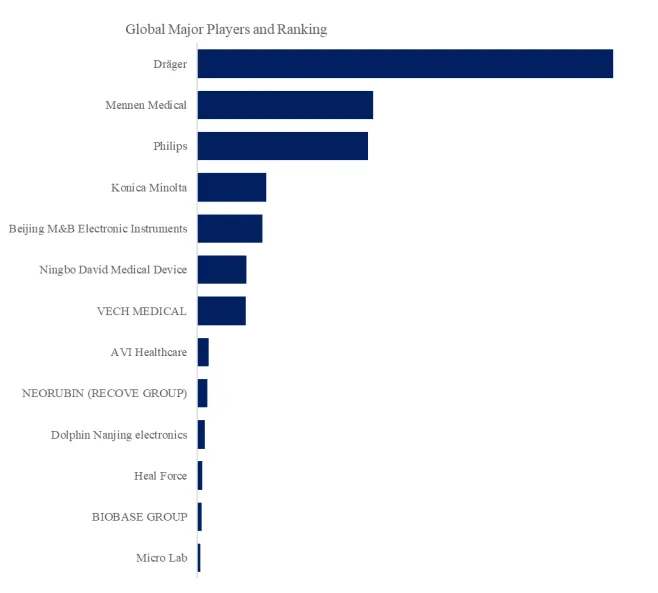
Above data is based on report from QYResearch: Global Transcutaneous Bilirubin Meters Market Report 2025-2031 (published in 2024). If you need the latest data, plaese contact QYResearch.
According to QYResearch Top Players Research Center, the global key manufacturers of Transcutaneous Bilirubin Meters include Dräger, Mennen Medical, Philips, Konica Minolta, Beijing M&B Electronic Instruments, Ningbo David Medical Device, VECH MEDICAL, AVI Healthcare, NEORUBIN (RECOVE GROUP), Dolphin Nanjing electronics, etc. In 2024, the global top five players had a share approximately 70.0% in terms of revenue.
Figure00003. Transcutaneous Bilirubin Meters, Global Market Size, Split by Product Segment
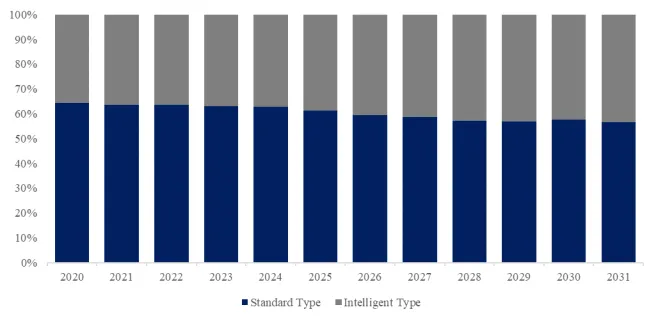
Based on or includes research from QYResearch: Global Transcutaneous Bilirubin Meters Market Report 2025-2031.
In terms of product type, currently Standard Type is the largest segment, hold a share of 62.7%.
The report provides a detailed analysis of the market size, growth potential, and key trends for each segment. Through detailed analysis, industry players can identify profit opportunities, develop strategies for specific customer segments, and allocate resources effectively.
The Transcutaneous Bilirubin Meters market is segmented as below:
By Company
Dräger
Mennen Medical
Philips
Konica Minolta
Beijing M&B Electronic Instruments
Ningbo David Medical Device
VECH MEDICAL
AVI Healthcare
NEORUBIN (RECOVE GROUP)
Dolphin Nanjing electronics
Heal Force
BIOBASE GROUP
Micro Lab
Segment by Type
Standard Type
Intelligent Type
Segment by Application
Hospitals
Clinics
Others
Each chapter of the report provides detailed information for readers to further understand the Transcutaneous Bilirubin Meters market:
Chapter 1: Introduces the report scope of the Transcutaneous Bilirubin Meters report, global total market size (valve, volume and price). This chapter also provides the market dynamics, latest developments of the market, the driving factors and restrictive factors of the market, the challenges and risks faced by manufacturers in the industry, and the analysis of relevant policies in the industry. (2021-2032)
Chapter 2: Detailed analysis of Transcutaneous Bilirubin Meters manufacturers competitive landscape, price, sales and revenue market share, latest development plan, merger, and acquisition information, etc. (2021-2026)
Chapter 3: Provides the analysis of various Transcutaneous Bilirubin Meters market segments by Type, covering the market size and development potential of each market segment, to help readers find the blue ocean market in different market segments. (2021-2032)
Chapter 4: Provides the analysis of various market segments by Application, covering the market size and development potential of each market segment, to help readers find the blue ocean market in different downstream markets.(2021-2032)
Chapter 5: Sales, revenue of Transcutaneous Bilirubin Meters in regional level. It provides a quantitative analysis of the market size and development potential of each region and introduces the market development, future development prospects, market space, and market size of each country in the world..(2021-2032)
Chapter 6: Sales, revenue of Transcutaneous Bilirubin Meters in country level. It provides sigmate data by Type, and by Application for each country/region.(2021-2032)
Chapter 7: Provides profiles of key players, introducing the basic situation of the main companies in the market in detail, including product sales, revenue, price, gross margin, product introduction, recent development, etc. (2021-2026)
Chapter 8: Analysis of industrial chain, including the upstream and downstream of the industry.
Chapter 9: Conclusion.
Other relevant reports of QYResearch:
Global Transcutaneous Bilirubin Meters Sales Market Report, Competitive Analysis and Regional Opportunities 2026-2032
Global Transcutaneous Bilirubin Meters Market Research Report 2026
Benefits of purchasing QYResearch report:
Competitive Analysis: QYResearch provides in-depth Transcutaneous Bilirubin Meters competitive analysis, including information on key company profiles, new entrants, acquisitions, mergers, large market shear, opportunities, and challenges. These analyses provide clients with a comprehensive understanding of market conditions and competitive dynamics, enabling them to develop effective market strategies and maintain their competitive edge.
Industry Analysis: QYResearch provides Transcutaneous Bilirubin Meters comprehensive industry data and trend analysis, including raw material analysis, market application analysis, product type analysis, market demand analysis, market supply analysis, downstream market analysis, and supply chain analysis.
and trend analysis. These analyses help clients understand the direction of industry development and make informed business decisions.
Market Size: QYResearch provides Transcutaneous Bilirubin Meters market size analysis, including capacity, production, sales, production value, price, cost, and profit analysis. This data helps clients understand market size and development potential, and is an important reference for business development.

Global Transcutaneous Bilirubin Meters Sales Market Report, Competitive Analysis and Regional Opportunities 2026-2032

Published Date: 2026-01-05

Pages: 99

Report ld: 5572382
Price:USD 4250.00
(Single User License)
Global Transcutaneous Bilirubin Meters Market Research Report 2026
Published Date: 2026-01-05
Pages: 126
Report ld: 5542649
Price:USD 2900.00
(Single User License)
Transcutaneous Bilirubin Meters- Global Market Share and Ranking, Overall Sales and Demand Forecast 2026-2032
Published Date: 2026-01-05
Pages: 115
Report ld: 5542646
Price:USD 3950.00
(Single User License)

Transcutaneous Bilirubin Meters - Global Market Share and Ranking, Overall Sales and Demand Forecast 2025-2031
Published Date: 2025-12-01
Pages: 178
Report ld: 5517562
Price:USD 3950.00
(Single User License)
Global Transcutaneous Bilirubin Meters Sales Market Report, Competitive Analysis and Regional Opportunities 2025-2031
Published Date: 2025-11-02
Pages: 102
Report ld: 5352533
Price:USD 4250.00
(Single User License)
Global Transcutaneous Bilirubin Meters Market Outlook, In‑Depth Analysis & Forecast to 2031
Published Date: 2025-11-02
Pages: 175
Report ld: 5344298
Price:USD 4900.00
(Single User License)


Competition
Key players, new entrants,acquisitions, mergers and expansions,development trends and challenges.

Industry Analysis
Rawmaterial, application, product type, demand,supply,downstream, supply chain etc.

Market Size
Capacity, production, sales, revenue, price, cost etc.

Customized Information
We can offer customized survey and information to meet ourclient's need.
