Humanoid Robot Multi-fingered Dexterous Hand Research:CAGR of 64.6% during the forecast period


QY Research Inc. (Global Market Report Research Publisher) announces the release of 2025 latest report “Humanoid Robot Multi-fingered Dexterous Hand- Global Market Share and Ranking, Overall Sales and Demand Forecast 2025-2031”. Based on current situation and impact historical analysis (2020-2024) and forecast calculations (2025-2031), this report provides a comprehensive analysis of the global Wire Drawing Dies market, including market size, share, demand, industry development status, and forecasts for the next few years.
The global market for Humanoid Robot Multi-fingered Dexterous Hand was estimated to be worth US$ 92.7 million in 2024 and is forecast to a readjusted size of US$ 5037 million by 2031 with a CAGR of 68.7% during the forecast period 2025-2031.
【Get a free sample PDF of this report (Including Full TOC, List of Tables & Figures, Chart)】
https://www.qyresearch.com/reports/4026987/humanoid-robot-multi-fingered-dexterous-hand
Humanoid Robot Multi-fingered Dexterous Hand Market Summary
Dexterous hand is a new type of end effector of robot. Generally speaking, the ways of robot interaction with the environment mainly include: moving and walking, obtaining information such as vision, and executing and outputting decisions. End effector is a general term for the robot's execution parts. It is generally installed at the end of the robot's wrist and is a device that directly executes tasks. As the last link and execution part of the interaction between the robot and the environment, the end effector plays an extremely important role in improving the flexibility and ease of use of the robot. The quality of its performance largely determines the working performance of the entire robot.
The dexterous hand of humanoid robot is a special end effector designed based on the kinematics of human hand. Unlike the end effector of industrial robot, which has poor versatility and can only complete specific tasks such as welding and painting, the dexterous hand has universal grasping ability. The basic characteristics are at least 3 fingers, each finger has at least 3 degrees of freedom with axes that are not completely parallel, and usually integrates multiple sensors such as force sense and proximity sense.
Multi-finger dexterous hand: The mechanism is multi-finger and multi-joint, and the most common is 3 to 5 fingers, each finger has 3 joints, and the kinematic pairs of the finger joints are all revolute pairs. The main driving methods of dexterous hands include 4 types: hydraulic drive, motor drive, pneumatic drive, and shape memory alloy drive. For example, the Okada dexterous hand of Japan's "Electronic Technology Laboratory", the Stanford/JPL dexterous hand successfully developed by Stanford University in the United States, and the Utah/MIT dexterous hand jointly developed by the Massachusetts Institute of Technology and the University of Utah.
The robot multi-finger dexterous hand has received continuous R&D investment and widespread attention because it can imitate the various dexterous grasping and complex operation capabilities of human hands. From the perspective of application fields, the fields where dexterous hands have achieved mature applications are mainly medical and industrial fields.
According to the new market research report “Global Humanoid Robot Multi-fingered Dexterous Hand Market Report 2024-2030”, published by QYResearch, the global Humanoid Robot Multi-fingered Dexterous Hand market size is projected to reach USD 5040 million by 2030, at a CAGR of 64.6% during the forecast period.
- Global Humanoid Robot Multi-fingered Dexterous Hand MarketSize(US$ Million), 2019-2030
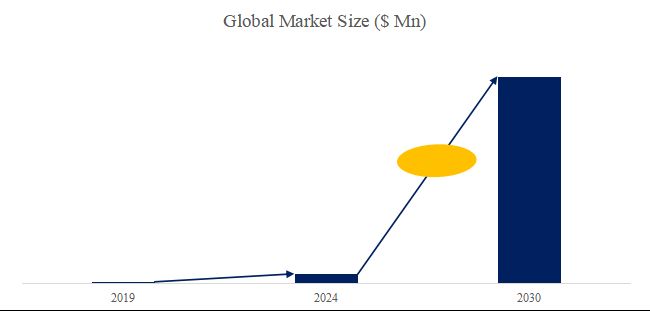
Above data is based on report from QYResearch: Global Humanoid Robot Multi-fingered Dexterous Hand Market Report 2024-2030 (published in 2024). If you need the latest data, plaese contact QYResearch.
- Global Humanoid Robot Multi-fingered Dexterous Hand Top16 Players Rankingand Market Share (Ranking is based on the revenue of 2023, continually updated)
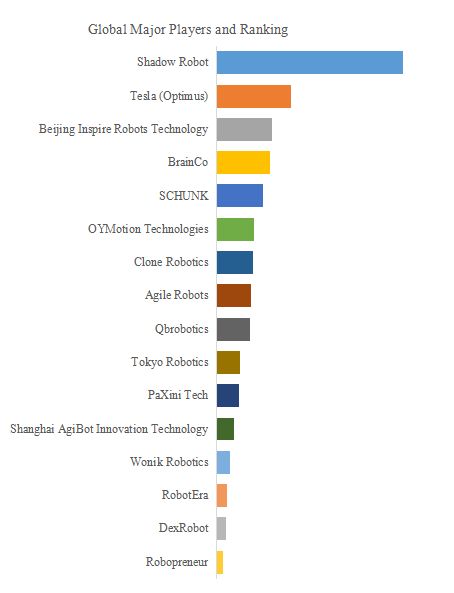
Above data is based on report from QYResearch: Global Humanoid Robot Multi-fingered Dexterous Hand Market Report 2024-2030 (published in 2024). If you need the latest data, plaese contact QYResearch.
According to QYResearch Top Players Research Center, the global key manufacturers of Humanoid Robot Multi-fingered Dexterous Hand include Shadow Robot, Tesla (Optimus), Beijing Inspire Robots Technology, BrainCo, SCHUNK, etc. In 2023, the global top five players had a share approximately 47.0% in terms of revenue.
According to QYResearch Top Players Research Center, the global key manufacturers of Humanoid Robot Multi-fingered Dexterous Hand include Shadow Robot, Tesla (Optimus), Beijing Inspire Robots Technology, BrainCo, SCHUNK, OYMotion Technologies, Clone Robotics, Agile Robots, Qbrobotics, Tokyo Robotics, etc. In 2023, the global top 10 players had a share approximately 63.0% in terms of revenue.
- Humanoid Robot Multi-fingered Dexterous Hand,Global Market Size, Split by Product Segment
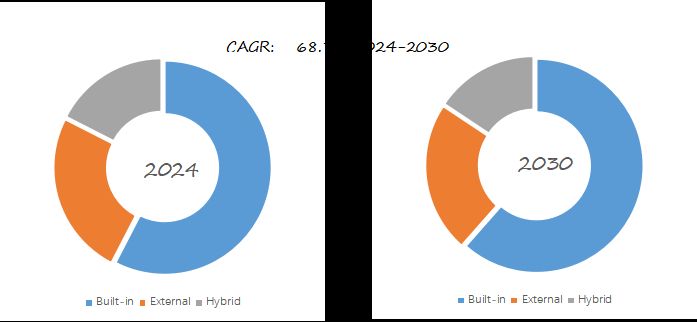
Based on or includes research from QYResearch: Global Humanoid Robot Multi-fingered Dexterous Hand Market Report 2024-2030.
In terms of product type, currently Built-in is the largest segment, hold a share of 57.6%.
In terms of product application, currently Medical is the largest segment, hold a share of 87.1%.
Main driving factors:
(1) Dexterous hands are a new type of end effector for robots. Generally speaking, the ways in which robots interact with the environment mainly include: moving and walking, obtaining information such as vision, and executing and outputting decisions. End effector is a general term for the robot's execution parts. It is generally installed at the end of the robot's wrist and is a device that directly executes tasks. As the final link and execution part of the interaction between the robot and the environment, the end effector plays an extremely important role in improving the flexibility and ease of use of the robot. The quality of its performance largely determines the working performance of the entire robot.
(2) The demand for humanoid robot multi-finger dexterous hands in the fields of surgical assistance, rehabilitation treatment, patient care and companionship is increasing. With the aging of the population and the shortage of medical resources, this demand will become more urgent. At the same time, in the manufacturing industry, multi-finger dexterous hands can perform complex assembly and processing tasks, improving production efficiency and product quality.
Main obstacles:
The sales price of existing robot multi-finger dexterous hands is generally high. For example, the HIT/DLR dexterous hand developed by Harbin Institute of Technology and German Aerospace Center is priced at more than RMB 900,000, the Shadow Dexterous Hand is priced at about US$300,000, and the SVH five-fingered hand of German SCHUNK is priced at more than RMB 700,000. The high price is a major obstacle to promotion and application, and many multi-fingered hand products are only used for scientific research and application-based development in scientific research laboratories. In recent years, various scientific research institutions have begun to invest in the research and development of low-cost robotic multi-fingered hands, and have carried out low-cost design and manufacturing from the aspects of materials, processing methods, drive devices, and sensing devices. Some prototypes have been developed, but their flexibility, perception richness, and reliability are generally low. Therefore, how to achieve a reasonable balance between performance and cost is also a topic worth studying.
During the physical interaction and tactile exploration of the robot hand and the object, the safety of the robot hand and its surrounding environment needs to be guaranteed. On the one hand, while collecting tactile signals in a timely manner and transmitting them to the controller, it is also necessary to have the ability to avoid unnecessary harm. On the other hand, since the object model is unknown, the robot may violate some key constraints. If accidental damage occurs during the exploration process, a certain degree of self-healing and stretching ability can ensure the safety of the system.
Because the surface of the hand is usually irregular, flexible sensors are easier to integrate with the surface of the hand than rigid sensors. Flexible sensors can be placed on the entire palm surface instead of fingertips, and the contact information is richer. Other properties of tactile sensors also need to be further improved, such as self-healing ability and self-power. Tactile sensors with self-healing ability can improve their adaptability to non-structural environments.
The report provides a detailed analysis of the market size, growth potential, and key trends for each segment. Through detailed analysis, industry players can identify profit opportunities, develop strategies for specific customer segments, and allocate resources effectively.
The Humanoid Robot Multi-fingered Dexterous Hand market is segmented as below:
By Company
Shadow Robot
Tesla (Optimus)
Beijing Inspire Robots Technology
BrainCo
SCHUNK
OYMotion Technologies
Clone Robotics
Agile Robots
Qbrobotics
Tokyo Robotics
PaXini Tech
Shanghai AgiBot Innovation Technology
Wonik Robotics
RobotEra
DexRobot
Robopreneur
Segment by Type
Built-in Type
External Type
Hybrid Type
Segment by Application
Medical
Industrial
Logistics
Research
Household
Other
Each chapter of the report provides detailed information for readers to further understand the Humanoid Robot Multi-fingered Dexterous Hand market:
Chapter 1: Introduces the report scope of the Humanoid Robot Multi-fingered Dexterous Hand report, global total market size (valve, volume and price). This chapter also provides the market dynamics, latest developments of the market, the driving factors and restrictive factors of the market, the challenges and risks faced by manufacturers in the industry, and the analysis of relevant policies in the industry. (2020-2031)
Chapter 2: Detailed analysis of Humanoid Robot Multi-fingered Dexterous Hand manufacturers competitive landscape, price, sales and revenue market share, latest development plan, merger, and acquisition information, etc. (2020-2025)
Chapter 3: Provides the analysis of various Humanoid Robot Multi-fingered Dexterous Hand market segments by Type, covering the market size and development potential of each market segment, to help readers find the blue ocean market in different market segments. (2020-2031)
Chapter 4: Provides the analysis of various market segments by Application, covering the market size and development potential of each market segment, to help readers find the blue ocean market in different downstream markets.(2020-2031)
Chapter 5: Sales, revenue of Humanoid Robot Multi-fingered Dexterous Hand in regional level. It provides a quantitative analysis of the market size and development potential of each region and introduces the market development, future development prospects, market space, and market size of each country in the world..(2020-2031)
Chapter 6: Sales, revenue of Humanoid Robot Multi-fingered Dexterous Hand in country level. It provides sigmate data by Type, and by Application for each country/region.(2020-2031)
Chapter 7: Provides profiles of key players, introducing the basic situation of the main companies in the market in detail, including product sales, revenue, price, gross margin, product introduction, recent development, etc. (2020-2025)
Chapter 8: Analysis of industrial chain, including the upstream and downstream of the industry.
Chapter 9: Conclusion.
Benefits of purchasing QYResearch report:
Competitive Analysis: QYResearch provides in-depth Humanoid Robot Multi-fingered Dexterous Hand competitive analysis, including information on key company profiles, new entrants, acquisitions, mergers, large market shear, opportunities, and challenges. These analyses provide clients with a comprehensive understanding of market conditions and competitive dynamics, enabling them to develop effective market strategies and maintain their competitive edge.
Industry Analysis: QYResearch provides Humanoid Robot Multi-fingered Dexterous Hand comprehensive industry data and trend analysis, including raw material analysis, market application analysis, product type analysis, market demand analysis, market supply analysis, downstream market analysis, and supply chain analysis.
and trend analysis. These analyses help clients understand the direction of industry development and make informed business decisions.
Market Size: QYResearch provides Humanoid Robot Multi-fingered Dexterous Hand market size analysis, including capacity, production, sales, production value, price, cost, and profit analysis. This data helps clients understand market size and development potential, and is an important reference for business development.
Other relevant reports of QYResearch:
Global Humanoid Robot Multi-fingered Dexterous Hand Sales Market Report, Competitive Analysis and Regional Opportunities 2025-2031
Global Humanoid Robot Multi-fingered Dexterous Hand Market Insights, Forecast to 2031
Global Humanoid Robot Multi-fingered Dexterous Hand Market Research Report 2025
Global and United States Humanoid Robot Multi-fingered Dexterous Hand Market Report & Forecast 2024-2030
Global Humanoid Robot Multi-fingered Dexterous Hand Market Insights, Forecast to 2030
Global Humanoid Robot Multi-fingered Dexterous Hand Market Research Report 2024
Humanoid Robot Multi-fingered Dexterous Hand- Global Market Share and Ranking, Overall Sales and Demand Forecast 2024-2030
About Us:
QYResearch founded in California, USA in 2007, which is a leading global market research and consulting company. Our primary business include market research reports, custom reports, commissioned research, IPO consultancy, business plans, etc. With over 18 years of experience and a dedicated research team, we are well placed to provide useful information and data for your business, and we have established offices in 7 countries (include United States, Germany, Switzerland, Japan, Korea, China and India) and business partners in over 30 countries. We have provided industrial information services to more than 60,000 companies in over the world.


Competition
Key players, new entrants,acquisitions, mergers and expansions,development trends and challenges.

Industry Analysis
Rawmaterial, application, product type, demand,supply,downstream, supply chain etc.

Market Size
Capacity, production, sales, revenue, price, cost etc.

Customized Information
We can offer customized survey and information to meet ourclient's need.