Hollow Fibre Membranes for Water and Wastewater Treatment Market Set to Hit 2522 Million USD by 2026 – What Industry Leaders Are Doing Differently


Hollow Fibre Membranes for Water and Wastewater Treatment Product Introduction
Hollow Fibre Membranes for Water and Wastewater Treatment refer to a type of porous, hollow cylindrical membrane material specifically designed for separating, purifying, and recycling water and wastewater. Typically made from high-performance polymeric materials—with surface modifications (e.g., hydrophilic coatings) often applied to reduce fouling—these membranes feature a unique hollow, fiber-like structure, where individual fibers (usually with an outer diameter of 50–200 μm and inner diameter of 20–100 μm) have a porous membrane wall. Their separation principle relies on pressure-driven selective permeation: under external pressure (or vacuum), water molecules and small-molecular-weight beneficial substances pass through the microscopic pores (ranging from 0.01 μm for ultrafiltration to several μm for microfiltration) in the membrane wall, while contaminants such as suspended solids, colloids, bacteria, viruses, macromolecular organic matter, and even some dissolved salts are intercepted on the membrane surface or within the pores. As a core component in modern water treatment technologies (e.g., membrane bioreactors (MBRs), ultrafiltration (UF) systems, and seawater desalination pre-treatment), these membranes enable efficient purification of municipal drinking water, recycling of industrial wastewater (e.g., textile, pharmaceutical effluents), and removal of pathogens/ pollutants from wastewater, while offering advantages like high filtration flux, compact footprint, and stable treatment efficiency—making them pivotal for addressing global water scarcity and meeting stringent environmental discharge standards.
Picture. Hollow Fibre Membranes for Water and Wastewater Treatment Picture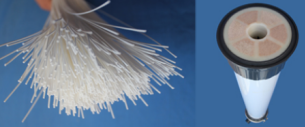
Source: Secondary Sources and QYResearch, 2024
According to the new market research report “Global Hollow Fibre Membranes for Water and Wastewater Treatment Market Report 2025-2031”, published by QYResearch, the global Hollow Fibre Membranes for Water and Wastewater Treatment market size is projected to reach USD 2.99 billion by 2031, at a CAGR of 3.76% during the forecast period.
Figure. Global Hollow Fibre Membranes for Water and Wastewater Treatment Market Size (US$ Million), 2020-2031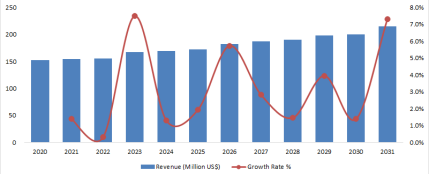
Above data is based on report from QYResearch: Global Hollow Fibre Membranes for Water and Wastewater Treatment Market Report 2024-2030 (published in 2024). If you need the latest data, plaese contact QYResearch.
Figure. Global Hollow Fibre Membranes for Water and Wastewater Treatment Top 17 Players Ranking and Market Share (Ranking is based on the revenue of 2024, continually updated)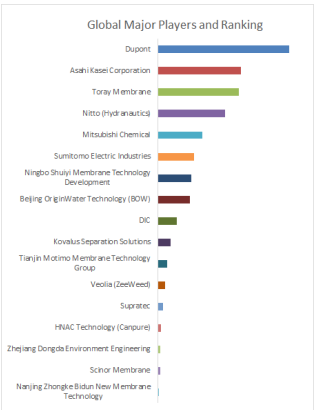
Above data is based on report from QYResearch: Global Hollow Fibre Membranes for Water and Wastewater Treatment Market Report 2024-2030 (published in 2024). If you need the latest data, plaese contact QYResearch.
According to QYResearch Top Players Research Center, the global key manufacturers of Hollow Fibre Membranes for Water and Wastewater Treatment include Dupont, Asahi Kasei Corporation, Toray Membrane, Nitto (Hydranautics), Mitsubishi Chemical, Sumitomo Electric Industries, Ningbo Shuiyi Membrane Technology Development, Beijing OriginWater Technology (BOW), DIC, Kovalus Separation Solutions, etc. In 2023, the global top five players had a share approximately 25% in terms of revenue.
Hollow Fibre Membranes for Water and Wastewater Treatment, Split by Product Segment
PVDF Hollow Fibre Membranes:
PVDF (polyvinylidene fluoride) hollow fibre membranes are dominant in water and wastewater treatment due to their balanced performance: excellent chemical stability, thermal resistance, and mechanical strength enable long-term operation in harsh conditions like industrial wastewater with high organic content or municipal sewage treatment via MBR (membrane bioreactor) systems. Their hollow fibre structure delivers high filtration flux and low energy consumption, making them the primary choice for applications ranging from drinking water purification (removing bacteria/viruses) to wastewater reuse and even seawater pre-treatment.
PTFE Hollow Fibre Membranes:
PTFE (polytetrafluoroethylene) hollow fibre membranes stand out for extreme chemical inertness and thermal stability, making them irreplaceable in treating high-challenge wastewater—including acidic/alkaline effluents from chemical plants, high-concentration organic wastewater from pharmaceuticals, and heavy metal-laden industrial discharge. Unlike PVDF, PTFE resists degradation by nearly all solvents and maintains performance at temperatures up to 260°C, suiting scenarios where other membranes fail. However, their application is constrained by production complexity: PTFE’s high melting point and low solubility require specialized spinning techniques, leading to significantly higher manufacturing costs than PVDF.
Others:
In addition to the two mainstream materials mentioned above, hollow fiber membranes also include niche or special materials such as polyethersulfone (PES), modified polyethersulfone (m-PES), polyacrylonitrile (PAN), and polyethylene (PE), each with targeted application scenarios.
Hollow Fibre Membranes for Water and Wastewater Treatment, Global Market Size, Split by Product Segment
Hollow Fibre Membranes for Water and Wastewater Treatment, Split by Application Segment
Hollow fiber membranes, a core technology for water treatment, are used across three key areas. In general water and wastewater treatment, they are primarily used to treat municipal wastewater via membrane bioreactor (MBR) systems, enabling compact, efficient treatment (e.g., achieving effluent BOD < 5 mg/L) and reuse of wastewater for irrigation or industrial cooling. In industrial wastewater treatment, PVDF and PES membranes can treat high-COD landfill leachate (COD > 15,000 mg/L), PTFE membranes can treat acidic/alkaline petrochemical wastewater, and modified PVDF membranes are used for ultrapure water production in the electronics industry (TOC < 5 ppb) and automotive electrophoretic paint recovery (recovery rates > 98%). Other applications include drinking water purification (FDA-approved PES/PVDF sterilization membranes, compliant with NSF standards), seawater desalination pretreatment (ultrafiltration to reduce RO membrane fouling and extend life), food and beverage processing (juice clarification, milk protein concentration), and biopharmaceuticals (vaccines with LRV > 7 sterilization).
Main driving factors:
1.Stringent Environmental Regulations:Governments globally are enforcing stricter pollution control and water quality standards. The EU’s Urban Wastewater Treatment Directive mandates nitrogen/phosphorus removal and microplastic elimination (e.g., Dutch plants achieving 99.8% microplastic removal with hollow fibre membranes), while the U.S. EPA’s PFAS drinking water limits (4 ppt) and China’s "Double Carbon" policies push industries toward advanced filtration solutions. Industrial sectors like pharmaceuticals and chemicals face mandatory wastewater reuse targets, incentivizing membrane adoption for zero-liquid-discharge (ZLD) systems.
2.Resource Scarcity and Water Reuse Imperatives:Growing urbanization and climate change have intensified freshwater demand. Membrane bioreactor (MBR) systems, dominated by hollow fibre technology, enable compact, high-efficiency treatment for wastewater reuse—such as Singapore’s NEWater program and Beijing’s reclaimed water projects, which achieve effluent BOD < 5 mg/L. Industrial applications, including automotive paint recovery (98% efficiency) and food processing water recycling, further drive demand as companies seek to reduce reliance on freshwater sources.
3.Technological Advancements and Cost Optimization:Innovations in material science (e.g., PVDF surface modifications for anti-fouling, PTFE for extreme environments) and manufacturing processes (e.g., single-step spinning techniques reducing hydraulic compression) have enhanced membrane durability and flux while lowering costs. AI-driven predictive maintenance and IoT integration (e.g., real-time leak detection) improve operational efficiency, making systems more attractive to utilities. Additionally, economies of scale and automation in China’s manufacturing hubs have reduced module prices by 20–30% over the past decade, democratizing access.
Main Market Challenges and Obstacles:
1.Persistent Fouling and Maintenance Burdens. Membrane fouling, caused by organic/inorganic deposits and microbial growth, remains the primary operational hurdle. PVDF and PTFE membranes, despite their chemical resistance, are prone to hydrophobic adsorption of oils and proteins, reducing flux by up to 80% over time. Cleaning protocols, such as chemical washes or backflushing, add 15–20% to lifecycle costs and require frequent downtime. Innovations like PVA/PIC hydrogel coatings (dual-defense mechanism) and CNT-modified PVDF membranes show promise in mitigating fouling, but industrial-scale implementation remains limited by high modification costs.
2.High Material Costs and Economic Barriers. Premium materials like PVDF and PTFE account for 40–50% of membrane module expenses, pricing them out of low-budget projects in emerging markets. While China’s production scale has reduced PVDF module prices by 20–30% since 2015, small utilities still struggle with upfront investments exceeding $500,000 for a 1,000 m³/day system. Traditional methods like activated sludge systems, though less efficient, have lower initial costs, diverting funding from membrane adoption.
3.Technical Integration Complexities. Retrofitting hollow fibre systems into legacy wastewater plants often requires replacing entire infrastructure due to incompatibilities with existing pumps, sensors, and control systems. For example, integrating IoT-enabled monitoring into older plants can increase project timelines by 6–8 months and add 12–18% to costs. Additionally, the high curvature of hollow fibres complicates uniform nanofiltration layer deposition, leading to inconsistent filtration performance in industrial applications.
Development trend of Hollow Fibre Membranes for Water and Wastewater Treatment:
1. Material Innovation: Advanced Polymers and Composite Upgrades
The development of hollow fibre membrane materials is focused on enhancing performance while balancing cost and sustainability. PVDF (polyvinylidene fluoride) remains dominant but is undergoing targeted modifications—nanotechnology integration, such as graphene oxide coatings, has improved anti-fouling properties by 50% and boosted flux to 1,518 L/(m²·h·bar), addressing a longstanding operational pain point. Meanwhile, PTFE (polytetrafluoroethylene) membranes are gaining traction in harsh industrial environments, driven by demand for chemical resistance in pharmaceutical and petrochemical wastewater treatment. Emerging bio-based composites, such as bacterial cellulose-oxidized graphene blends, further align with sustainability goals by reducing fossil fuel reliance while achieving 95% organic pollutant removal.
2. Intelligent Upgrading: Digitalization and Automated Operation
Digital integration is transforming membrane system management, shifting from reactive to predictive maintenance. AI and IoT technologies enable real-time monitoring of transmembrane pressure, flux, and fouling status—platforms like Alfa Laval’s MBR systems use continuous data collection (every two hours) to optimize operation, as demonstrated in Galaxy Surfactants’ Indian plants, where gravity-driven, low-instrumentation MBRs achieved BOD₅ < 5 mg/L and enabled 40% water reuse. Machine learning algorithms now predict fouling events 72 hours in advance, cutting downtime by 20–30% and reducing cleaning costs by 15–20%. Digital twins are also emerging as a tool for scenario simulation, allowing utilities to test parameter adjustments (e.g., backwash cycles) in virtual environments before on-site implementation, ensuring stable pollutant removal within 10% error margins. These advancements are critical for scaling decentralized systems, where remote operation and minimal manpower are prioritized.
3. Application Expansion: From Municipal to High-End Industrial Niches
Hollow fibre membranes are penetrating broader and more specialized application scenarios beyond traditional municipal wastewater treatment. In industrial zero-liquid discharge (ZLD) projects, modified PVDF and PTFE membranes handle high-COD (>15,000 mg/L) and acidic effluents—Galaxy Surfactants’ adoption of MBRs for chemical wastewater treatment, followed by reverse osmosis, enabled domestic water reuse and aligned with ZLD strategies. The pharmaceutical sector is another high-growth area: PTFE membranes support sterilization of heat-sensitive biologics and viral clearance, catering to a $400 billion global biologics market, while ceramic membranes meet FDA requirements for aseptic processing with sterilization assurance levels (SAL) of 10⁻⁶. Municipal applications are upgrading too—membranes now target microplastic removal (99.8% efficiency) and drinking water depth treatment, driven by EU directives and China’s “Water Ten Measures”.
About QYResearch
QYResearch founded in California, USA in 2007.It is a leading global market research and consulting company. With over 17 years’ experience and professional research team in various cities over the world QY Research focuses on management consulting, database and seminar services, IPO consulting (data is widely cited in prospectuses, annual reports and presentations), industry chain research and customized research to help our clients in providing non-linear revenue model and make them successful. We are globally recognized for our expansive portfolio of services, good corporate citizenship, and our strong commitment to sustainability. Up to now, we have cooperated with more than 60,000 clients across five continents. Let’s work closely with you and build a bold and better future.
QYResearch is a world-renowned large-scale consulting company. The industry covers various high-tech industry chain market segments, spanning the semiconductor industry chain (semiconductor equipment and parts, semiconductor materials, ICs, Foundry, packaging and testing, discrete devices, sensors, optoelectronic devices), photovoltaic industry chain (equipment, cells, modules, auxiliary material brackets, inverters, power station terminals), new energy automobile industry chain (batteries and materials, auto parts, batteries, motors, electronic control, automotive semiconductors, etc.), communication industry chain (communication system equipment, terminal equipment, electronic components, RF front-end, optical modules, 4G/5G/6G, broadband, IoT, digital economy, AI), advanced materials industry Chain (metal materials, polymer materials, ceramic materials, nano materials, etc.), machinery manufacturing industry chain (CNC machine tools, construction machinery, electrical machinery, 3C automation, industrial robots, lasers, industrial control, drones), food, beverages and pharmaceuticals, medical equipment, agriculture, etc.

Global Hollow Fibre Membranes for Water and Wastewater Treatment Market Outlook, In‑Depth Analysis & Forecast to 2032

Published Date: 2026-09-22

Pages: 180

Report ld: 6113059
Price:USD 4900.00
(Single User License)
Global Hollow Fibre Membranes for Water and Wastewater Treatment Sales Market Report, Competitive Analysis and Regional Opportunities 2026-2032
Published Date: 2026-09-22
Pages: 148
Report ld: 6109236
Price:USD 4250.00
(Single User License)
Global Hollow Fibre Membranes for Water and Wastewater Treatment Market Research Report 2026
Published Date: 2026-09-22
Pages: 154
Report ld: 6105427
Price:USD 2900.00
(Single User License)
Hollow Fibre Membranes for Water and Wastewater Treatment- Global Market Share and Ranking, Overall Sales and Demand Forecast 2026-2032
Published Date: 2026-09-22
Pages: 149
Report ld: 6101629
Price:USD 3950.00
(Single User License)
Hollow Fibre Membranes for Water and Wastewater Treatment - Global Market Share and Ranking, Overall Sales and Demand Forecast 2025-2031
Published Date: 2025-09-27
Pages: 134
Report ld: 5055110
Price:USD 3950.00
(Single User License)
Global Hollow Fibre Membranes for Water and Wastewater Treatment Market Outlook, In‑Depth Analysis & Forecast to 2031
Published Date: 2025-09-27
Pages: 171
Report ld: 5055109
Price:USD 4900.00
(Single User License)


Competition
Key players, new entrants,acquisitions, mergers and expansions,development trends and challenges.

Industry Analysis
Rawmaterial, application, product type, demand,supply,downstream, supply chain etc.

Market Size
Capacity, production, sales, revenue, price, cost etc.

Customized Information
We can offer customized survey and information to meet ourclient's need.
