What the Client Needs Is Not a Supplier List, but a Technical Analysis System That Supports Supply Layout Judgments


In the semiconductor manufacturing industry chain, FFKM (perfluoroelastomer) is not a core material directly involved in chip manufacturing, but it is an indispensable key consumable in semiconductor production equipment. With the development of advanced processes, plasma processes, and high-temperature deposition processes, seals inside equipment face higher requirements for corrosion resistance, high-temperature resistance, low outgassing, low particle contamination, and long-term stability. With its comprehensive performance, FFKM is used in critical sealing positions in semiconductor manufacturing equipment.
This study takes Qnity (formerly DuPont) as the core supplier and, around its Kalrez® brand FFKM products, examines the procurement and use of such materials by different semiconductor equipment manufacturers, focusing on semiconductor etch equipment, ion implantation equipment, PVD equipment, single-wafer CVD equipment, and batch vertical furnace equipment.
The focus of the study is not simply to list which equipment companies may use Qnity products, but to establish, along the relationships among material suppliers, seal manufacturers, equipment OEMs, internal equipment application positions, and end customers, an analytical framework from material procurement to equipment consumption.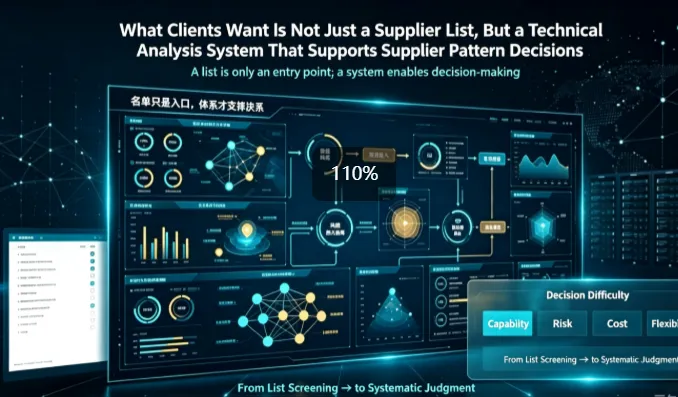
I. The Value of FFKM Lies Not in Volume, but in Equipment Operating Reliability
FFKM is mainly used in vacuum chambers, valves, pipeline interfaces, chamber doors, and other critical connection positions in semiconductor equipment. Compared with ordinary rubber sealing materials, its value is mainly reflected in three aspects:
Chemical corrosion and plasma erosion resistance: In processes such as etching and plasma cleaning, seals are exposed for long periods to reactive gases containing fluorine, chlorine, and other species as well as plasma environments, and must maintain material integrity.
Low particles and low outgassing: Erosion, aging, or release of impurities from seals may cause wafer contamination and affect yield.
High-temperature resistance and long-term sealing: In processes such as CVD, ALD, oxidation, and diffusion, equipment must maintain stable sealing at relatively high temperatures, reducing unplanned downtime and maintenance frequency.
Qnity's Kalrez product information shows that some products can be used in semiconductor thermal process environments up to approximately 325°C; Kalrez 7080 is aimed at higher-temperature process environments. Different grades differ in temperature resistance, plasma resistance, and applicable media, and not all FFKM products can be regarded as interchangeable materials.E{VMCF]Z~]~$CJM.png)
II. FFKM Applications and Procurement Chains Across Five Types of Semiconductor Equipment
Semiconductor Etch Equipment
Etch equipment is one of the fields with relatively clear evidence of FFKM application. In dry etching, wafers undergo plasma treatment in a vacuum chamber, and positions such as chamber door seals, gate valve seals, swing valve seals, chamber lid seals, exhaust valve seals, and gas inlet/outlet seals may all use FFKM. Qnity's publicly available Kalrez plasma product information lists conductor etching, dielectric etching, and ashing processes, and recommends different material grades for different process chemical environments. Its technical cases also involve the Lam Research TCP-9600 metal etch platform and slit valve seal applications. When studying etch equipment, in addition to complete equipment manufacturers, attention should also be paid to vacuum valve, chamber component, and seal suppliers.
Semiconductor Ion Implantation Equipment
Ion implantation equipment generates, accelerates, and controls an ion beam through an ion source to implant specific impurities into wafers. The equipment involves the ion source, vacuum transfer system, beamline chamber, analyzing magnet, and wafer handling module. Potential FFKM application positions include vacuum chamber connections, valves, gas interfaces, and some sealing structures requiring corrosion resistance. Unlike etch equipment, the focus in this field is on high-vacuum systems, ion source maintenance environments, and seal contamination control. At present, publicly available information contains relatively limited direct evidence of specific ion implantation equipment OEMs purchasing Qnity FFKM, and further verification should be conducted regarding equipment platforms, seal specifications, material grades, and supplier certification; the usage ratios for etch equipment should not be directly applied.
Semiconductor PVD Equipment
PVD mainly forms metal and related thin films through physical vapor deposition. Equipment operation involves vacuum chambers, target assemblies, wafer transfer systems, and chamber isolation valves. FFKM may be used in sealing positions such as chamber doors, vacuum valves, chamber interfaces, and gas lines. The Kalrez Bonded Door Seal information released by Qnity during the DuPont period states that the product is suitable for gate valve and slit valve doors in semiconductor equipment and can support processes such as plasma etching, CVD, and PVD. Research on PVD equipment should focus on equipment OEMs as well as vacuum valve and chamber component suppliers; however, the target investigation list is not equal to a confirmed list of Qnity customers.
Semiconductor Single-Wafer CVD Equipment
Single-wafer CVD equipment processes wafers one at a time and mainly includes PECVD, LPCVD, and related deposition equipment. Its process chambers are relatively independent and have high requirements for temperature, vacuum degree, and particle contamination control. FFKM may be used for chamber seals, valve seals, exhaust systems, and gas delivery interfaces. Qnity's publicly available technical cases involve the isolation valve and showerhead sealing positions of the Applied Materials Centura Ultima HDPCVD platform, as well as the chamber lid seal of the Producer SE PECVD platform. Such cases can link material brand, equipment platform, process type, and seal position; subsequently, it is still necessary to confirm whether the purchasing entity is the equipment OEM, a seal manufacturer, or an equipment maintenance service provider.
Semiconductor Batch Vertical Furnace Equipment
Batch vertical furnace equipment is mainly used for processes such as wafer oxidation, diffusion, annealing, and LPCVD. Compared with single-wafer equipment, its core process area involves quartz furnace tubes, furnace bodies, wafer boats, and gas delivery systems, and the operating temperature is usually relatively high. FFKM does not directly replace quartz furnace tubes or high-temperature furnace body materials, but is used for interfaces that need to maintain sealing, such as furnace tube seals, chamber seals, flange connections, and gas interfaces. Qnity's Kalrez 8900 information lists oxidation, diffusion, ALD, and LPCVD applications and involves positions such as quartz tube seals, plenum seals, chamber seals, and joints. Research needs to focus on furnace tube sealing structures, process temperatures, seal replacement cycles, and maintenance frequency.HLUF]GLZ[G4MHMZ}23K23.png)
III. Equipment Manufacturers and FFKM Purchasing Entities Are Not Entirely the Same
In the actual supply chain, Qnity's FFKM is not necessarily purchased directly by complete semiconductor equipment manufacturers; there are usually three procurement models:
Direct procurement by equipment OEMs: Equipment manufacturers, according to equipment design and material certification systems, directly purchase Qnity FFKM O-rings or custom seals for complete equipment assembly.
Procurement by component suppliers: Manufacturers of vacuum valves, chambers, gas delivery systems, and precision seal assemblies purchase FFKM materials or finished seals and then assemble them into equipment components.
Aftermarket maintenance procurement: Fabs, equipment maintenance service providers, and spare parts suppliers purchase FFKM replacement parts for equipment repair, preventive maintenance, and seal replacement.
Equipment Type Key Equipment Manufacturers to Investigate Main Investigation Content
Etch Lam Research, Applied Materials, Tokyo Electron Plasma chambers, valves, and door seals
Ion Implantation Applied Materials, Axcelis Technologies, Nissin Ion Equipment, Sumitomo Heavy Industries Ion source, beamline vacuum system, and chamber seals
PVD Applied Materials, Tokyo Electron, ULVAC, Canon Anelva Vacuum chambers, gate valves, and gas interfaces
Single Wafer-CVD Applied Materials, Lam Research, Tokyo Electron, ASM International PECVD, single-wafer deposition chambers, and valve seals
Batch Vertical Furnace Tokyo Electron, Kokusai Electric, ASM International Quartz tubes, furnace tube interfaces, and high-temperature chamber seals
Qnity company information shows that it maintains cooperative relationships with semiconductor equipment suppliers, fabs, and other industry chain enterprises, and some products are specified by OEMs and incorporated into customer product designs. Its public filing materials also disclose that the top ten customers have an average cooperation period of more than 30 years, reflecting the customer stickiness that may form after high-performance materials enter the semiconductor equipment supply chain.
IV. Further Measure Actual FFKM Consumption from Technical Applications
Merely confirming that a certain equipment company uses FFKM does not directly lead to its procurement amount. There are obvious differences among different equipment in the number of chambers, number of seals, specifications, material grades, and replacement cycles. Research needs to establish an equipment-level consumption model:
Analysis Dimension Main Research Content
Equipment output Annual production and delivered equipment volume of each equipment company
Usage per unit Number and specifications of FFKM seals used per equipment unit
Product structure O-rings, door seals, valve seals, and custom seals
Material brand Supply situation of Qnity Kalrez and other competing brands
Procurement price Procurement prices of different grades, sizes, and custom products
Aftermarket consumption Equipment operating cycle, preventive maintenance frequency, and replacement demand
Supply share Actual supply proportion of Qnity in different equipment platforms
Annual FFKM demand = annual equipment output × FFKM usage per unit × Qnity supply proportion
At the same time, aftermarket replacement demand for the installed base should be calculated separately to avoid conflating initial equipment installation demand with maintenance demand. In the data collection process, it is also necessary to distinguish among FFKM raw materials, finished seals, and composite seal assemblies containing metal skeletons, because the sales amounts and statistical boundaries corresponding to different procurement forms are not the same.
V. Moving from a Supplier List to Supply Layout Judgments
For semiconductor material supply chains, truly valuable research results are not simply confirming which companies may use a certain brand of material, but answering several more specific questions:
Where are the customers? Which equipment OEMs, component manufacturers, and aftermarket service providers are the actual purchasing entities of Qnity FFKM?
Where are the products used? Which FFKM grades, specifications, and seal assemblies are used in different equipment types?
How large is the consumption? What are the material value per equipment unit, annual equipment delivery volume, and aftermarket replacement demand?
What is the supply relationship? Is Qnity a direct supplier, a designated material supplier, or does it enter the equipment supply chain indirectly through seal processing enterprises?
How difficult is substitution? What are the material certification, process validation, supplier switching cycle, and competitive brand situation for different equipment platforms?
Through these dimensions, the relationships among material suppliers, component manufacturers, equipment OEMs, and end fabs can be connected to form a quantifiable and cross-verifiable supply chain analysis system.
VI. Research Value: Providing Enterprises with Actionable Market Judgment Basis
The FFKM research on Qnity (formerly DuPont) is essentially an industry chain research topic extending from high-performance materials to downstream equipment markets. Qnity completed its spin-off from DuPont on November 1, 2025, becoming an independent publicly listed company. Its Kalrez brand has a clear product application foundation in fields such as semiconductor etching, deposition, and thermal processes.
For material enterprises hoping to enter the semiconductor FFKM supply chain, this research can help them identify potential customers in different equipment fields, understand product technical requirements, determine supply chain entry paths, and further analyze the material demand space in different equipment markets. For suppliers already in the market, data such as equipment platforms, customer procurement relationships, product usage volumes, and aftermarket replacement cycles can be used to judge their competitive position in different market segments.
What customers truly need is not a simple list of enterprises, but a research system that can connect technical applications, product specifications, procurement relationships, equipment output, and material consumption.
Author of this article — Chen Zhu
Analyst introduction: Has 12 years of market research experience in the semiconductor industry. Research scope covers the global and Chinese semiconductor industry chain, including upstream semiconductor materials, core components, and production equipment; midstream chip design, wafer manufacturing, and packaging and testing; and downstream end application markets. Research content involves semiconductor industry structure, technology development trends, product applications, supply chain systems, major enterprise operations, and market competition landscape. Market research reports participated in have been recognized by the market, and some individual project reports have cumulatively sold nearly one hundred copies.


Competition
Key players, new entrants,acquisitions, mergers and expansions,development trends and challenges.

Industry Analysis
Rawmaterial, application, product type, demand,supply,downstream, supply chain etc.

Market Size
Capacity, production, sales, revenue, price, cost etc.

Customized Information
We can offer customized survey and information to meet ourclient's need.