PHEV Exhaust System Market to Reach USD 2.24 Billion by 2031, at a CAGR of 6.52%


PHEV Exhaust System Product Introduction
PHEV Exhaust System is a dedicated exhaust treatment and emission control system used in plug-in hybrid vehicles. It effectively purifies exhaust gases, reduces noise, and ensures the vehicle meets emission regulations during engine operation. The exhaust system is a crucial component of the combined internal combustion engine and electric drive system structure. In hybrid mode, it ensures the engine's environmental friendliness and thermal efficiency. It typically consists of an exhaust manifold, a three-way catalytic converter, a particulate filter (GPF/DPF), a muffler, a tailpipe, and related sensors and control devices.
Figure. China PHEV Exhaust System Product Picture
PHEV Exhaust System Market Summary
According to the new market research report “China PHEV Exhaust System Market Report 2025-2031”, published by QYResearch, the China PHEV Exhaust System market size is projected to reach USD 2.24 billion by 2031, at a CAGR of 6.52% during the forecast period.
Figure. China PHEV Exhaust System Market Size (US$ Million), 2020-2031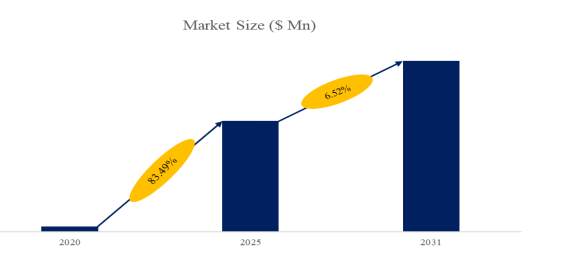
Above data is based on report from QYResearch: China PHEV Exhaust System Market Report 2025-2031 (published in 2025). If you need the latest data, plaese contact QYResearch
Figure. China PHEV Exhaust System Top 9 Players Ranking and Market Share (Ranking is based on the revenue of 2024, continually updated)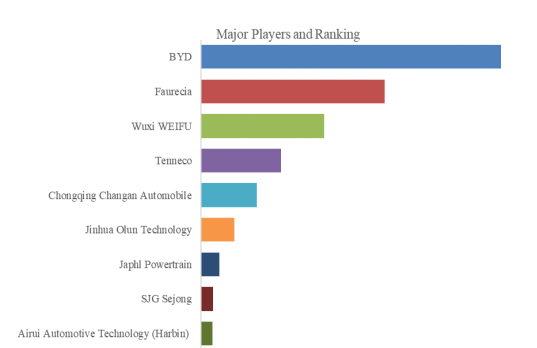
Above data is based on report from QYResearch: China PHEV Exhaust System Market Report 2025-2031 (published in 2025). If you need the latest data, plaese contact QYResearch.
According to QYResearch Top Players Research Center, the China key manufacturers of PHEV Exhaust System include BYD, Faurecia, Wuxi WEIFU, Tenneco, etc. In 2024, the China top four players had a share approximately 78.87% in terms of revenue, the China top three players had a share approximately 69.69% in terms of revenue.
Main Development Trends
Lightweighting and Material Innovation: To improve the fuel economy of plug-in hybrid electric vehicles (PHEVs), exhaust system materials are evolving towards lightweight, high-temperature resistant, and corrosion-resistant alloys and composite materials. Modular design also improves vehicle assembly efficiency and system compatibility. Intelligentization and System Integration: The exhaust system collaborates with the vehicle's energy management system and electric motor to achieve dynamic emission control and fuel economy optimization. Sensor and monitoring components are integrated to support online monitoring and data feedback of exhaust emissions. Environmental Protection and Sustainable Development: Exhaust system materials and manufacturing processes are developing towards low-carbon and recyclable directions to meet national green manufacturing and sustainable development requirements. Increased Industry Concentration: The Chinese domestic market is concentrating on leading manufacturers, with well-known companies holding a major market share.
Industry Chain Analysis
The upstream of the PHEV exhaust system mainly includes raw material supply and core components. Key raw materials include high-temperature corrosion-resistant stainless steel, lightweight aluminum alloys, precious metals for catalysts (platinum, palladium, rhodium), and high-performance heat insulation materials. System components typically include major parts such as the exhaust manifold, three-way catalytic converter, muffler, exhaust pipe, and tailpipes. These components are crucial to the exhaust system. The midstream involves the design, production, and modular assembly of the exhaust system. Companies responsible for modular integration must have vehicle compatibility capabilities and pass China VI and vehicle certifications, directly supplying downstream OEMs. The downstream mainly consists of vehicle manufacturers (OEMs) and the aftermarket. OEMs include BYD (with self-developed capabilities), Geely, FAW, and SAIC. The exhaust system needs to work in conjunction with the vehicle's powertrain, motor, and energy management system; therefore, OEMs have extremely high requirements for the supplier's technical capabilities and delivery reliability.
Industry Policies
The China VI b emission standard will be fully implemented nationwide from July 1, 2023, clarifying requirements for RDE testing and information disclosure; current regulations limit particulate matter counts to ≥23 nm (PN23), and academic research and policy discussions are currently assessing the feasibility and health benefits of PN10; simultaneously, the "dual-credit" (CAFC+NEV) mechanism will be further strengthened in 2024-2025, optimizing the credit weight and threshold for PHEVs, which will help increase their proportion in the product structure. This combination of policies makes cold start control, particulate matter, and vehicle durability rigid constraints for PHEV exhaust system development.
Challenges and Obstacles
Increased BEV penetration puts pressure on long-term installations; fluctuating prices of precious metals, stainless steel, and energy compress profit margins; low exhaust temperatures and frequent cold starts in PHEV operating conditions lead to difficulties in catalytic converter ignition and high verification costs; the coexistence of multiple regulatory domains (China VI b/RDE, export models meeting EU PN10 requirements, etc.) increases testing and certification complexity; more stringent packaging space and NVH targets, making exhaust layout and acoustic balance more difficult when range extenders and battery/heat pump systems coexist; price wars and bidding pressures, along with higher life-cycle cost (LCC) requirements, place higher demands on suppliers.
Industry Entry Barriers
Emissions Certification and Regulatory Barriers: The Chinese market has stringent emission certification requirements (vehicle and system-level testing) for PHEV models. Manufacturers must pass China VI emission certification and environmental testing, regardless of whether they meet stricter local emission standards (such as China VIb and China VIc in some cities). The certification process is lengthy and costly. OEM Cooperation Barriers: Some OEMs and their subsidiaries have independent R&D capabilities, requiring new entrants to build long-term partnerships to secure OEM orders. Furthermore, leading domestic and international manufacturers (Faurecia, Tenneco) have established long-term partnerships with mainstream OEMs, making it difficult for new entrants to quickly enter the core supply chain. Manufacturing and Process Barriers: The manufacturing processes for high-temperature corrosion-resistant exhaust system components, catalytic converters, and mufflers are complex, involving precision welding, modular assembly, and durability testing. High equipment investment and process experience are required, creating production barriers. Material Supply and Cost Control Barriers: Core materials such as high-temperature alloys and precious metal catalysts rely on stable supplies, making it difficult for new manufacturers to establish reliable supply chains in the short term. Established manufacturers achieve cost advantages through large-scale procurement and long-term partnerships.
About QYResearch
QYResearch specialises in providing segmented data analysis reports for businesses since 2007. Headquartered in Los Angeles, USA and Beijing, China. and has locations in 10 countries including the US, Japan, Korea, Germany, Switzerland, India, Portugal, Canada,Indonesia and China. QYResearch's website is available in 6 languages, providing China enterprises with barrier-free communication in English, Japanese, Korean, German and Chinese. QYResearch understands the value of consulting and accumulates innovative methods in a variety of high-quality market research surveys. With access to multiple paid databases, we have managed to prepare our own internal database which has been updated on a quarterly basis to ensure the most latest and updated data for our customers.Today, we are well known for our extensive service portfolio, professional research team and the best services to assist customers in making business decisions and solving problems in the business."Customer first" service tailored to the actual business needs of the customer to providea fast, high quality service. Committed to management consulting, IPO consulting, industrial chain and customized research, database and seminar services, QYResearch focuses on providing customers with in-depth research reports, professional analysis and market forecast.
QYResearch is a world-renowned large-scale consulting company. The industry covers various high-tech industry chain market segments, spanning the semiconductor industry chain (semiconductor equipment and parts, semiconductor materials, ICs, Foundry, packaging and testing, discrete devices, sensors, optoelectronic devices), photovoltaic industry chain (equipment, cells, modules, auxiliary material brackets, inverters, power station terminals), new energy automobile industry chain (batteries and materials, auto parts, batteries, motors, electronic control, automotive semiconductors, etc.), communication industry chain (communication system equipment, terminal equipment, electronic components, RF front-end, optical modules, 4G/5G/6G, broadband, IoT, digital economy, AI), advanced materials industry Chain (metal materials, polymer materials, ceramic materials, nano materials, etc.), machinery manufacturing industry chain (CNC machine tools, construction machinery, electrical machinery, 3C automation, industrial robots, lasers, industrial control, drones), food, beverages and pharmaceuticals, medical equipment, agriculture, etc.


Competition
Key players, new entrants,acquisitions, mergers and expansions,development trends and challenges.

Industry Analysis
Rawmaterial, application, product type, demand,supply,downstream, supply chain etc.

Market Size
Capacity, production, sales, revenue, price, cost etc.

Customized Information
We can offer customized survey and information to meet ourclient's need.