Gridded Ion Thrusters Industry Analysis : at a CAGR of 6.8% during the forecast period


Gridded Ion Thrusters Market Summary
According to the new market research report “Global Gridded Ion Thrusters Market Report 2024-2030”, published by QYResearch, the global Gridded Ion Thrusters market size is projected to reach USD 0.41 billion by 2030, at a CAGR of 6.8% during the forecast period.
Gridded ion thrusters are a type of electric propulsion system used primarily in spacecraft for high-efficiency, long-duration missions. These thrusters generate thrust by ionizing a propellant (typically xenon gas) and accelerating the resulting ions through a grid system using electrostatic forces.
Figure00001. Global Gridded Ion Thrusters Market Size (US$ Million), 2019-2030
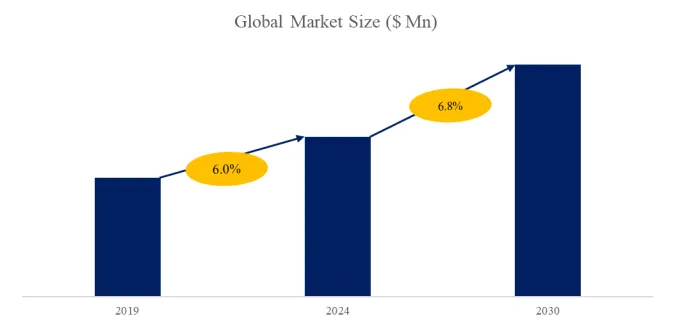
Above data is based on report from QYResearch: Global Gridded Ion Thrusters Market Report 2024-2030 (published in 2024). If you need the latest data, plaese contact QYResearch.
Figure00002. Global Gridded Ion Thrusters Top 8 Players Ranking and Market Share (Ranking is based on the revenue of 2023, continually updated)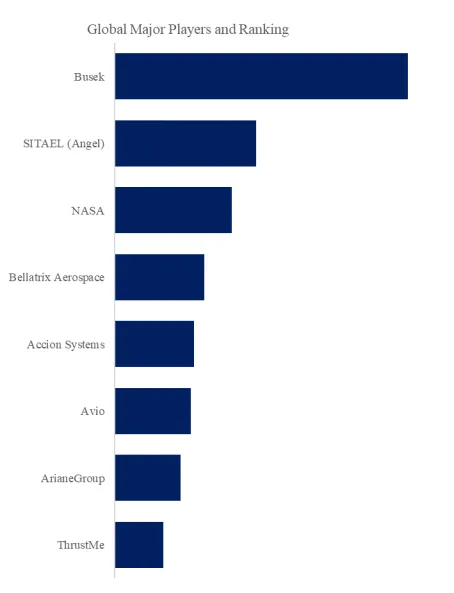
Above data is based on report from QYResearch: Global Gridded Ion Thrusters Market Report 2024-2030 (published in 2024). If you need the latest data, plaese contact QYResearch.
According to QYResearch Top Players Research Center, the global key manufacturers of Gridded Ion Thrusters include Busek, SITAEL (Angel), NASA, Bellatrix Aerospace, Accion Systems, etc. In 2023, the global top four players had a share approximately 69.0% in terms of revenue.
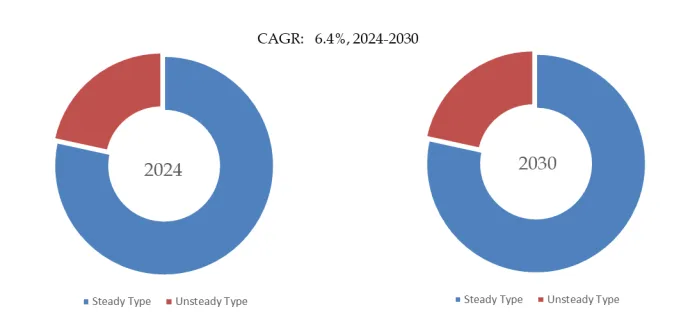
Figure00003. Gridded Ion Thrusters, Global Market Size, Split by Product Segment
Based on or includes research from QYResearch: Global Gridded Ion Thrusters Market Report 2024-2030.
In terms of product type, currently Steady Type is the largest segment, hold a share of 78.4%.
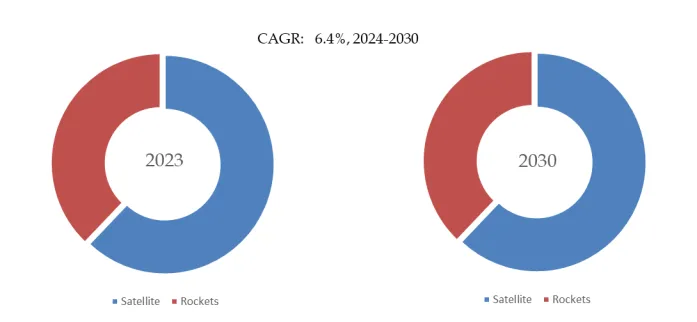
Figure00004. Gridded Ion Thrusters, Global Market Size, Split by Application Segment
Based on or includes research from QYResearch: Global Gridded Ion Thrusters Market Report 2024-2030.
In terms of product application, currently Satellite is the largest segment, hold a share of 62.1%.
Market Drivers:
Increasing Demand for Satellite Services: The growing demand for satellite-based communication services, including internet, television, and mobile communications, drives the need for more efficient and reliable satellite propulsion systems. The expansion of Earth observation satellites for climate monitoring, agriculture, disaster management, and surveillance increases the demand for long-lasting, efficient propulsion systems like gridded ion thrusters.
Deep Space Exploration: Missions to asteroids, comets, and other planets require propulsion systems with high efficiency and long operational lifespans. Gridded ion thrusters are well-suited for these missions due to their high specific impulse. Increasing investments and missions by space agencies such as NASA, ESA, and JAXA in deep space exploration contribute to the demand for advanced propulsion technologies.
Satellite Longevity and Cost Efficiency: Gridded ion thrusters enable satellites to operate for longer durations by using propellant more efficiently, thus extending their mission lifetimes and reducing the need for frequent replacements. The efficient use of propellant allows for lighter satellite designs, reducing launch costs and enabling more cost-effective missions.
Restraint:
High Initial Costs: The research, development, and manufacturing of gridded ion thrusters are expensive due to the advanced technology and materials required. High initial costs can deter investment from smaller companies or startups, limiting market growth.
Power Requirements: Gridded ion thrusters require significant electrical power to operate, often necessitating large solar arrays or alternative power sources, which can be a limiting factor for smaller satellites or missions with limited power budgets. Ensuring a reliable power supply in space can be challenging and adds complexity to spacecraft design.
Complexity and Integration: The integration of ion thrusters into spacecraft involves complex engineering and design challenges, including thermal management, power distribution, and control systems. The operation and maintenance of ion thrusters require specialized technical expertise, which may not be readily available in all organizations or regions.
Opportunity:
Advancements in Technology: Development of new materials with higher durability and resistance to ion erosion can extend the lifespan and reliability of gridded ion thrusters. Advancements in solar panel efficiency and alternative power sources, such as nuclear reactors, can provide the necessary power for ion thrusters, enabling more extensive and ambitious missions. Development of miniaturized ion thrusters for small satellites (CubeSats and NanoSats) can open up new markets and applications, providing efficient propulsion for smaller spacecraft.
Growing Commercial Space Industry: The deployment of large satellite constellations for global communications, internet services, and Earth observation creates a substantial market for efficient propulsion systems that can maintain and adjust orbits over long periods. The emerging space tourism industry requires reliable and efficient propulsion systems for spacecraft transporting passengers to and from low Earth orbit (LEO) and beyond.
Deep Space Exploration and Colonization: The push for missions to Mars, the Moon, and other celestial bodies creates demand for propulsion systems that can operate efficiently over long distances and durations. Future asteroid mining ventures will require advanced propulsion systems for both the journey to the asteroid and the return trip, providing opportunities for gridded ion thrusters.
The report provides a detailed analysis of the market size, growth potential, and key trends for each segment. Through detailed analysis,industry players can identify profit opportunities, develop strategies for specific customer segments, and allocate resources effectively.
Each chapter of the report provides detailed information for readers to further understand the Gridded Ion Thrusters market:
Chapter 1: Introduces the report scope of the Gridded Ion Thrusters report,global total market size (valve,volume and price). This chapter also provides the market dynamics,latest developments of the market, the driving factors and restrictive factors of the market, the challenges and risks faced by manufacturers in the industry, and the analysis of relevant policies in the industry. (2021-2032)
Chapter 2: Detailed analysis of Gridded Ion Thrusters manufacturers competitive landscape, price, sales and revenue market share,latest development plan, merger, and acquisition information, etc. (2021-2026)
Chapter 3: Provides the analysis of various Gridded Ion Thrusters market segments by Type covering the market size and development potential of each.

Global Gridded Ion Thrusters Market Outlook, In‑Depth Analysis & Forecast to 2032

Published Date: 2026-09-16

Pages: 147

Report ld: 7106778
Price:USD 4900.00
(Single User License)
Global Gridded Ion Thrusters Sales Market Report, Competitive Analysis and Regional Opportunities 2026-2032
Published Date: 2026-09-15
Pages: 128
Report ld: 7030113
Price:USD 4250.00
(Single User License)
Gridded Ion Thrusters- Global Market Share and Ranking, Overall Sales and Demand Forecast 2026-2032
Published Date: 2026-01-31
Pages: 103
Report ld: 5828632
Price:USD 3950.00
(Single User License)
Global Gridded Ion Thrusters Market Research Report 2026
Published Date: 2026-01-31
Pages: 131
Report ld: 5822491
Price:USD 2900.00
(Single User License)
Global Gridded Ion Thrusters Market Outlook, In‑Depth Analysis & Forecast to 2031
Published Date: 2025-10-03
Pages: 148
Report ld: 5092762
Price:USD 4900.00
(Single User License)
Global Gridded Ion Thrusters Sales Market Report, Competitive Analysis and Regional Opportunities 2025-2031
Published Date: 2025-02-13
Pages: 76
Report ld: 3753271
Price:USD 4250.00
(Single User License)


Competition
Key players, new entrants,acquisitions, mergers and expansions,development trends and challenges.

Industry Analysis
Rawmaterial, application, product type, demand,supply,downstream, supply chain etc.

Market Size
Capacity, production, sales, revenue, price, cost etc.

Customized Information
We can offer customized survey and information to meet ourclient's need.
