Supplier Contract Management Software Market Size to Expand to 3128 Million USD by 2026 – A Critical Growth Milestone


Supplier Contract Management Software Market Summary
1. Industry Chain Analysis
a)Supplier Contract Management (SCM) software is a tool that enterprises use to create, execute, monitor, and update contracts with their suppliers. It intersects digital applications in procurement management, supply chain management, and legal operations. The industry chain can be divided into upstream technology providers, midstream software vendors, downstream clients, and implementation service providers.
b)Upstream, the backbone of the industry chain is core technology and platform services. These technologies include cloud computing infrastructure, artificial intelligence (AI), natural language processing (NLP), big data analytics, blockchain or distributed ledger technology, electronic signature technology, and contract lifecycle management (CLM) engines. Upstream providers supply the technical foundation that allows midstream software to automate contract drafting, clause recognition, risk assessment, renewal reminders, compliance monitoring, and data visualization. Upstream also encompasses cloud service providers, electronic signature services, and security and compliance vendors, ensuring that contract management systems operate securely and reliably.
c)Midstream represents the core software development and provisioning segment. This includes SaaS (Software-as-a-Service), on-premises software, and hybrid platforms. Vendors provide comprehensive modules such as contract drafting, approval workflows, clause libraries, electronic signatures, renewal reminders, analytical dashboards, supplier performance tracking, and risk alerts. Many midstream vendors also offer value-added services, including AI-driven analysis, automated clause extraction, risk scoring, supplier performance evaluation, and customized contract management solutions. They are also responsible for software updates, maintenance, custom development, and integration with clients’ ERP, SRM, finance, and legal systems.
d)Downstream consists of system integrators and end users. Integrators assist enterprises in software deployment, functionality customization, data migration, employee training, and post-implementation support. End users include procurement, legal, supply chain, or supplier relationship management departments. Their key objectives are to streamline contract approvals, reduce risk, shorten contract cycles, improve supplier performance, and enhance supply chain transparency. Downstream also involves training, consulting, contract review, and data migration services, forming a complete value chain from software selection to deployment.
e)The value flow in the industry chain follows this path: upstream technology investment → midstream software delivering contract management capabilities → implementation services enhancing adoption and effectiveness → enterprise clients achieving process optimization, risk reduction, and supplier management improvements. Overall, the SCM software industry chain is complete, covering technology foundation, product development, service implementation, and practical application.
According to the new market research report “Global Supplier Contract Management Software Market Report 2024-2030”, published by QYResearch, the global Supplier Contract Management Software market size is projected to reach USD 4.84 billion by 2030, at a CAGR of 9.0% during the forecast period.
Figure. Global Supplier Contract Management Software Market Size (US$ Million), 2020-2031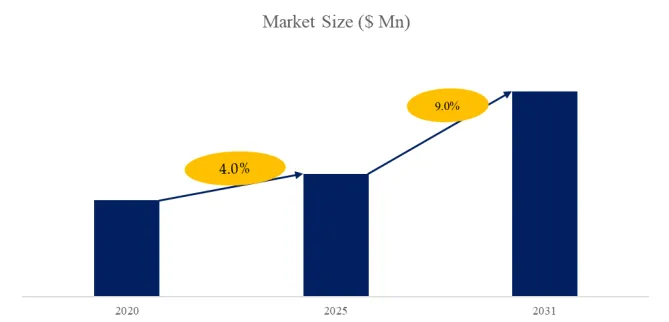
Above data is based on report from QYResearch: Global Supplier Contract Management Software Market Report 2024-2030 (published in 2024). If you need the latest data, plaese contact QYResearch.
Figure. Global Supplier Contract Management Software Top 8 Players Ranking and Market Share (Ranking is based on the revenue of 2024, continually updated)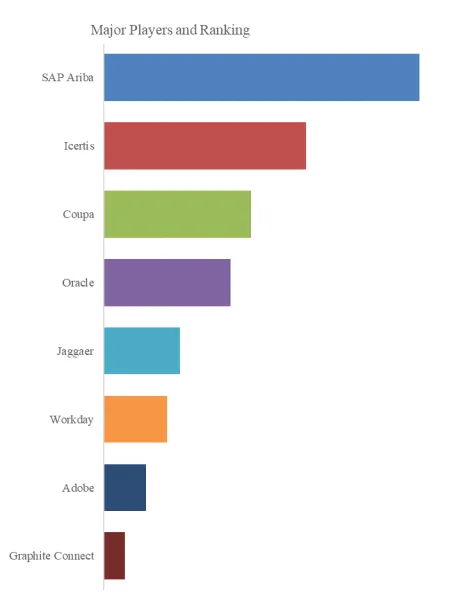
Above data is based on report from QYResearch: Global Supplier Contract Management Software Market Report 2024-2030 (published in 2024). If you need the latest data, plaese contact QYResearch.
According to QYResearch Top Players Research Center, the global key manufacturers of Supplier Contract Management Software include SAP Ariba, Icertis, etc. In 2024, the global top three players had a share approximately 60.0% in terms of revenue.
2. Development Trends
a)The future development of supplier contract management software exhibits several clear trends.
b)First, cloud deployment and SaaS models will continue to dominate. Enterprises increasingly demand flexible deployment, remote access, rapid iteration, and cost efficiency, driving cloud adoption. Cloud platforms enable real-time management of contracts across global supply chains and improve cross-regional collaboration.
c)Second, AI and automation will penetrate the contract management workflow. Contract management is evolving from simple storage and approval to intelligent lifecycle management. AI enables clause recognition, risk scoring, automated alerts, renewal forecasting, and supplier performance analysis, significantly enhancing efficiency and accuracy. Future software will likely integrate intelligent contracts, low-code platforms, mobile approvals, and real-time dashboards for further capability expansion.
d)Third, supplier contract management will integrate deeply with supply chain and supplier ecosystems. Globalized, multi-tier supply chains require enterprises to monitor supplier performance and risks comprehensively. SCM software will connect procurement, supplier relationship management, and contract lifecycle management into a closed-loop system—from supplier onboarding to contract signing, performance monitoring, renewal, or replacement. Compliance, sustainable sourcing, and ESG (Environmental, Social, Governance) considerations are becoming key functional areas.
e)Fourth, penetration in small and medium-sized enterprises (SMEs) will increase. With lower SaaS costs, modular products, and shorter deployment cycles, SMEs can now adopt SCM solutions, expanding market potential. Vendors are increasingly focusing on industry-specific solutions for manufacturing, retail, finance, and public sector applications.
f)Fifth, cross-system integration and open ecosystems will become standard. SCM software will no longer operate in isolation but integrate with procurement, supplier management, legal, and ERP systems. APIs and prebuilt connectors enable data sharing, workflow automation, and analytical insights. Open ecosystems also promote partnerships, such as integrating e-signatures, supplier management, and legal tech, creating a unified contract management environment.
3. Opportunities and Challenges
a)Opportunities and challenges coexist in the supplier contract management software sector.
b)Opportunities stem from digital transformation and the growing complexity of supply chains. AI and automation improve contract management efficiency, reduce human errors, and optimize supplier performance. Increased adoption by SMEs and emerging markets provides new growth avenues. Industry verticalization and customization demands allow vendors to create differentiated value. Cross-system integration and ecosystem expansion open up new revenue streams and value-added services.
c)Challenges include high implementation complexity and uncertain ROI. Enterprise contract data is often scattered and inconsistent, complicating deployment. Organizational change and user adoption pose difficulties; without proper alignment, software benefits are not fully realized. Security, privacy, and compliance requirements are stringent, especially in cross-border and cloud deployments. Market fragmentation means new entrants face disadvantages in technology, brand reputation, and ecosystem development. Rapid technological change requires continuous investment in R&D.
d)In summary, opportunities lie in growing market demand and technological empowerment, while challenges revolve around implementation, compliance, and competition. Vendors must balance technology, service, ecosystem, and user adoption to sustain long-term competitiveness.
4. Downstream Industry Analysis
a)SCM software applies to a wide range of industries, each with distinct requirements.
b)Manufacturing relies on contracts for raw materials, components, outsourced production, and logistics. SCM software centralizes contract terms, tracks critical dates, monitors supplier performance, and evaluates supplier metrics.
c)Retail and e-commerce contracts involve pricing, rebates, promotions, and delivery agreements. SCM software can centralize contracts, automatically track rebates and promotional clauses, monitor supplier delivery and return performance, and improve operational efficiency.
d)Public sector and government procurement emphasize compliance, transparency, and auditability. SCM software standardizes contract templates, provides audit trails, automatic alerts, and performance monitoring, ensuring regulatory and policy adherence.
e)Pharmaceuticals and life sciences require stringent compliance management for contracts including raw materials, logistics, and clinical trials. SCM software helps track contract terms, manage risks, and monitor supplier performance.
f)Automotive and logistics sectors face complex contracts for components, tooling, transportation, and service agreements. SCM software tracks performance, manages delay clauses, and evaluates supplier metrics, improving supply chain control.
g)Overall, common downstream needs are complex contract terms, rigorous compliance, and supplier performance monitoring. SCM software enhances efficiency, mitigates risks, and optimizes supplier management through centralization, automation, and intelligence.
5. Entry Barriers
Entry barriers in the SCM software market include technology, capital, market reputation, compliance, user adoption, and ecosystem development.
Technology barriers require long-term accumulation in contract management, AI/NLP, supply chain knowledge, and system integration. Capital barriers involve substantial investment in R&D, infrastructure, implementation services, and market development. Market and brand barriers arise from established enterprise software selection; new entrants face trust challenges. Compliance and security barriers demand that software meets diverse legal and data security requirements across regions. User adoption barriers stem from organizational change, process redesign, and employee training challenges. Ecosystem barriers involve deep integration with procurement, legal, ERP, and supplier management systems.
In short, while the SCM software market has enormous potential, entry requires strong capabilities in technology, capital, services, and ecosystem building, alongside effective customer adoption strategies.
About QYResearch
QYResearch founded in California, USA in 2007.It is a leading global market research and consulting company. With over 17 years’ experience and professional research team in various cities over the world QY Research focuses on management consulting, database and seminar services, IPO consulting (data is widely cited in prospectuses, annual reports and presentations), industry chain research and customized research to help our clients in providing non-linear revenue model and make them successful. We are globally recognized for our expansive portfolio of services, good corporate citizenship, and our strong commitment to sustainability. Up to now, we have cooperated with more than 60,000 clients across five continents. Let’s work closely with you and build a bold and better future.
QYResearch is a world-renowned large-scale consulting company. The industry covers various high-tech industry chain market segments, spanning the semiconductor industry chain (semiconductor equipment and parts, semiconductor materials, ICs, Foundry, packaging and testing, discrete devices, sensors, optoelectronic devices), photovoltaic industry chain (equipment, cells, modules, auxiliary material brackets, inverters, power station terminals), new energy automobile industry chain (batteries and materials, auto parts, batteries, motors, electronic control, automotive semiconductors, etc.), communication industry chain (communication system equipment, terminal equipment, electronic components, RF front-end, optical modules, 4G/5G/6G, broadband, IoT, digital economy, AI), advanced materials industry Chain (metal materials, polymer materials, ceramic materials, nano materials, etc.), machinery manufacturing industry chain (CNC machine tools, construction machinery, electrical machinery, 3C automation, industrial robots, lasers, industrial control, drones), food, beverages and pharmaceuticals, medical equipment, agriculture, etc.

Global Supplier Contract Management Software Market Outlook, In‑Depth Analysis & Forecast to 2032

Published Date: 2026-03-10

Pages: 120

Report ld: 6126884
Price:USD 4900.00
(Single User License)
Global Supplier Contract Management Software Sales Market Report, Competitive Analysis and Regional Opportunities 2026-2032
Published Date: 2026-03-10
Pages: 80
Report ld: 6123303
Price:USD 4250.00
(Single User License)
Global Supplier Contract Management Software Market Research Report 2026
Published Date: 2026-03-10
Pages: 107
Report ld: 6119726
Price:USD 2900.00
(Single User License)
Supplier Contract Management Software - Global Market Share and Ranking, Overall Sales and Demand Forecast 2026-2032
Published Date: 2026-03-10
Pages: 97
Report ld: 6116151
Price:USD 3950.00
(Single User License)
Global Supplier Contract Management Software Market Outlook, In‑Depth Analysis & Forecast to 2031
Published Date: 2025-10-31
Pages: 125
Report ld: 5319040
Price:USD 4900.00
(Single User License)
Supplier Contract Management Software - Global Market Share and Ranking, Overall Sales and Demand Forecast 2025-2031
Published Date: 2025-10-31
Pages: 84
Report ld: 5319039
Price:USD 3950.00
(Single User License)


Competition
Key players, new entrants,acquisitions, mergers and expansions,development trends and challenges.

Industry Analysis
Rawmaterial, application, product type, demand,supply,downstream, supply chain etc.

Market Size
Capacity, production, sales, revenue, price, cost etc.

Customized Information
We can offer customized survey and information to meet ourclient's need.
