Global Flake Silver Powder Market Forecast: 2953 Million USD by 2026 – Entering a New Growth Phase


Silver Powders and Flakes Market Summary
Ultrafine silver powders and flakes are high-purity metallic silver particles engineered in the sub-micron to a few-micron range (and sometimes with nanoscale primary structures) with tightly controlled particle-size distribution (PSD), shape, surface area, and surface treatment. Ultrafine powders are typically more isotropic (spherical/irregular) and optimized for dispersion and low-temperature sintering, while ultrafine flakes are thin, plate-like particles with high aspect ratio that form efficient conductive networks at lower loadings. In practice, these materials are specified not only by size (D10/D50/D90) but by morphology, tap density, impurity profile, and how they behave in inks/pastes (rheology, screen/jet compatibility, sintering window).
Market trends are currently shaped by a downstream mix dominated by photovoltaics (~70%) and electronics (~30%), so PV cycles and cell technology roadmaps exert the strongest influence. In PV, the trend is toward finer-line, higher-efficiency metallization: narrower fingers, better print definition, and lower resistive losses, which increases the value of ultrafine, narrow-PSD silver that prints cleanly and sinters reliably. At the same time, PV manufacturers continuously pursue silver-thrifting—reducing silver grams per watt via thinner deposits, improved paste utilization, and alternative metallization stacks—so suppliers compete on “performance per gram” rather than simply selling more silver. In electronics, trends emphasize miniaturization, higher frequency operation, and printing/additive processes (screen, inkjet, aerosol jet), which favor ultrafine particles that enable thin, defect-free conductive layers and stable conductivity under thermal cycling.
The main demand drivers start with PV scale: global additions in solar capacity, expansion of cell manufacturing, and upgrades to higher-efficiency architectures directly translate into large-volume demand for metallization materials. Ultrafine powders/flakes become more attractive as producers push for tighter line width control and lower contact resistance, because particle engineering can improve packing, connectivity, and sintering at production temperatures. Electronics adds a second driver set focused on functional materials: conductive inks/pastes for printed circuits and antennas, conductive adhesives for interconnects, and EMI shielding—applications where ultrafine silver improves print resolution, uniformity, and conductivity at lower film thickness.
Hindering factors are led by cost and substitution pressure. Silver price volatility impacts both procurement behavior and inventory strategy, and PV’s constant cost-down imperative accelerates “silver thrift” and partial substitution approaches (e.g., using less silver through design/process changes, or exploring lower-cost conductive fillers where reliability permits). In electronics, customers also weigh alternatives such as silver-coated copper and copper systems, though oxidation and long-term stability often limit substitution in harsh or high-reliability uses. Overall demand can therefore grow in watts or device count while silver consumption grows more slowly if thrift outpaces volume expansion.
There are also technical barriers that are specific to ultrafine materials. Higher surface area increases sensitivity to agglomeration, moisture, contamination, and binder interactions, which can cause nozzle clogging (for jetting), print defects, or inconsistent sintering—so qualification cycles are strict and process windows can be narrow. Fine powders require careful handling (dust control and consistent dispersion), and many users demand batch-to-batch reproducibility in PSD and morphology because small shifts can change viscosity, printability, and final conductivity. As a result, suppliers who can deliver tight QC, robust surface treatments, and application support for paste/ink formulation and printing processes are best positioned to win long-term, high-volume programs—especially in PV where approvals tend to lock in large demand once a recipe is qualified.
According to the new market research report “Global Silver Powders and Flakes Market Report 2025-2031”, published by QYResearch, the global Silver Powders and Flakes market size is projected to reach USD 28.62 billion by 2031, at a CAGR of 13.9% during the forecast period.
Figure. Global Silver Powders and Flakes Market Size (US$ Million), 2020-2031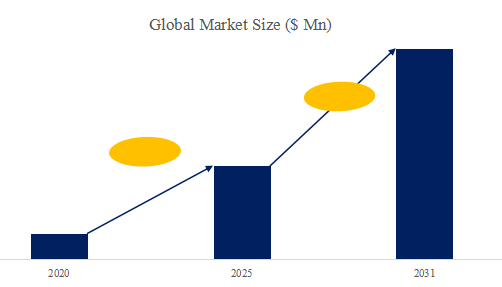
Above data is based on report from QYResearch: Global Silver Powders and Flakes Market Report 2025-2031 (published in 2024). If you need the latest data, plaese contact QYResearch.
Figure. Global Silver Powders and Flakes Top 10 Players Ranking and Market Share (Ranking is based on the revenue of 2024, continually updated)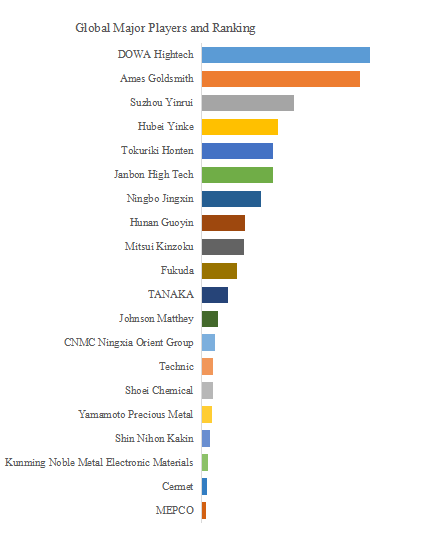
Above data is based on report from QYResearch: Global Silver Powders and Flakes Market Report 2025-2031 (published in 2024). If you need the latest data, plaese contact QYResearch.
According to QYResearch Top Players Research Center, the global key manufacturers of Silver Powders and Flakes include DOWA Hightech, Ames Goldsmith, Suzhou Yinrui, Hubei Yinke, Tokuriki Honten, Janbon High Tech, Ningbo Jingxin, Hunan Guoyin, Mitsui Kinzoku, Fukuda, etc. In 2024, the global top 10 players had a share approximately 66.0% in terms of revenue.
In terms of product type, currently Silver Powders is the largest segment, hold a share of 94.7%.
In terms of product application, currently Photovoltaic is the largest segment, hold a share of 68.4%.
About QYResearch
QYResearch founded in California, USA in 2007.It is a leading global market research and consulting company. With over 17 years’ experience and professional research team in various cities over the world QY Research focuses on management consulting, database and seminar services, IPO consulting (data is widely cited in prospectuses, annual reports and presentations), industry chain research and customized research to help our clients in providing non-linear revenue model and make them successful. We are globally recognized for our expansive portfolio of services, good corporate citizenship, and our strong commitment to sustainability. Up to now, we have cooperated with more than 60,000 clients across five continents. Let’s work closely with you and build a bold and better future.
QYResearch is a world-renowned large-scale consulting company. The industry covers various high-tech industry chain market segments, spanning the semiconductor industry chain (semiconductor equipment and parts, semiconductor materials, ICs, Foundry, packaging and testing, discrete devices, sensors, optoelectronic devices), photovoltaic industry chain (equipment, cells, modules, auxiliary material brackets, inverters, power station terminals), new energy automobile industry chain (batteries and materials, auto parts, batteries, motors, electronic control, automotive semiconductors, etc.), communication industry chain (communication system equipment, terminal equipment, electronic components, RF front-end, optical modules, 4G/5G/6G, broadband, IoT, digital economy, AI), advanced materials industry Chain (metal materials, polymer materials, ceramic materials, nano materials, etc.), machinery manufacturing industry chain (CNC machine tools, construction machinery, electrical machinery, 3C automation, industrial robots, lasers, industrial control, drones), food, beverages and pharmaceuticals, medical equipment, agriculture, etc.

Flake Silver Powder- Global Market Share and Ranking, Overall Sales and Demand Forecast 2026-2032

Published Date: 2026-05-22

Pages: 145

Report ld: 6713203
Price:USD 3950.00
(Single User License)
Global Flake Silver Powder Market Outlook, In‑Depth Analysis & Forecast to 2032
Published Date: 2026-05-22
Pages: 163
Report ld: 6713202
Price:USD 4900.00
(Single User License)
Global Flake Silver Powder Sales Market Report, Competitive Analysis and Regional Opportunities 2026-2032
Published Date: 2026-05-22
Pages: 145
Report ld: 6713201
Price:USD 4250.00
(Single User License)
Global Flake Silver Powder Market Research Report 2026
Published Date: 2026-05-22
Pages: 143
Report ld: 6482644
Price:USD 2900.00
(Single User License)
Global Flake Silver Powder Sales Market Report, Competitive Analysis and Regional Opportunities 2025-2031
Published Date: 2025-11-10
Pages: 110
Report ld: 5439920
Price:USD 4250.00
(Single User License)
Global Flake Silver Powder Market Outlook, In‑Depth Analysis & Forecast to 2031
Published Date: 2025-11-08
Pages: 180
Report ld: 5382542
Price:USD 4900.00
(Single User License)


Competition
Key players, new entrants,acquisitions, mergers and expansions,development trends and challenges.

Industry Analysis
Rawmaterial, application, product type, demand,supply,downstream, supply chain etc.

Market Size
Capacity, production, sales, revenue, price, cost etc.

Customized Information
We can offer customized survey and information to meet ourclient's need.
