Ultra-thin Metal Foil Market Report 2026: Data-Driven Insights on Trends and Opportunities


Ultra-thin Metal Foil Market Summary
Ultra-thin metal foil refers to a class of metallic materials that are manufactured into extremely thin sheets, typically with a thickness ranging from several micrometers down to sub-micron levels, while maintaining high mechanical strength, consistent surface properties, and functional performance. These foils are commonly produced from aluminum, copper, nickel, stainless steel, and specialty alloys depending on the application’s conductivity, reflectivity, corrosion resistance, thermal stability, and decorative requirements. The manufacturing process usually involves precision rolling, vapor deposition, electrochemical techniques, and multi-step surface treatments to achieve uniform thickness and high-dimensional accuracy. Ultra-thin foils play a critical enabling role in a wide range of industries such as consumer electronics, semiconductors, battery manufacturing, packaging, automotive components, aerospace thermal insulation, medical sensors, and decorative printing.
In electronics, they serve as carrier foils, EMI shielding layers, electrode substrates, and heat dissipation components, where ultra-thinness directly correlates with device miniaturization and performance enhancement. In the lithium battery sector, ultra-thin copper and aluminum foils are essential for improving energy density and reducing total cell weight. In high-value packaging and decorative applications, such as hot-stamping and premium labels, ultra-thin metallic foils provide aesthetic and functional qualities including barrier protection, gloss, and brand differentiation. The ability to engineer precise microstructures, surface roughness, and customized metallurgical properties makes ultra-thin foils a foundational material in next-generation technologies such as flexible electronics, wearable devices, 5G communication modules, and advanced optical components. With global trends toward lightweighting, sustainability, and high energy efficiency, the demand for high-performance ultra-thin metal foil continues to grow, encouraging investment in advanced manufacturing lines, automation, and R&D for ultra-precision metallurgical control.
Ultra-thin Metal Foil Picture
Market Size
The global Ultra-thin Metal Foil market size is estimated to reach US$ 5230.4 million by 2025 and is anticipated to reach US$ 8208.2 million by 2031, witnessing a CAGR of 7.80% during the forecast period 2025-2031.
Figure. Global Ultra-thin Metal Foil Market Size (US$ Million), 2020-2031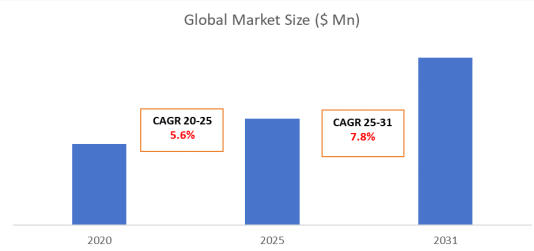
Above data is based on report from QYResearch: Global Ultra-thin Metal Foil Market Report 2025-2031 (published in 2025). If you need the latest data, please contact QYResearch.
Figure. Global Ultra-thin Metal Foil Top 11 Players Ranking and Market Share (Ranking is based on the revenue of 2025, continually updated)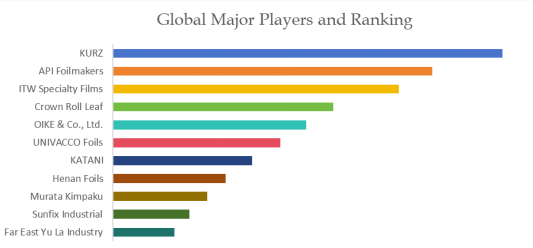
Above data is based on report from QYResearch: Global Ultra-thin Metal Foil Market Report 2025-2031 (published in 2025). If you need the latest data, plaese contact QYResearch.
Industry Chain
The industry chain for ultra-thin metal foil spans a highly specialized sequence of upstream raw materials, midstream processing technologies, and downstream applications, forming an integrated ecosystem that supports electronics, packaging, energy, and precision manufacturing sectors.
Upstream inputs primarily include refined metals such as aluminum ingots, copper cathodes, nickel plates, stainless-steel alloys, and various specialty metals sourced from globally distributed mining and smelting companies. These materials must meet extremely tight purity specifications—often above 99.99% for electronics-grade copper or aluminum—to ensure electrical, mechanical, and corrosion-resistance performance.
Midstream processing constitutes the technological core of the industry and relies on high-precision rolling mills, electro-forming systems, vacuum deposition equipment, calendering machines, slitting systems, and surface treatment lines. The ability to produce foils with micro-scale thickness uniformity depends heavily on sophisticated tension control, thermal management, and online measurement technologies. Surface treatment processes such as coating, embossing, metallization, and lamination add functional layers for improved adhesion, reflectivity, or electronic compatibility. Downstream applications are diverse and include lithium-ion battery electrodes, flexible printed circuits, RFID antennas, semiconductor packaging, EMI shielding, decorative hot-stamping foils, high-barrier packaging films, aerospace insulation, and medical diagnostic components. The value chain is also influenced by equipment manufacturers, chemical suppliers (adhesives, release coatings, protective lacquers), automation system integrators, and quality-testing providers. The global industry structure is moderately concentrated, with leading suppliers in Germany, Japan, the United States, and China dominating high-end segments such as ultra-thin copper foil, functional aluminum foil, and advanced decorative foils. Market competitiveness is shaped by materials purity, precision rolling capability, yield rate, R&D strength, and ability to meet emerging requirements for sustainability, recyclability, and ultra-high consistency. As end-use industries push toward miniaturization, higher energy density, and aesthetic differentiation, the entire industry chain continues to evolve toward automation, tighter tolerances, and increased integration between material suppliers and downstream manufacturers.
Industry Trends
The ultra-thin metal foil industry is undergoing rapid transformation driven by global technological shifts, with several major trends shaping product evolution, manufacturing capability, and competitive dynamics. One significant trend is the accelerated use of ultra-thin copper and aluminum foils in lithium-ion batteries for electric vehicles and energy storage systems, where foil thickness reduction directly improves energy density and overall system efficiency. Battery manufacturers are transitioning from 10–12 μm foils to 4–6 μm foils, pushing suppliers to upgrade precision rolling and surface treatment technologies. Another major trend is the expansion of flexible electronics, including foldable smartphones, wearable sensors, flexible displays, and IoT devices, which rely on ultra-thin foils as conductive substrates, shielding layers, and thermal management materials. The industry is also witnessing rapid growth in high-end packaging and hot-stamping foils, especially in cosmetics, premium beverages, tobacco, and luxury products that require high visual quality, complex embossing, and environmental compliance. Sustainability has become a defining trend as regulators and brand owners emphasize recyclable materials, solvent-free coatings, bio-based release layers, and low-energy manufacturing processes. Additionally, the semiconductor and 5G communication sectors are increasing demand for precision foils used in IC substrates, RF modules, EMI shielding, and advanced heat-spreading applications where micro-scale uniformity and high purity are essential. Digitalization and intelligent manufacturing are reshaping production lines through AI-assisted process control, real-time defect detection, and predictive maintenance systems, allowing improved yield rates and reduced waste. Regionally, China is rapidly scaling production capacity and technology capability, challenging long-time leaders from Japan and Germany in both decorative and electronic foil segments. Meanwhile, Europe and the U.S. continue to focus on high-performance applications such as aerospace, medical devices, and semiconductor packaging. The competitive landscape is shifting toward consolidation, vertical integration, and long-term supply partnerships with downstream customers. Overall, industry trends point toward thinner materials, higher precision, stronger environmental requirements, and deeper integration across the value chain.
Market Drivers
The growth of the ultra-thin metal foil market is primarily driven by intensified demand from high-technology industries that require lightweight, conductive, and precisely engineered materials. One of the strongest drivers is the global expansion of electric vehicles and energy storage systems, where ultra-thin copper and aluminum foils serve as essential current collectors for lithium-ion batteries. As manufacturers strive to enhance energy density, improve charging efficiency, and reduce weight, ultra-thin foil consumption continues to rise significantly. Another major market driver is the proliferation of consumer electronics and the trend toward device miniaturization, which require thin conductive layers, EMI shielding foils, and thermally conductive materials for smartphones, tablets, wearables, and foldable devices. Semiconductor packaging and 5G communication systems also stimulate demand for ultra-thin foils used in RF modules, heat spreaders, and micro-interconnect structures.
In addition, the luxury packaging and printing industries rely on metallic hot-stamping foils to deliver high-quality decorative effects, brand differentiation, anti-counterfeit features, and premium visual appeal, especially in personal care, cosmetics, and specialty beverages. The expansion of flexible electronics, transparent conductive films, and printed sensors continues to open new applications where ultra-thin foils offer superior mechanical flexibility and electrical performance. Global sustainability initiatives further drive adoption by encouraging recyclable metallic materials over plastic-based alternatives, pushing brands and manufacturers to adopt environmentally friendly foil products. Advances in precision rolling, vacuum deposition, and digital quality control technologies enable higher yields and lower production costs, making ultra-thin foils more accessible across industries. Regional industrialization, especially in China and Southeast Asia, boosts production capacity and downstream demand. Additionally, the push for thermal management solutions in high-power electronics and EV components increases the use of ultra-thin metallic heat-spreading foils. Overall, the convergence of electrification, digitalization, premium packaging demands, sustainability goals, and advanced manufacturing technologies forms a powerful set of market drivers that will continue to elevate global demand for ultra-thin metal foils.
Market Challenges
structure, technological development, and supply stability. One of the most significant challenges is the extreme difficulty of producing foils thinner than 6 μm with consistent mechanical strength, surface smoothness, and defect-free quality. Achieving such precision requires advanced rolling mills, tight thermal control, high-purity raw materials, and sophisticated quality inspection systems, all of which significantly increase capital investment and operating costs. Yield losses during ultra-thin production remain high, particularly for battery-grade and semiconductor-grade foils, which demand exceptionally low pinhole rates and surface uniformity. Another major challenge is raw material price volatility, especially for copper, aluminum, and nickel, which can disrupt production planning and compress profit margins. Geopolitical tensions, energy costs, and supply disruptions further contribute to instability across the upstream metal supply chain. Environmental regulations present additional pressure, requiring manufacturers to reduce emissions, adopt solvent-free coatings, manage waste streams, and improve recycling processes, often necessitating costly process upgrades. In the decorative foil sector, competition from digital printing technologies and sustainable packaging alternatives challenges traditional foil usage, forcing manufacturers to innovate or shift toward eco-friendly metallization solutions. For electronics and semiconductor applications, customers require extremely strict quality certifications, long validation cycles, and stable supply continuity, raising the barrier for new entrants. Logistics complexity and global supply chain fragmentation—especially between Asia, Europe, and North America—create challenges for on-time product delivery and cost control. Intellectual property protection is another concern, as high-end foil production techniques involve proprietary rolling, coating, and metallization technologies that may be vulnerable to imitation. Talent shortages in metallurgical engineering, process chemistry, and precision manufacturing also limit rapid industry expansion. Ultimately, while downstream demand is strong, the industry must overcome technological, economic, environmental, and logistical challenges to maintain competitiveness and meet evolving customer expectations.
Industry Barriers
The ultra-thin metal foil industry exhibits high entry barriers due to its demanding technological requirements, capital intensity, intellectual property protections, and stringent quality standards. First, the technological barrier is extremely high: producing foils in the 4–10 μm range requires ultra-precision rolling mills, multi-stage annealing systems, vacuum deposition lines, and advanced surface-treatment technologies. The engineering know-how accumulated by leading firms over decades—such as tension control algorithms, lubricants formulation, coating chemistry, and yield optimization—is difficult for new entrants to replicate. Capital barriers are equally significant, as a modern ultra-thin foil production line can require hundreds of millions of dollars in equipment investment, not including clean-room facilities, quality inspection systems, and environmental treatment units. Intellectual property barriers play a major role because top companies protect their proprietary metallurgical recipes, rolling technologies, embossing patterns, and coating formulations through patents and trade secrets, limiting competitive catch-up. The industry also faces strict quality and certification requirements, especially for electronics, semiconductors, and lithium-ion battery applications, where customers demand long-term reliability, extremely low defect rates, and highly consistent surface characteristics. Achieving these standards requires years of process validation and stable large-scale production, creating a barrier for smaller or new producers. Supply chain integration is another barrier, as manufacturers must coordinate with upstream suppliers to secure high-purity metals and with downstream clients to customize foil properties, requiring strong long-term partnerships. Environmental compliance regulations—such as solvent emissions limits, recycling requirements, and energy-efficiency standards—further increase operational complexity and cost. Branding and reputation also matter: downstream battery makers, consumer electronics brands, and luxury-packaging companies prefer established suppliers with proven reliability, making market entry even more difficult for newcomers. Regional concentration of expertise, especially in Japan and Germany for decorative foils and in China for battery foils, creates additional structural barriers for late entrants. As a result, the ultra-thin metal foil industry is characterized by high barriers across technology, capital, knowledge, certification, supply chain integration, and regulatory compliance, reinforcing the dominance of a small group of global leaders.
About QYResearch
https://www.qyresearch.com
QYResearch founded in California, USA in 2007.It is a leading global market research and consulting company. With over 17 years’ experience and professional research team in various cities over the world QY Research focuses on management consulting, database and seminar services, IPO consulting, industry chain research and customized research to help our clients in providing non-linear revenue model and make them successful. We are globally recognized for our expansive portfolio of services, good corporate citizenship, and our strong commitment to sustainability. Up to now, we have cooperated with more than 60,000 clients across five continents. Let’s work closely with you and build a bold and better future.
QYResearch is a world-renowned large-scale consulting company. The industry covers various high-tech industry chain market segments, spanning the semiconductor industry chain (semiconductor equipment and parts, semiconductor materials, ICs, Foundry, packaging and testing, discrete devices, sensors, optoelectronic devices), photovoltaic industry chain (equipment, cells, modules, auxiliary material brackets, inverters, power station terminals), new energy automobile industry chain (batteries and materials, auto parts, batteries, motors, electronic control, automotive semiconductors, etc.), communication industry chain (communication system equipment, terminal equipment, electronic components, RF front-end, optical modules, 4G/5G/6G, broadband, IoT, digital economy, AI), advanced materials industry Chain (metal materials, polymer materials, ceramic materials, nano materials, etc.), machinery manufacturing industry chain (CNC machine tools, construction machinery, electrical machinery, 3C automation, industrial robots, lasers, industrial control, drones), food, beverages and pharmaceuticals, medical equipment, agriculture, etc.

Global Ultra-thin Metal Foil Market Outlook, In‑Depth Analysis & Forecast to 2032

Published Date: 2026-03-26

Pages: 152

Report ld: 6315302
Price:USD 4900.00
(Single User License)
Global Ultra-thin Metal Foil Sales Market Report, Competitive Analysis and Regional Opportunities 2026-2032
Published Date: 2026-03-26
Pages: 92
Report ld: 6309438
Price:USD 4250.00
(Single User License)
Ultra-thin Metal Foil- Global Market Share and Ranking, Overall Sales and Demand Forecast 2026-2032
Published Date: 2026-01-09
Pages: 118
Report ld: 5627188
Price:USD 3950.00
(Single User License)
Global Ultra-thin Metal Foil Market Research Report 2026
Published Date: 2026-01-09
Pages: 140
Report ld: 5621209
Price:USD 2900.00
(Single User License)
Global Ultra-thin Metal Foil Market Outlook, In‑Depth Analysis & Forecast to 2031
Published Date: 2025-12-06
Pages: 163
Report ld: 4860770
Price:USD 4900.00
(Single User License)
Global Ultra-thin Metal Foil Sales Market Report, Competitive Analysis and Regional Opportunities 2025-2031
Published Date: 2025-12-06
Pages: 92
Report ld: 4523192
Price:USD 4250.00
(Single User License)


Competition
Key players, new entrants,acquisitions, mergers and expansions,development trends and challenges.

Industry Analysis
Rawmaterial, application, product type, demand,supply,downstream, supply chain etc.

Market Size
Capacity, production, sales, revenue, price, cost etc.

Customized Information
We can offer customized survey and information to meet ourclient's need.
