Welding Machines for Reinforcement Mesh Market Set to Hit 115 Million USD by 2026 – What Industry Leaders Are Doing Differently


Welding Machines for Reinforcement Mesh Market Summary
The welding machines for reinforcement mesh are automated process that integrates rebar straightening, cutting, routing, welding, and finished product output. Precision control ensures product quality and improves production efficiency. The line, consisting of a rebar feeding mechanism, straightening device, welding machine, and shearing unit, enables continuous processing from raw material to finished mesh. Customizable rebar meshes with varying diameters, spacing, and shapes are available. Widely used in building floor slabs, road reinforcement, and precast concrete components, it combines high efficiency with high precision.
According to the new market research report “Global Welding Machines for Reinforcement Mesh Market Report 2024-2030”, published by QYResearch, the global Welding Machines for Reinforcement Mesh market size is projected to reach USD 0.12 billion by 2030, at a CAGR of 0.2% during the forecast period.
Figure. Global Welding Machines for Reinforcement Mesh Market Size (US$ Million), 2020-2031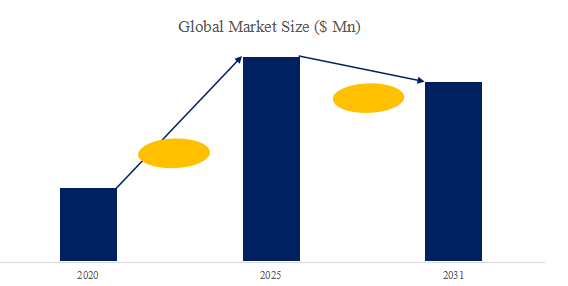
Above data is based on report from QYResearch: Global Welding Machines for Reinforcement Mesh Market Report 2024-2030 (published in 2024). If you need the latest data, plaese contact QYResearch.
Figure. Global Welding Machines for Reinforcement Mesh Top 14 Players Ranking and Market Share (Ranking is based on the revenue of 2024, continually updated)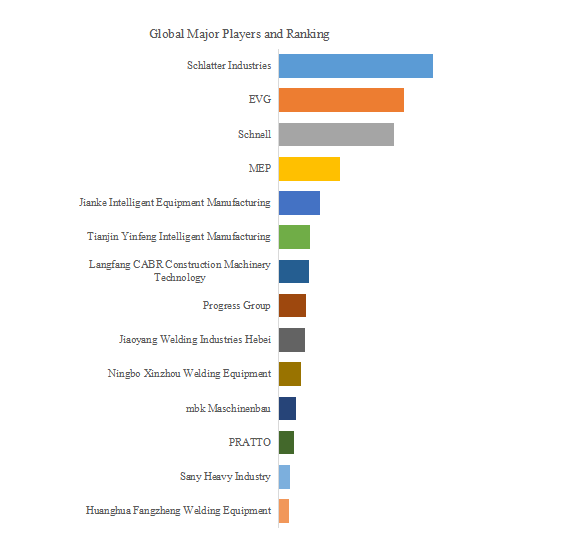
Above data is based on report from QYResearch: Global Welding Machines for Reinforcement Mesh Market Report 2024-2030 (published in 2024). If you need the latest data, plaese contact QYResearch.
According to QYResearch Top Players Research Center, the global key manufacturers of Welding Machines for Reinforcement Mesh include Schlatter Industries, EVG, Schnell, MEP, Jianke Intelligent Equipment Manufacturing, etc. In 2023, the global top five players had a share approximately 67.0% in terms of revenue.
Key Drivers:
Policy and Regulatory Driven: The implementation of mandatory standards (such as increased seismic resistance ratings) and environmental regulations (carbon emission limits) in the construction industry are forcing construction companies to adopt standardized welded mesh products, indirectly promoting the procurement of production equipment.
Infrastructure Investment Driven: Governments' financial investment in infrastructure construction, particularly in areas such as transportation (high-speed rail and highways), municipal engineering (integrated pipeline corridors and sponge cities), and water conservancy facilities, is directly driving demand for standardized welded steel mesh, providing a stable market space for production line equipment.
Prefabricated Building Popularization: The global penetration rate of prefabricated buildings is increasing. The large-scale production of precast concrete components (such as composite floor slabs and wall panels) requires high-precision welded mesh, driving the upgrading of production lines towards automation and flexibility.
Rising Labor Costs Driven: With rising labor costs, the traditional manual rebar processing model needs to be fundamentally changed. The trend is to replace manual and semi-automatic processing with automated, specialized, and standardized processing methods. Key Risk Factors:
Raw Material Price Fluctuation Risk: Steel, as a major raw material, is significantly affected by the market conditions of bulk commodities such as iron ore and coke. Sharp price fluctuations will directly impact equipment manufacturing costs and profit margins. Furthermore, price fluctuations in non-ferrous metals such as copper and aluminum can lead to cost instability in electrical components.
Technology Upgrade Risk: Compared with traditional rebar processing machinery, CNC rebar processing equipment features automation and intelligent features, requiring higher technical requirements. Consequently, the industry demands continuous product technology upgrades. If companies fail to promptly research new technologies and develop new products based on market changes, and rationally adjust their R&D direction and product mix, they risk technology and product replacement.
Intensified Market Competition Risk: With the growing demand for CNC rebar processing equipment, the industry will inevitably attract more domestic and international competitors. This will inevitably impact domestic companies, leading to intensified competition and increased competitive pressure.
Industrial Policy Risk: If countries adjust their industrial policies, governments may significantly reduce infrastructure investment and slow down investment progress, impacting companies' production and operations.
About QYResearch
QYResearch founded in California, USA in 2007.It is a leading global market research and consulting company. With over 17 years’ experience and professional research team in various cities over the world QY Research focuses on management consulting, database and seminar services, IPO consulting, industry chain research and customized research to help our clients in providing non-linear revenue model and make them successful. We are globally recognized for our expansive portfolio of services, good corporate citizenship, and our strong commitment to sustainability. Up to now, we have cooperated with more than 60,000 clients across five continents. Let’s work closely with you and build a bold and better future.
QYResearch is a world-renowned large-scale consulting company. The industry covers various high-tech industry chain market segments, spanning the semiconductor industry chain (semiconductor equipment and parts, semiconductor materials, ICs, Foundry, packaging and testing, discrete devices, sensors, optoelectronic devices), photovoltaic industry chain (equipment, cells, modules, auxiliary material brackets, inverters, power station terminals), new energy automobile industry chain (batteries and materials, auto parts, batteries, motors, electronic control, automotive semiconductors, etc.), communication industry chain (communication system equipment, terminal equipment, electronic components, RF front-end, optical modules, 4G/5G/6G, broadband, IoT, digital economy, AI), advanced materials industry Chain (metal materials, polymer materials, ceramic materials, nano materials, etc.), machinery manufacturing industry chain (CNC machine tools, construction machinery, electrical machinery, 3C automation, industrial robots, lasers, industrial control, drones), food, beverages and pharmaceuticals, medical equipment, agriculture, etc.

Global Welding Machines for Reinforcement Mesh Sales Market Report, Competitive Analysis and Regional Opportunities 2026-2032

Published Date: 2026-03-09

Pages: 98

Report ld: 6064903
Price:USD 4250.00
(Single User License)
Welding Machines for Reinforcement Mesh- Global Market Share and Ranking, Overall Sales and Demand Forecast 2026-2032
Published Date: 2026-03-06
Pages: 112
Report ld: 6028759
Price:USD 3950.00
(Single User License)
Global Welding Machines for Reinforcement Mesh Market Research Report 2026
Published Date: 2026-03-06
Pages: 144
Report ld: 6024081
Price:USD 2900.00
(Single User License)
Global Welding Machines for Reinforcement Mesh Market Outlook, In‑Depth Analysis & Forecast to 2031
Published Date: 2025-11-02
Pages: 165
Report ld: 4943585
Price:USD 4900.00
(Single User License)
Global Welding Machines for Reinforcement Mesh Sales Market Report, Competitive Analysis and Regional Opportunities 2025-2031
Published Date: 2025-11-02
Pages: 91
Report ld: 4943584
Price:USD 4250.00
(Single User License)
Welding Machines for Reinforcement Mesh - Global Market Share and Ranking, Overall Sales and Demand Forecast 2025-2031
Published Date: 2025-09-08
Pages: 129
Report ld: 4943586
Price:USD 3950.00
(Single User License)


Competition
Key players, new entrants,acquisitions, mergers and expansions,development trends and challenges.

Industry Analysis
Rawmaterial, application, product type, demand,supply,downstream, supply chain etc.

Market Size
Capacity, production, sales, revenue, price, cost etc.

Customized Information
We can offer customized survey and information to meet ourclient's need.
