Aortic Perfusion Cannula Market Set to Hit 883 Million USD by 2026 – What Industry Leaders Are Doing Differently


Aortic Perfusion Cannula Market Summary
According to the latest report "Global Aortic Perfusion Cannula Market Report 2025-2031" by the QYResearch research team, the global xxx market size is expected to reach US$ 1.206 billion in 2031, with a compound annual growth rate (CAGR) of 6.3% in the next few years.
An aortic perfusion cannula is a critical medical device used to establish a connection between the aorta and the cardiopulmonary bypass machine during extracorporeal circulation surgery, primarily for maintaining systemic blood circulation during cardiac arrest. This cannula delivers oxygenated blood to the patient's entire body through an aortic insertion port, ensuring tissue oxygenation and metabolic needs. Its structure typically consists of a tube, connector, guide tip, and fixture. The tube is typically made of medical-grade silicone, polyurethane, or polytetrafluoroethylene, offering excellent flexibility, torsion resistance, and biocompatibility. Depending on the intended use and surgical procedure, it can be categorized into adult and pediatric types, with side ports, and with pressure monitoring. This product requires high flow capacity and a low-resistance design to minimize blood damage and ensure stable perfusion pressure. It is an essential core component in cardiac surgery and extracorporeal circulation equipment systems.
The aortic perfusion cannula market is a typical technology-driven specialty medical market, whose development is highly dependent on the global growth in cardiac surgery volume and technological advancements. Key drivers of this market growth include the increase in cardiac surgery procedures driven by an aging global population and the widespread adoption of minimally invasive cardiac surgery techniques. These factors, in turn, place higher demands on cannula morphology, flexibility, and fluid dynamics, driving product upgrades. However, the market also faces significant challenges, including continued pricing pressure from global payers and the potential substitution of traditional open-chest surgery by advancements in interventional cardiac technologies (such as transcatheter aortic valve replacement (TAVR)). Looking ahead, the aortic perfusion cannula market will continue to evolve towards safer and more efficient procedures. Innovative products that minimize blood trauma, optimize hemodynamics, and enhance intraoperative visualization (such as improved ultrasound imaging) will be key to maintaining a competitive advantage.
The main drivers of aortic perfusion cannula growth are as follows:
1. The increasing prevalence of cardiovascular disease drives increased surgical demand.
The core driver of the aortic perfusion cannula market is the continued rise in the global incidence of cardiovascular disease. The number of surgeries such as heart bypass surgery, valve replacement, and congenital heart disease repair is increasing year by year. Especially against the backdrop of a rapidly aging population, the number of patients with atherosclerosis, coronary artery disease, and heart failure is rising. According to the World Health Organization, cardiovascular disease causes approximately 18 million deaths worldwide each year, accounting for one-third of all deaths. This trend directly drives sustained demand for key consumables such as extracorporeal circulation devices and aortic perfusion cannulas.
II. Advances in Medical Technology Promote Product Upgrades
With the advancement of minimally invasive and precision surgical techniques, aortic perfusion cannulas are gradually evolving towards high performance, small outer diameters, low resistance, and monitorability. Minimally invasive cardiac surgery and robotic-assisted surgery require cannulas with increased flexibility and precision, as well as high-pressure resistance and anti-twisting properties. In recent years, smart cannulas with integrated pressure monitoring and temperature control sensors have entered clinical use, significantly improving safety and perfusion efficiency, further expanding the market. 3. Increased medical investment in emerging markets is driving demand.
In Asia Pacific, Latin America, and the Middle East, medical infrastructure development and government health spending have grown significantly. In particular, countries like China, India, and Brazil are accelerating the localization and upgrading of cardiovascular surgical equipment. The rapid growth of cardiac centers in these regions has created a new market for aortic perfusion cannula manufacturers. Furthermore, increased medical insurance coverage and policies to localize the production of mid- to high-end consumables are also driving market penetration for this product.
4. High-performance materials and standardized regulations are driving industry upgrades.
Aortic perfusion cannulas place extremely high demands on material safety and biocompatibility. As national drug regulatory agencies in Europe, the United States, and China tighten medical device standards, manufacturers are adopting high-end materials such as medical-grade silicone, polyurethane (PU), and polytetrafluoroethylene (PTFE) to meet stringent clinical performance verification requirements. This not only improves product stability and lifespan but also drives the global market toward high-tech, high-value-added technologies, creating a long-term growth engine centered on material innovation and quality standards.
Figure. Global Aortic Perfusion Cannula Top 5 Players Ranking and Market Share (Ranking is based on the revenue of 2024, continually updated)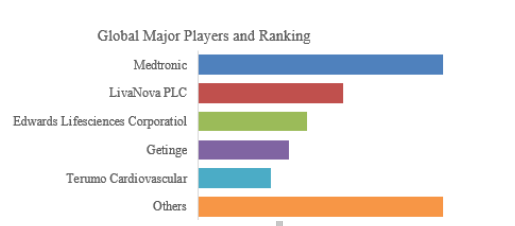
Above data is based on report from QYResearch: Global Aortic Perfusion Cannula Market Report 2025-2031 (published in 2025). If you need the latest data, plaese contact QYResearch.
This report profiles key players of Aortic Perfusion Cannula such as MERA、Cardinal Health、EUROSETS、ANDOCOR、Medtronic、LivaNova PLC、Edwards Lifesciences Corporation、Getinge、Nipro、SurgiKart India、Terumo Cardiovascular、Braile Biomédica、Weigao Group、VITALCOR. In 2023, the global top five Aortic Perfusion Cannula players account for 73% of market share in terms of revenue.
Aortic perfusion cannulas, critical, high-value consumables used in cardiac surgery, have an industry chain that combines the common characteristics of the medical device industry with its own high standards and regulatory oversight.
Upstream Industry Chain: Raw Materials, Components, and Core Technologies
The upstream industry chain for aortic perfusion cannulas primarily includes various materials, core components, and related equipment used in manufacturing and R&D. The technical level and quality of this process directly determine the performance and safety of the final product. Medical-grade polymer materials, such as medical PVC, silicone rubber, polyurethane, and TPE, are central to the manufacture of the cannula itself. These materials must exhibit excellent biocompatibility, flexibility, collapse resistance, and adequate blood compatibility. To ensure clear positioning during surgery, cannulas typically require radiopaque markers, which rely on contrast materials such as tungsten wire, barium sulfate, or bismuth compounds. Furthermore, auxiliary components such as suture rings and connectors on the cannulas require specialized silicone or plastics. The upstream manufacturing process also includes the design and manufacture of precision injection molding machines, extruders, and molds. The precision of the mold directly impacts the smoothness of the cannula wall and the flow path design. Finally, sterilization equipment (such as ethylene oxide autoclaves and electron beam irradiation equipment) and packaging materials (such as blister packs and Tyvek lids) are also essential steps before a product leaves the factory.
Midstream of the Industry Chain: R&D, Production, Quality Control, and Regulatory Registration
The midstream is the core value chain, encompassing product design and development, production and manufacturing, quality control, and market access. Companies conduct fluid dynamics design based on surgeons' clinical needs, optimizing the cannula's opening shape and wall curvature to maximize blood flow efficiency and minimize shear forces, thereby reducing blood trauma and the risk of hemolysis. Prototyping and rigorous testing (including fluid dynamics bench testing and animal experiments) are key steps before product finalization. The production process, conducted in a highly cleanroom, involves multiple processes, including precision extrusion, assembly, vulcanization, and coating, placing extremely high demands on process stability and the production environment. Quality control is implemented throughout the entire process, from incoming raw material inspection to online monitoring on the production line and comprehensive performance testing of finished products (such as flow testing, pressure resistance, and biocompatibility testing), all in compliance with Good Manufacturing Practices for Medical Devices. Furthermore, companies must invest significant resources in regulatory registration, such as submitting a 510(k) application to the US FDA or applying for a medical device registration certificate from the National Medical Products Administration in China. This process is time-consuming and costly. Brand building, marketing, and establishing partnerships with hospitals and distributors are also core business activities for midstream companies.
Downstream of the Industry Chain: Distribution, Clinical Applications, and the End Market
The downstream of the industry chain connects end users, primarily including distribution logistics, medical institutions, and payers. Products reach hospitals primarily through two channels: first, through large medical device distributors (such as Cardinal Health, although it also produces its own brand), which have extensive logistics networks responsible for distributing products to hospitals at all levels; second, through direct academic promotion and sales to large cardiac centers through companies' in-house marketing teams. The end application scenario is the primary operating room in a hospital's cardiovascular surgery department, where cardiac surgeons and perfusionists are users. Physician usage habits, brand trust, and immediate product availability are crucial. Therefore, providing comprehensive technical training, on-site clinical support, and emergency stocking services are key to maintaining customer relationships. Ultimately, product costs are covered by national medical insurance, commercial insurance, or out-of-pocket payments. In different countries, medical insurance catalogs and payment policies have a decisive influence on product pricing and penetration. End-market demand is directly driven by an aging population, the incidence of cardiovascular disease, and the increasing popularity of minimally invasive cardiac surgery.
Industry Chain Support System: Regulation, R&D, and Standards
The operation of the entire industry chain relies on a strong support system. Government regulatory agencies (such as the US FDA, China's National Medical Products Administration, and Europe's European Medical Equipment Manufacturers) serve as the "gatekeepers" of the industry chain, establishing regulations and standards that ensure product safety and effectiveness. Academic research institutions and universities are the source of cutting-edge technology and basic research, fueling industry innovation. Industry standards organizations (such as ISO and ASTM International) are responsible for developing unified international standards for medical device materials, performance testing, and sterilization validation, ensuring product compatibility and consistent quality. This support system, closely interacting with upstream, midstream, and downstream sectors, together forms a solid foundation for the continued development and iteration of the aortic perfusion cannula industry. The competitive landscape of the aortic perfusion cannula market primarily exhibits the following characteristics:
International Market Landscape:
Globally, the aortic perfusion cannula market is dominated by a handful of large medical device groups, resulting in a competitive landscape characterized by high technological barriers and significant product concentration. European and American companies dominate the high-end market. Leveraging robust R&D systems and extensive clinical data accumulation, some companies offer high-end aortic cannulas with pressure monitoring, flow optimization, and improved biocompatibility, which are widely used in major cardiac surgery hospitals and heart centers. Furthermore, some Japanese and European manufacturers, leveraging their strengths in supporting equipment for extracorporeal circulation, maintain a stable market share in the Asia-Pacific and European markets.
Domestic Market Landscape:
The competitive landscape in the Chinese market is relatively fragmented, with local companies making significant progress in the mid-range and domestic substitution sectors. By incorporating imported materials and improving perfusion tubing design, these companies have achieved a balance between cost control and product performance, gradually gaining entry into the centralized procurement catalogs of tertiary hospitals and cardiac surgery departments. Furthermore, domestic companies are actively pursuing overseas certifications (such as FDA and CE) to enhance their international market recognition. Overall, the global aortic perfusion cannula market exhibits a dual structure characterized by international high-end monopoly and regional expansion of domestic substitution. The high-end market is dominated by European, American, and Japanese companies, with technological barriers concentrated in areas such as perfusion fluid dynamics design, material purity control, and blood compatibility verification. Meanwhile, Chinese, Indian, and South Korean companies are rapidly emerging in the mid- and low-end markets, leveraging pricing advantages and policy support to accelerate domestic substitution. Future competition will shift from single-product performance to systematic extracorporeal circulation solutions and monitorable smart cannulae, leading to further market concentration.
About QYResearch
QYResearch founded in California, USA in 2007.It is a leading global market research and consulting company. With over 17 years’ experience and professional research team in various cities over the world QY Research focuses on management consulting, database and seminar services, IPO consulting (data is widely cited in prospectuses, annual reports and presentations), industry chain research and customized research to help our clients in providing non-linear revenue model and make them successful. We are globally recognized for our expansive portfolio of services, good corporate citizenship, and our strong commitment to sustainability. Up to now, we have cooperated with more than 60,000 clients across five continents. Let’s work closely with you and build a bold and better future.
QYResearch is a world-renowned large-scale consulting company. The industry covers various high-tech industry chain market segments, spanning the semiconductor industry chain (semiconductor equipment and parts, semiconductor materials, ICs, Foundry, packaging and testing, discrete devices, sensors, optoelectronic devices), photovoltaic industry chain (equipment, cells, modules, auxiliary material brackets, inverters, power station terminals), new energy automobile industry chain (batteries and materials, auto parts, batteries, motors, electronic control, automotive semiconductors, etc.), communication industry chain (communication system equipment, terminal equipment, electronic components, RF front-end, optical modules, 4G/5G/6G, broadband, IoT, digital economy, AI), advanced materials industry Chain (metal materials, polymer materials, ceramic materials, nano materials, etc.), machinery manufacturing industry chain (CNC machine tools, construction machinery, electrical machinery, 3C automation, industrial robots, lasers, industrial control, drones), food, beverages and pharmaceuticals, medical equipment, agriculture, etc.

Global Aortic Perfusion Cannula Market Outlook, In‑Depth Analysis & Forecast to 2032

Published Date: 2026-03-11

Pages: 156

Report ld: 6190724
Price:USD 4900.00
(Single User License)
Global Aortic Perfusion Cannula Sales Market Report, Competitive Analysis and Regional Opportunities 2026-2032
Published Date: 2026-03-11
Pages: 98
Report ld: 6185319
Price:USD 4250.00
(Single User License)
Global Aortic Perfusion Cannula Market Research Report 2026
Published Date: 2026-03-11
Pages: 119
Report ld: 6179934
Price:USD 2900.00
(Single User License)
Aortic Perfusion Cannula- Global Market Share and Ranking, Overall Sales and Demand Forecast 2026-2032
Published Date: 2026-03-08
Pages: 114
Report ld: 6043591
Price:USD 3950.00
(Single User License)
Global Aortic Perfusion Cannula Market Outlook, In‑Depth Analysis & Forecast to 2031
Published Date: 2025-10-29
Pages: 156
Report ld: 5290160
Price:USD 4900.00
(Single User License)
Aortic Perfusion Cannula - Global Market Share and Ranking, Overall Sales and Demand Forecast 2025-2031
Published Date: 2025-10-29
Pages: 122
Report ld: 4348600
Price:USD 3950.00
(Single User License)


Competition
Key players, new entrants,acquisitions, mergers and expansions,development trends and challenges.

Industry Analysis
Rawmaterial, application, product type, demand,supply,downstream, supply chain etc.

Market Size
Capacity, production, sales, revenue, price, cost etc.

Customized Information
We can offer customized survey and information to meet ourclient's need.
