Discrete Device Lead Frame Market Insight Report: Understanding the Needs and Trends in the Industry 2026-2032


Discrete Device Lead Frame Market Summary
Discrete Device Lead Frame is a key structural and conductive component for discrete semiconductor devices (e.g., diodes, transistors, thyristors), typically made of copper alloy (predominantly C194, C192) or iron-nickel alloy through precision stamping or etching processes. It features pin structures for electrical connection and chip pads for die attachment, serving to fix the chip, conduct electrical signals between the chip and external circuits, and dissipate heat generated during device operation. With strict requirements for dimensional accuracy (tolerance ≤±0.01mm), conductivity, and thermal conductivity, it is a core packaging material that directly affects the performance and reliability of discrete devices.
Figure. Discrete Device Lead Frame Product Picture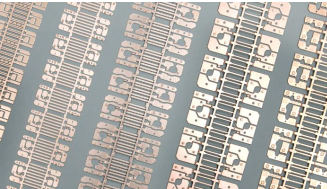
Based on or includes research from QYResearch: Global Discrete Device Lead Frame Market Report 2025-2031.
The current market of Discrete Device Lead Frame is driven by strong demand from high-growth end-use sectors such as new energy vehicles, photovoltaic energy storage, 5G communications, and industrial control, maintaining a steady growth momentum. Copper alloy lead frames dominate the market due to their excellent conductivity, thermal conductivity, and cost-effectiveness, while iron-nickel alloy products hold stable demand in high-end power devices and special application scenarios. Regionally, the Asia-Pacific region, especially China, has become a core market and production hub, with domestic enterprises accelerating import substitution by improving technological capabilities. Internationally, the market is characterized by a differentiated competitive pattern, with leading foreign manufacturers holding advantages in high-end segments and local players gaining traction in cost-sensitive markets.
According to the new market research report "Global Discrete Device Lead Frame Market Report 2025-2031", published by QYResearch, the global market for Discrete Device Lead Frame was valued at US$ 931.20 million in the year 2024 and is projected to reach a revised size of US$ 1,252 million by 2031, growing at a CAGR of 4.3 % during the forecast period 2025-2031.
Figure. Global Discrete Device Lead Frame Market Size (US$ Million), 2025 VS 2031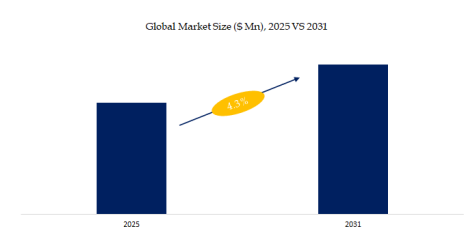
Above data is based on report from QYResearch: Global Discrete Device Lead Frame Market Report 2025-2031 (published in 2024). If you need the latest data, plaese contact QYResearch.
Figure. Global Discrete Device Lead Frame Top 21 Players Ranking and Market Share (Ranking is based on the revenue of 2024, continually updated)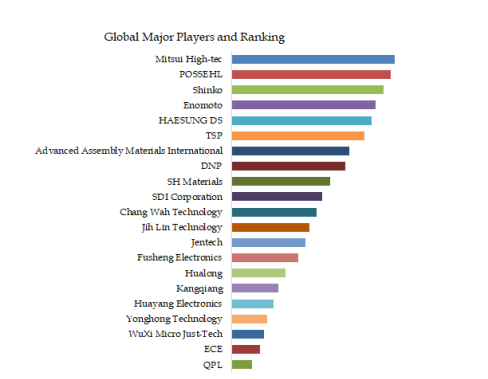
Above data is based on report from QYResearch: Global Discrete Device Lead Frame Market Report 2025-2031 (published in 2024). If you need the latest data, plaese contact QYResearch.
Table 1. Discrete Device Lead Frame Industry Chain Analysis
Item Description
Upstream Raw Materials Metal materials: Copper (main raw material), copper-based alloys (copper-iron-phosphorus, copper-nickel-silicon), precious metals (gold, silver), iron-nickel alloys, and stainless steel for special scenarios.
Auxiliary materials: Nickel, silver, gold plating solutions for surface treatment, as well as plastic and ceramic materials for auxiliary components.
Production Equipment Precision rolling mills, stamping dies, photolithography/etching equipment, electroplating lines, and AI inspection systems.
Suppliers International giants: Proterial Metals, Mitsubishi Materials, Wieland (control high-end alloy materials).
Domestic suppliers: Ningbo Jintian Copper, Chalco Luoyang Copper (focus on mid-low-end copper alloy production).
Midstream Core Manufacturing Processes Stamping (for high-volume, simple-structured products like DIP/SOP) and photochemical etching (for high-precision, fine-pitch products ≤0.05mm pitch).
Key links: Strip precision rolling, die/photomask making, forming, electroplating, and quality inspection.
Product Types By material: Copper-based alloy frames (mainstream), iron-nickel alloy frames (for hermetic packaging).
By application: IC lead frames (75% market share), LED lead frames (25% market share), and high-end frames for SiC/GaN devices.
Leading Enterprises Mitsui High-tecm, Possehl Electronics, Shinko, Enomoto, HAESUNG DS, etc.
Downstream Direct Customers Semiconductor packaging and testing enterprises: ASE Technology, Changjiang Electronics Technology, Powertech Technology.
Automotive electronic module manufacturers (customized frame demand for on-vehicle devices).
Application Fields Consumer electronics: Smartphones, computers, wearables (account for over 50% of market share).
Automotive electronics: New energy vehicle inverters, ADAS chips (25% market share).
Industrial control/medical equipment: Industrial sensors, medical devices (15% market share).
Emerging fields: 5G communication, IoT, AI chips, Mini/Micro LED displays.
Demand Drivers Penetration of new energy vehicles, commercialization of 5G/IoT, advancement of advanced packaging technologies, and domestic substitution policies in the semiconductor industry.
Source: Secondary Sources, Press Releases, Expert Interviews and QYResearch, 2025
Table 2. Discrete Device Lead Frame Industry Development Trends
Development Trends Description
1 High-precision and high-density evolution Driven by the miniaturization and high integration of semiconductor devices, lead frames are evolving toward ultra-fine pitch and complex structures. Leading enterprises have developed products with a pitch of 50 microns or smaller, and advanced structures such as LQFP micro-pitch and DROFN double-row designs are increasingly adopted to meet the packaging needs of high-performance chips. This trend requires breakthroughs in precision stamping, etching, and electroplating technologies.
2 Material Innovation and Environmental Adaptation The industry is shifting from traditional materials to high-performance copper alloys and silver alloys to enhance conductivity and heat dissipation. Meanwhile, global environmental regulations are promoting the widespread use of lead-free and halogen-free materials, with environmentally friendly coatings such as nickel-palladium-gold plating becoming mainstream. The application of third-generation semiconductor materials (SiC, GaN) also drives the development of lead frames with higher temperature resistance and reliability.
3 Intelligent Manufacturing and Industrial Integration Automation production lines equipped with AI visual inspection and MES systems are widely used to improve yield stability and production efficiency. The industry is also accelerating upstream and downstream integration, with leading enterprises deepening cooperation with raw material suppliers and downstream packaging plants to build a closed-loop industrial chain, reducing supply chain risks and enhancing collaborative innovation capabilities.
Source: Secondary Sources, Press Releases, Expert Interviews and QYResearch, 2025
Table 3. Discrete Device Lead Frame Industry Development Opportunities
Development Opportunities Description
1 Boom in Downstream Application Fields The rapid development of new energy vehicles (inverters, motor controllers), 5G communication equipment, and IoT devices has driven a surge in demand for discrete semiconductors, directly boosting the lead frame market. The new energy vehicle sector alone is expected to increase its lead frame demand share from 27% in 2024 to 35% by 2030, becoming a core growth driver.
2 Policy Support for Domestic Substitution National policies such as the "14th Five-Year Plan for Integrated Circuit Industry Development" prioritize the localization of key semiconductor materials, providing financial subsidies and R&D support for lead frame enterprises. The current low domestic substitution rate (especially in high-end products) creates huge market space for domestic enterprises to replace imported products.
3 Global Industrial Chain Restructuring The adjustment of the global semiconductor supply chain has led to the transfer of production capacity to Asia-Pacific regions. Chinese enterprises are expanding overseas markets through mergers, acquisitions, and joint ventures, while "Belt and Road" along countries offer emerging market opportunities for cost-effective lead frame products, driving international business growth.
Source: Secondary Sources, Press Releases, Expert Interviews and QYResearch, 2025
Table 4. Discrete Device Lead Frame Obstacles/Challenges to Industry Development
Obstacles/Challenges Description
1 High Technical and Process Barriers The industry faces strict requirements for mold precision (micron-level), complex chemical treatment processes (dozens of procedures including etching and electroplating), and advanced structure development. Mass production of high-density products requires long-term process accumulation, and it is difficult for new entrants to achieve breakthroughs in a short time.
2 Weak Industrial Foundation and Supply Chain Dependence Domestic enterprises rely heavily on imports for high-purity copper alloys, etching fluids, and high-end stamping equipment. The lack of professional engineering talents and insufficient R&D investment also restrict technological progress. The imperfect supporting system makes it difficult for domestic enterprises to achieve stable mass production and compete with international giants.
3 High Customer Certification Thresholds Downstream packaging plants and automotive/industrial customers have strict supplier audits, requiring a verification cycle of 6 months to 2 years (including sample testing, small-batch trial production, and long-term reliability verification). Once customers lock in suppliers, they rarely switch, forming high market entry barriers and making it difficult for new enterprises to gain market share.
Source: Secondary Sources, Press Releases, Expert Interviews and QYResearch, 2025
Looking ahead, the market will continue to grow amid the expansion of downstream semiconductor industries and the deepening of domestic substitution trends. Technologically, the miniaturization and high-density development of discrete device packaging will drive lead frames toward smaller line widths, thinner thicknesses, and higher precision, requiring advancements in material purity and processing technologies. The widespread adoption of third-generation semiconductors will promote the development of new composite materials to meet higher thermal conductivity and reliability requirements. Additionally, stricter environmental regulations will push the industry toward greener manufacturing processes, while industrial chain integration and technological upgrading will become key factors for enterprises to enhance competitiveness, shifting the industry focus from scale expansion to high-quality development.
About QYResearch
QYResearch founded in California, USA in 2007.It is a leading global market research and consulting company. With over 17 years’ experience and professional research team in various cities over the world QY Research focuses on management consulting, database and seminar services, IPO consulting, industry chain research and customized research to help our clients in providing non-linear revenue model and make them successful. We are globally recognized for our expansive portfolio of services, good corporate citizenship, and our strong commitment to sustainability. Up to now, we have cooperated with more than 60,000 clients across five continents. Let’s work closely with you and build a bold and better future.
QYResearch is a world-renowned large-scale consulting company. The industry covers various high-tech industry chain market segments, spanning the semiconductor industry chain (semiconductor equipment and parts, semiconductor materials, ICs, Foundry, packaging and testing, discrete devices, sensors, optoelectronic devices), photovoltaic industry chain (equipment, cells, modules, auxiliary material brackets, inverters, power station terminals), new energy automobile industry chain (batteries and materials, auto parts, batteries, motors, electronic control, automotive semiconductors, etc.), communication industry chain (communication system equipment, terminal equipment, electronic components, RF front-end, optical modules, 4G/5G/6G, broadband, IoT, digital economy, AI), advanced materials industry Chain (metal materials, polymer materials, ceramic materials, nano materials, etc.), machinery manufacturing industry chain (CNC machine tools, construction machinery, electrical machinery, 3C automation, industrial robots, lasers, industrial control, drones), food, beverages and pharmaceuticals, medical equipment, agriculture, etc.

Global Discrete Device Lead Frame Market Outlook, In‑Depth Analysis & Forecast to 2032

Published Date: 2026-03-11

Pages: 182

Report ld: 6159645
Price:USD 4900.00
(Single User License)
Global Discrete Device Lead Frame Sales Market Report, Competitive Analysis and Regional Opportunities 2026-2032
Published Date: 2026-03-11
Pages: 115
Report ld: 6153952
Price:USD 4250.00
(Single User License)
Global Discrete Device Lead Frame Market Research Report 2026
Published Date: 2026-03-11
Pages: 161
Report ld: 6148304
Price:USD 2900.00
(Single User License)
Discrete Device Lead Frame- Global Market Share and Ranking, Overall Sales and Demand Forecast 2026-2032
Published Date: 2026-03-08
Pages: 163
Report ld: 6033555
Price:USD 3950.00
(Single User License)
Global Discrete Device Lead Frame Market Outlook, In‑Depth Analysis & Forecast to 2031
Published Date: 2025-11-26
Pages: 188
Report ld: 5490156
Price:USD 4900.00
(Single User License)
Discrete Device Lead Frame - Global Market Share and Ranking, Overall Sales and Demand Forecast 2025-2031
Published Date: 2025-11-26
Pages: 161
Report ld: 3604492
Price:USD 3950.00
(Single User License)


Competition
Key players, new entrants,acquisitions, mergers and expansions,development trends and challenges.

Industry Analysis
Rawmaterial, application, product type, demand,supply,downstream, supply chain etc.

Market Size
Capacity, production, sales, revenue, price, cost etc.

Customized Information
We can offer customized survey and information to meet ourclient's need.
