Microfiber Cleaning Cloths Industry Research:is projected to grow from USD 752 million to USD 867 million by 2031


Microfiber Cleaning Cloths Market Summary
Microfiber cleaning cloths are a fabulous option for cleaning. The textile that combines poly-amide and polyester provides a very effective surface that actually grabs dust, grime and contaminants off the surface, plus they are very strong, soft and durable at the same time, and people can wash those hundreds of times and they maintain their properties.
According to the new market research report "Global Microfiber Cleaning Cloths Market Report 2025-2031", published by QYResearch, the global Microfiber Cleaning Cloths market size is projected to grow from USD 752 million in 2024 to USD 867 million by 2031, at a CAGR of 2.4% during the forecast period.
Figure00001. Global Microfiber Cleaning Cloths Market Size (US$ Million), 2020-2031
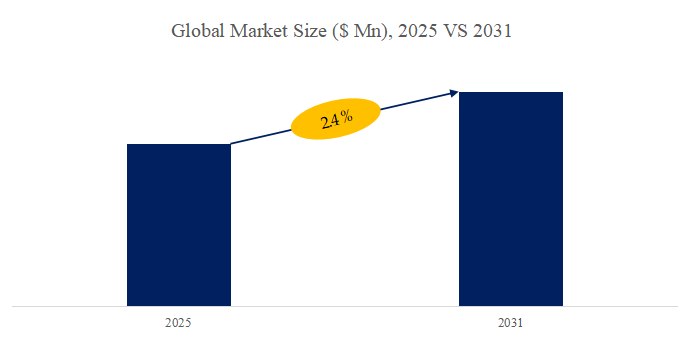
Above data is based on report from QYResearch: Global Microfiber Cleaning Cloths Market Report 2025-2031 (published in 2024). If you need the latest data, plaese contact QYResearch.
Figure00002. Global Microfiber Cleaning Cloths Top 20 Players Ranking and Market Share (Ranking is based on the revenue of 2024, continually updated)
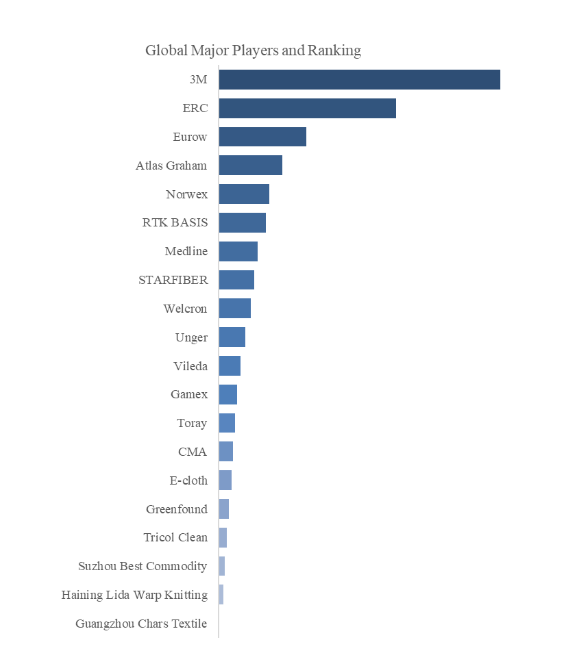
Above data is based on report from QYResearch: Global Microfiber Cleaning Cloths Market Report 2025-2031 (published in 2024). If you need the latest data, plaese contact QYResearch.
Table 1. Microfiber Cleaning Cloths Industry Chain Analysis
|
|
Item |
Description |
|
Upstream |
Core Raw Materials |
Polymer Chips: The main raw materials are polyester (PET) and polyamide (PA, nylon) chips, which can also be blended with recycled polyester and wood pulp. |
|
Microfiber Filaments: The main types are split - type and sea - island type. |
||
|
Auxiliaries |
Water - based polyurethane adhesives and surfactants are the main ones. Driven by environmental protection policies, the application rate of water-based polyurethane adhesives is constantly increasing. |
|
|
Midstream |
Spinning |
Melt - blown, sea - island composite spinning Fineness: 0.3-0.5 denier Energy accounts for 25% of the cost |
|
Weaving |
Warp - knitting, weft - knitting, non – woven Weight: 200-400 g/m², density |
|
|
Finishing |
Splitting, hydrophilic treatment, antibacterial coating Water absorption: ≥7 times its own weight, lint - free Chemicals account for 8-12% |
|
|
Cutting & Packaging |
Laser cutting, ultrasonic edge sealing |
|
|
Downstream |
Distribution Channels |
B2C: E - commerce (38% of U.S. sales in 2024), supermarkets, and brand stores, with key brands including Scotch - Brite, E - Cloth, and Norwex. B2B: Professional channels such as cleaning service companies, hospitals, and auto detailing shops, with a penetration rate of only 28% and great growth potential. OEM/ODM: Mainly serving global retailers and brands like Decathlon and Tesla. |
|
Key Application Scenarios |
Household Lint - free, scratch - free, easy to clean Replacement demand and e - commerce penetration Commercial (Hotel/Catering) Streak - free, reusable (≥50 washes) Hygiene standards and cost - saving needs Industrial (Semiconductor/Automotive) Low ion residue, high cleanliness (Class 100 cleanroom) New energy and electronics manufacturing Medical Antibacterial, traceable Infection control and hospital accreditation |
Source: Secondary Sources, Press Releases, Expert Interviews and QYResearch, 2025
Table 2. Microfiber Cleaning Cloths Industry Policy Analysis
|
|
Policy |
Description |
|
1 |
EU |
REACH, Single - Use Plastics Directive (SUPD), Microfiber Filtration Mandate REACH tightens chemical residue standards by 30%; SUPD restricts disposable alternatives; France mandates microfiber - capturing filters in new washing machines from 2025. Enterprises need to invest in low - shedding technology and recycled materials, with compliance costs increasing by 10-15%. |
|
2 |
China |
14th Five - Year Plan for Textiles, Dual - Carbon Target, Circular Economy Development Plan Supports advanced textile materials; requires 100% clean production transformation by 2025 and 60% biodegradation rate of microfiber products by 2027. It forces low - end capacity to withdraw and encourages R & D of recycled fibers. |
|
3 |
US |
Supply Chain Security Act, Tax Credits for Recycled Materials Promotes localized production (Mexico, Eastern Europe); provides tax incentives for recycled PET/PA. It boosts the transfer of medium - end capacity and increases the R & D investment in recycled materials by 22% year - on - year. |
|
4 |
Southeast Asia (Vietnam, Thailand) |
FTA Preferential Policies, Labor & Environmental Compliance Vietnam's export tax rate to the EU is 0-5% (compared with 12-15% for China); requires factories to meet ISO 14001. It attracts OEM capacity transfer and the regional export volume. |
|
5 |
California (US) |
AB 1628 (Proposed) Requires washing machine manufacturers to equip microfiber filters. It sets a benchmark for U.S. environmental regulation and promotes the industrialization of filter supporting industries. |
Source: Secondary Sources, Press Releases, Expert Interviews and QYResearch, 2025
Table 3. Microfiber Cleaning Cloths Industry Development Trends
|
|
Development Trends |
Description |
|
1 |
Sustainable Materials & Processes |
Recycled polyester; bio - based PA (castor oil - derived) is industrialized. Low - shedding technology (such as island - sea fiber splitting optimization) reduces fiber loss by 40-50%, and water - based adhesives. |
|
2 |
Functional & High - Value - Added Products |
Antibacterial (silver ion, graphene) and antistatic (for semiconductors) products. |
|
3 |
Production & Supply Chain |
Intelligent production lines increase capacity utilization; digital quality control reduces the defect. The supply chain shifts to Southeast Asia and Mexico to avoid tariffs, with China maintaining its advantage in high - end fiber and finishing. |
|
4 |
Channel & Business Model |
B2C e - commerce accounts for 45% of sales in Europe and the US; B2B professional channels (hospitals, electronics factories) have a penetration rate increasing to 40% by 2028. Subscription - based cleaning solutions in commercial scenarios have a penetration rate of 24% in 2025. |
Source: Secondary Sources, Press Releases, Expert Interviews and QYResearch, 2025
Table 4. Microfiber Cleaning Cloths Industry Development Opportunities
|
|
Development Opportunities |
Description |
|
1 |
High - Growth Application Segments |
Medical: Infection control drives market growth; the penetration rate of microfiber cloths in North American hospitals exceeds 75%. Industrial (Semiconductor/New Energy): The expansion of wafer fabs and battery plants has driven increased demand for low-ion (≤5 ppm) and lint-free wipes. Emerging markets: Demand is growing in India and Southeast Asia, driven by urbanization and increased health awareness. |
|
2 |
Policy & Market Dividends |
Green procurement policies in Europe and the US increase the premium of eco - friendly products. The replacement of disposable cleaning products brings annual demand increase for reusable microfiber cloths. |
|
3 |
Technological Innovation |
Nano - coating (graphene, titanium dioxide) enhances antibacterial and self - cleaning performance, with a profit margin of 40-60% for high - end products. Digital transformation (carbon management, intelligent scheduling) reduces energy consumption by 24-31% and costs by 15-20%. |
Source: Secondary Sources, Press Releases, Expert Interviews and QYResearch, 2025
Table 5. Microfiber Cleaning Cloths Obstacles/Challenges to Industry Development
|
|
Obstacles/Challenges |
Description |
|
1 |
Environmental & Regulatory Risks |
Microplastic shedding triggers consumer resistance and regulatory scrutiny; the EU's microfiber emission limits may eliminate 20% of small and medium - sized capacity by 2027. Compliance with environmental regulations increases the production cost by 8-12%, and the R & D cost of biodegradable fibers is high (the cost of bio - based PA is 30% higher than that of traditional PA). |
|
2 |
Technical & Supply Chain Bottlenecks |
30% of high - end special - shaped cross - section fibers rely on imports (South Korea, Japan), with a delivery cycle of 6-8 weeks and unstable supply. The production of microfibers is energy - intensive. |
|
3 |
Market & Competition |
Low - end product homogenization leads to price wars, with the gross profit margin of OEM/ODM reduced. Alternatives (cotton, bamboo fiber, steam mops) seize 18% of the market in Europe and the US, as they are considered more eco - friendly. |
|
4 |
Trade & Operational Risks |
Tariffs of 8-25% in Europe and the US increase export costs; anti - dumping investigations in the US and EU affect the export of Chinese enterprises. Exchange rate fluctuations and geopolitical tensions increase the uncertainty of cross - border supply chains. |
Source: Secondary Sources, Press Releases, Expert Interviews and QYResearch, 2025
The report provides a detailed analysis of the market size, growth potential, and key trends for each segment. Through detailed analysis, industry players can identify profit opportunities, develop strategies for specific customer segments, and allocate resources effectively.
The Microfiber Cleaning Cloths market is segmented as below:
By Company
3M
ERC
Eurow
Atlas Graham
Norwex
RTK BASIS
Medline
STARFIBER
Welcron
Unger
Vileda
Gamex
Toray
CMA
E-cloth
Greenfound
Tricol Clean
Suzhou Best Commodity
Haining Lida Warp Knitting
Guangzhou Chars Textile
Segment by Type
Multi-Component Microfiber Cleaning Cloths
Mono-Component Microfiber Cleaning Cloths
Segment by Application
Household
Commercial
Industrial
Car Care
Each chapter of the report provides detailed information for readers to further understand the Microfiber Cleaning Cloths market:
Chapter 1: Introduces the report scope of the Microfiber Cleaning Cloths report, global total market size (valve, volume and price). This chapter also provides the market dynamics, latest developments of the market, the driving factors and restrictive factors of the market, the challenges and risks faced by manufacturers in the industry, and the analysis of relevant policies in the industry. (2021-2032)
Chapter 2: Detailed analysis of Microfiber Cleaning Cloths manufacturers competitive landscape, price, sales and revenue market share, latest development plan, merger, and acquisition information, etc. (2021-2026)
Chapter 3: Provides the analysis of various Microfiber Cleaning Cloths market segments by Type, covering the market size and development potential of each market segment, to help readers find the blue ocean market in different market segments. (2021-2032)
Chapter 4: Provides the analysis of various market segments by Application, covering the market size and development potential of each market segment, to help readers find the blue ocean market in different downstream markets.(2021-2032)
Chapter 5: Sales, revenue of Microfiber Cleaning Cloths in regional level. It provides a quantitative analysis of the market size and development potential of each region and introduces the market development, future development prospects, market space, and market size of each country in the world..(2021-2032)
Chapter 6: Sales, revenue of Microfiber Cleaning Cloths in country level. It provides sigmate data by Type, and by Application for each country/region.(2021-2032)
Chapter 7: Provides profiles of key players, introducing the basic situation of the main companies in the market in detail, including product sales, revenue, price, gross margin, product introduction, recent development, etc. (2021-2026)
Chapter 8: Analysis of industrial chain, including the upstream and downstream of the industry.
Chapter 9: Conclusion.
Other relevant reports of QYResearch:
Microfiber Cleaning Cloth- Global Market Share and Ranking, Overall Sales and Demand Forecast 2026-2032
Global Microfiber Cleaning Cloth Market Research Report 2026
Global Microfiber Cleaning Cloths Sales Market Report, Competitive Analysis and Regional Opportunities 2026-2032
Global Microfiber Cleaning Cloths Market Research Report 2026
Medical Microfiber Cleaning Cloth- Global Market Share and Ranking, Overall Sales and Demand Forecast 2026-2032
Global Medical Microfiber Cleaning Cloth Market Research Report 2026
Global Non Woven Microfiber Cleaning Cloths Market Outlook, In‑Depth Analysis & Forecast to 2032
Global Non Woven Microfiber Cleaning Cloths Sales Market Report, Competitive Analysis and Regional Opportunities 2026-2032
Non Woven Microfiber Cleaning Cloths- Global Market Share and Ranking, Overall Sales and Demand Forecast 2026-2032
Global Non Woven Microfiber Cleaning Cloths Market Research Report 2026
Benefits of purchasing QYResearch report:
Competitive Analysis: QYResearch provides in-depth Microfiber Cleaning Cloths competitive analysis, including information on key company profiles, new entrants, acquisitions, mergers, large market shear, opportunities, and challenges. These analyses provide clients with a comprehensive understanding of market conditions and competitive dynamics, enabling them to develop effective market strategies and maintain their competitive edge.
Industry Analysis: QYResearch provides Microfiber Cleaning Cloths comprehensive industry data and trend analysis, including raw material analysis, market application analysis, product type analysis, market demand analysis, market supply analysis, downstream market analysis, and supply chain analysis.
and trend analysis. These analyses help clients understand the direction of industry development and make informed business decisions.
Market Size: QYResearch provides Microfiber Cleaning Cloths market size analysis, including capacity, production, sales, production value, price, cost, and profit analysis. This data helps clients understand market size and development potential, and is an important reference for business development.

Global Microfiber Cleaning Cloths Sales Market Report, Competitive Analysis and Regional Opportunities 2026-2032

Published Date: 2026-01-04

Pages: 103

Report ld: 5549144
Price:USD 4250.00
(Single User License)
Global Microfiber Cleaning Cloths Market Research Report 2026
Published Date: 2026-01-04
Pages: 135
Report ld: 5528543
Price:USD 2900.00
(Single User License)
Microfiber Cleaning Cloths- Global Market Share and Ranking, Overall Sales and Demand Forecast 2026-2032
Published Date: 2026-01-04
Pages: 150
Report ld: 5496975
Price:USD 3950.00
(Single User License)
Global Microfiber Cleaning Cloths Market Outlook, In‑Depth Analysis & Forecast to 2031
Published Date: 2025-09-11
Pages: 191
Report ld: 5038785
Price:USD 4900.00
(Single User License)
Global Microfiber Cleaning Cloths Market Size, Manufacturers, Supply Chain, Sales Channel and Clients, 2025-2031
Published Date: 2025-03-28
Pages: 200
Report ld: 4669962
Price:USD 5900.00
(Single User License)
Global Microfiber Cleaning Cloths Sales Market Report, Competitive Analysis and Regional Opportunities 2025-2031
Published Date: 2025-03-19
Pages: 119
Report ld: 4677493
Price:USD 4250.00
(Single User License)


Competition
Key players, new entrants,acquisitions, mergers and expansions,development trends and challenges.

Industry Analysis
Rawmaterial, application, product type, demand,supply,downstream, supply chain etc.

Market Size
Capacity, production, sales, revenue, price, cost etc.

Customized Information
We can offer customized survey and information to meet ourclient's need.
