Mobile Backhaul Transport Network Market Trends: growing at a CAGR of 12.1% during 2026-2032


Product Overview and Scope of Mobile Backhaul Transport Network
A mobile backhaul transport network refers to the communication transmission network connecting the radio access side of mobile base stations to the core network. Its primary function is to transport voice, data, video, and IoT service traffic generated by 4G and 5G base stations from the Radio Access Network (RAN) to the operator's core network or data centers. Typically, it comprises various transmission technologies—such as fiber optics, microwave, IP/MPLS, Ethernet, OTN, and PTN/SPN—and in 5G networks, it further evolves into an "xHaul" transport architecture that integrates fronthaul, midhaul, and backhaul segments. The mobile backhaul transport network must meet stringent requirements regarding high bandwidth, low latency, high reliability, precise synchronization, flexible networking, and network slicing; as such, it serves as critical infrastructure for supporting mobile communication network coverage, capacity expansion, and service quality assurance.
Mobile Backhaul Transport Network Market Summary
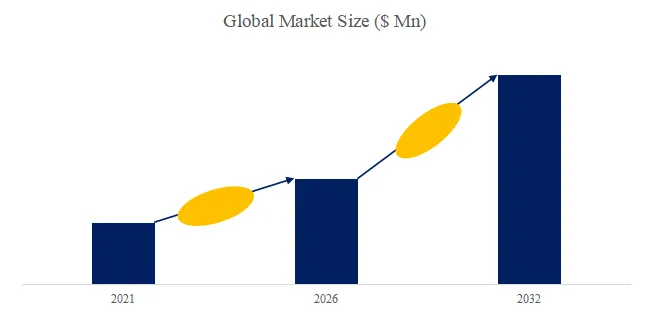
Figure00001. Mobile Backhaul Transport NetworkIndustry Chain Diagram
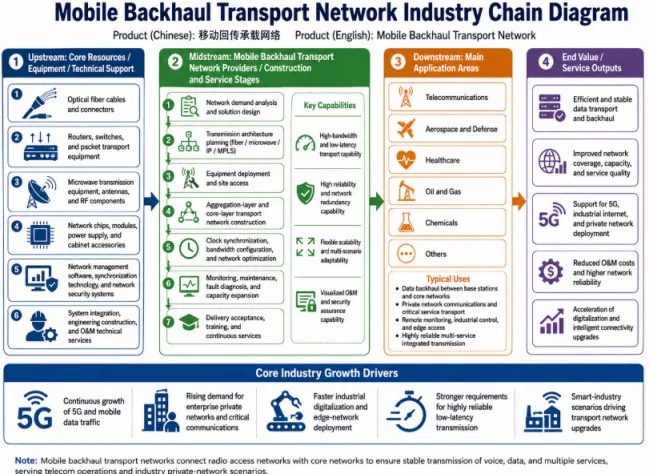
Industry Chain Overview
The upstream segment primarily encompasses fiber optic cables and connectors, routers, switches, packet transport equipment, microwave transmission equipment, antennas, RF components, network chips, communication modules, power supplies, cabinet accessories, network management software, clock synchronization technologies, and network security systems. Concurrently, system integration, engineering construction, installation and commissioning, and O&M technical services serve as vital supporting elements. The upstream segment fundamentally determines the bearer network's bandwidth capacity, transmission stability, low-latency performance, and overall reliability.
The midstream segment constitutes the core of the mobile backhaul bearer network; it is primarily executed by communication equipment vendors, network builders, carrier network departments, and system integration service providers. Its key processes include network requirements analysis and solution design, transmission architecture planning, equipment deployment and site access, construction of the aggregation and core layers of the bearer network, clock synchronization and bandwidth configuration, network optimization, monitoring and O&M, fault diagnosis, capacity expansion, as well as project delivery and acceptance, training, and ongoing support services. The critical capabilities of midstream enterprises are primarily manifested in their capacity for high-bandwidth, low-latency data transport; high reliability and network redundancy; flexible capacity expansion and adaptability to diverse scenarios; as well as visualized O&M and security assurance capabilities.
Downstream application sectors include telecommunications operations, aerospace and defense, healthcare, oil and gas, chemicals, and various other industries. Telecommunications operations represent the primary application scenario, utilized chiefly for data backhaul between base stations and the core network, 5G bearer services, private network communications, and the transmission of mission-critical services. The aerospace and defense sectors place a heightened emphasis on secure, stable, and highly reliable communications. Meanwhile, industries such as healthcare, oil and gas, and chemicals primarily leverage these networks for private network construction, remote monitoring, industrial control, edge access, and data transmission for critical production systems.
In terms of end-value, the mobile backhaul bearer network ultimately achieves efficient and stable data transport and backhaul, thereby enhancing network coverage, capacity, and Quality of Service (QoS). It supports the deployment of 5G networks, the Industrial Internet, and industry-specific private networks, while simultaneously reducing O&M costs and bolstering network reliability. For both telecommunications carriers and enterprise customers, this network serves as the critical infrastructure that bridges the wireless access network with the core network, facilitating the converged transmission of voice, data, video, and various other services. Overall, the core drivers of the mobile backhaul and transport network industry chain include the continuous growth of 5G and mobile data traffic; rising demand for enterprise private networks and mission-critical communications; the acceleration of industrial digitalization and edge network deployment; heightened requirements for high-reliability, low-latency transmission; and the impetus for transport network upgrades driven by smart industry applications.
Figure00002. Global Mobile Backhaul Transport Network Top 15 Players Ranking and Market Share (Ranking is based on the revenue of 2025, continually updated)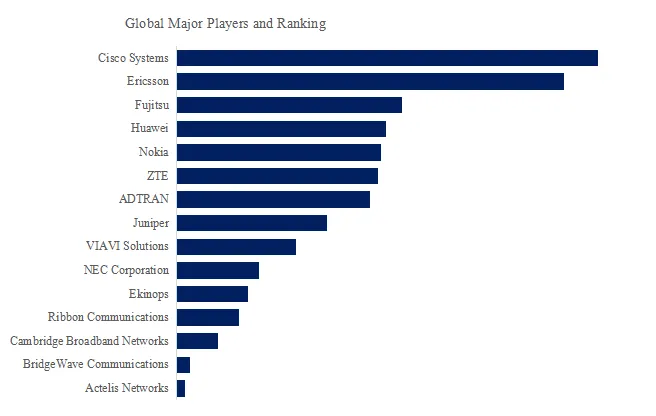
Above data is based on report from QYResearch: Global Mobile Backhaul Transport Network Market Report 2026-2032 (published in 2025). If you need the latest data, plaese contact QYResearch.
Figure00003. Mobile Backhaul Transport Network, Global Market Size, Split by Product Segment
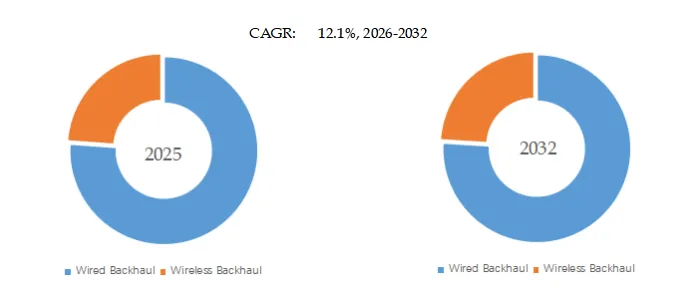
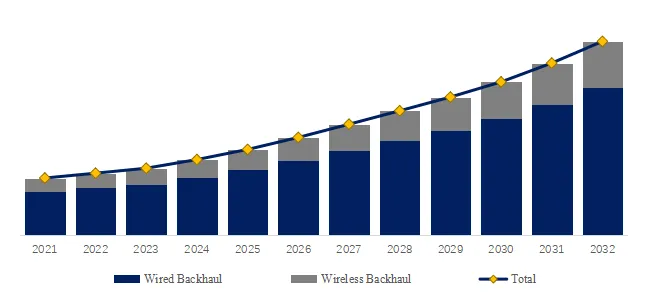
Based on or includes research from QYResearch: Global Mobile Backhaul Transport Network Market Report 2026-2032.
Figure00004. Mobile Backhaul Transport Network, Global Market Size, Split by Application Segment
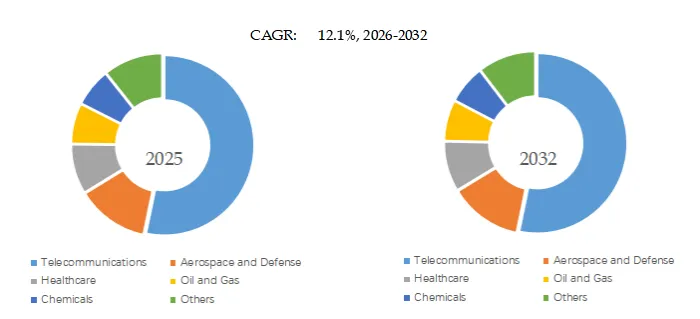
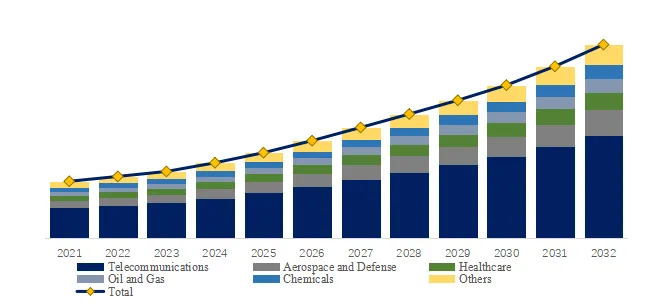
Based on or includes research from QYResearch: Global Mobile Backhaul Transport Network Market Report 2026-2032.
Figure00005. Mobile Backhaul Transport Network, Global Market Size, Split by Region
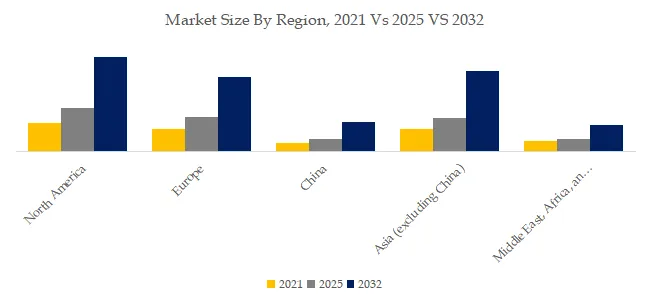
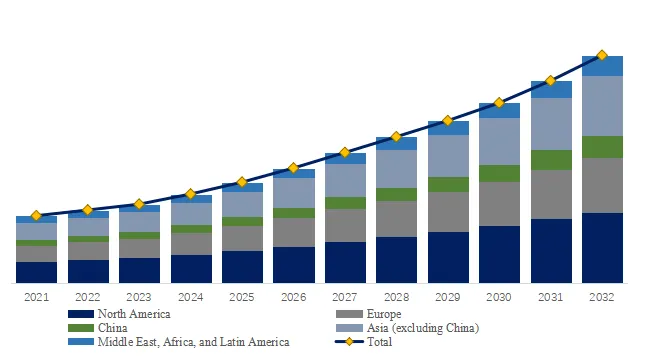
Based on or includes research from QYResearch: Global Mobile Backhaul Transport Network Market Report 2026-2032.
Market Drivers:
The deployment of 5G and 5G-Advanced (5G-A) base stations is driving the continuous expansion of transport networks. The most direct impetus for mobile backhaul transport networks stems from the site upgrades and bandwidth enhancements necessitated by the evolution from 4G to 5G and 5G-A. 5G base stations utilize Massive MIMO, wider spectrum bandwidths, and higher cell capacities; consequently, the backhaul bandwidth requirements for a single site are significantly higher than those for 4G. As a result, traditional 1G/10G backhaul links are gradually being upgraded to 25G, 50G, 100G, or even higher capacities.
The growth in mobile data traffic is driving the upgrade of backhaul links. Services such as HD video, short-form video, cloud gaming, AR/VR, Fixed Wireless Access (FWA), and mobile office applications are continuously increasing traffic on the wireless access side, thereby escalating the data transmission pressure between base stations and the core network, edge clouds, and data centers. User experience is becoming increasingly dependent on the capabilities of the transport network; if backhaul network capacity is insufficient—even with excellent wireless coverage—users will experience reduced speeds, congestion, and increased latency. Therefore, operators must continuously expand the capacity of the access, aggregation, and core layers of their transport networks.
The convergence of fronthaul, midhaul, and backhaul is driving the construction of "xHaul" networks. With the introduction of CU/DU separation, Cloud RAN, and edge cloud architectures in 5G networks, the mobile transport network is no longer limited to traditional backhaul; instead, it has evolved into an "xHaul" (or "anyhaul") system that integrates fronthaul, midhaul, and backhaul. Nokia notes that mobile transport is no longer solely about backhaul but must now support a "mobile anyhaul" framework formed by the convergence of fronthaul, midhaul, and backhaul. This imperative is driving operators to build next-generation mobile transport networks characterized by unified transport, unified scheduling, and unified operations and maintenance (O&M).
The proliferation of low-latency and high-reliability services is raising performance requirements for transport networks. Services such as the Industrial Internet, Internet of Vehicles (IoV), remote control systems, smart ports, smart mines, emergency communications, and enterprise private networks impose stringent requirements regarding end-to-end latency, jitter, reliability, and SLA guarantees. Mobile backhaul transport networks must not merely "provide bandwidth"; they must also deliver capabilities such as low-latency forwarding, rapid protection switching, service isolation, deterministic transmission, and high-precision synchronization. This necessity is accelerating the deployment of technologies such as IP/MPLS, SPN/MTN, OTN, Time-Sensitive Networking (TSN), and network slicing within mobile transport networks.
Restraint:
The high cost of fiber-optic infrastructure limits the large-scale deployment of wired backhaul solutions. Within mobile backhaul transport networks, fiber optics offer distinct advantages in terms of capacity, latency, and reliability; however, the construction of new fiber infrastructure entails managing conduits, excavation, pole routes, equipment rooms, power supply, regulatory permits, and construction coordination—resulting in lengthy deployment cycles and substantial initial capital investments. This is particularly true in scenarios involving complex underground utility networks in urban areas, geographically dispersed base stations, or remote regions requiring long-distance connections, where fiber-laying costs can significantly inflate an operator's CAPEX. Consequently, some base stations are compelled to rely on wireless backhaul alternatives—such as microwave, millimeter-wave, or satellite links—instead. The GSMA has also noted that while fiber is typically the preferred solution for mobile backhaul, its actual adoption in real-world deployments is often constrained by factors such as cost, construction permits, and specific site conditions.
The rapid growth in bandwidth demand driven by 5G and 5G-Advanced (5G-A) places immense pressure on existing backhaul networks to undergo upgrades. Many legacy 4G backhaul networks were originally designed around 1 Gbps or 10 Gbps links; however, the dense deployment of 5G macro cells, Massive MIMO technology, and small cells—along with the emergence of future 5G-A services—is pushing the backhaul capacity requirements for individual base stations to levels of 25 Gbps, 50 Gbps, 100 Gbps, or even higher. If existing transport networks lack sufficient capacity, a critical imbalance arises where the "wireless access side possesses the capability, but the transport backhaul side becomes the bottleneck." Resolving this issue necessitates extensive upgrades to equipment across the access, aggregation, and core layers of the network.
The stringent requirements for low latency, precise synchronization, and high reliability significantly increase technical complexity. A mobile backhaul transport network serves a purpose far beyond merely "transporting data traffic"; it must also satisfy the exacting requirements—regarding latency, jitter, time synchronization, and protection switching—demanded by advanced services such as 5G TDD synchronization, network slicing, URLLC (Ultra-Reliable Low-Latency Communications), the Industrial Internet, V2X (Vehicle-to-Everything) communications, and edge computing. This is particularly critical in fronthaul and midhaul scenarios, where requirements for end-to-end latency and time synchronization accuracy are exceptionally strict; consequently, the complexity involved in network planning, equipment selection, and operations and maintenance (O&M) is markedly higher than that of traditional backhaul networks.
Wireless backhaul solutions are subject to limitations imposed by spectrum availability, link distance, and weather conditions. Wireless backhaul technologies—including microwave, millimeter-wave, E-band, and V-band links—offer distinct advantages such as rapid deployment and relatively lower costs. However, their capacity and stability are highly susceptible to various external factors, including available spectrum resources, frequency band licensing regulations, link distances, line-of-sight conditions, rain attenuation, electromagnetic interference, and the specific installation conditions at the base station sites. High-frequency millimeter waves offer substantial bandwidth but feature shorter coverage distances and are more susceptible to weather conditions and obstructions; conversely, low-frequency microwaves provide greater coverage range, yet face limitations regarding available spectrum resources and capacity expansion. Relevant ITU documentation also emphasizes that 5G wireless backhaul solutions must take into account factors such as spectrum availability, spectrum costs, capacity, and spectral efficiency.
Opportunity:
Cloud-Network-Edge collaboration and MEC (Mobile Edge Computing) present new opportunities for node construction. Services such as cloud-native core networks, edge computing, cloud gaming, video distribution, the Industrial Internet, and the Internet of Vehicles (IoV) mean that traffic no longer flows exclusively back to the traditional core network; instead, it flows dynamically among base stations, aggregation nodes, edge clouds, and data centers. Mobile backhaul transport networks must interconnect the Radio Access Network (RAN), edge clouds, and the core network to support low-latency service scheduling; consequently, this will drive new demand for edge aggregation routers, low-latency transmission equipment, data center interconnect solutions, and SDN control systems.
Enterprise private networks and vertical-specific applications are unlocking high-value market segments. Industry applications—including smart factories, smart mines, smart ports, power grid inspection, IoV, emergency communications, and public safety—impose stringent requirements on mobile transport networks regarding low latency, high reliability, service isolation, and SLA guarantees. Compared to standard mobile broadband services, industry-specific private networks place a greater emphasis on deterministic transport, network slicing, end-to-end visibility, and secure isolation. This trend encourages operators and equipment vendors to pivot from merely selling bandwidth to providing high-value-added solutions that encompass "transport networks + private network integration + O&M services."
Fiber-optic upgrades are creating opportunities for wired backhaul equipment and optical modules. In urban core areas, industrial parks, data center vicinities, and high-traffic zones, fiber-optic backhaul remains the dominant approach for mobile transport networks due to its high bandwidth, low latency, robust reliability, and superior capacity for future expansion. The GSMA notes that fiber is typically the preferred backhaul solution for mobile operators deploying 4G and 5G networks; this will drive continuous upgrades across 10G/25G/50G/100G optical modules, access routers, OTN/SPN/IPRAN equipment, and fiber infrastructure.
Wireless backhaul continues to offer room for growth in remote locations and scenarios requiring rapid deployment. Not all base stations are situated in locations suitable for fiber-optic cabling. In rural areas, mountainous regions, islands, temporary event venues, emergency communication scenarios, and emerging overseas markets, technologies such as microwave, millimeter-wave, E-band, satellite backhaul, and Integrated Access and Backhaul (IAB) continue to offer distinct advantages in terms of rapid deployment, lower construction costs, and high flexibility.
The report provides a detailed analysis of the market size, growth potential, and key trends for each segment. Through detailed analysis, industry players can identify profit opportunities, develop strategies for specific customer segments, and allocate resources effectively.
The Mobile Backhaul Transport Network market is segmented as below:
By Company
Cisco Systems
Ericsson
Fujitsu
Huawei
Nokia
ZTE
ADTRAN
Juniper
VIAVI Solutions
NEC Corporation
Ekinops
Ribbon Communications
Cambridge Broadband Networks
BridgeWave Communications
Actelis Networks
Segment by Type
Low-Capacity Backhaul (<1 Gbps)
Medium-Capacity Backhaul (1–10 Gbps)
High-Capacity Backhaul (>10 Gbps)
Segment by Application
Telecommunications
Aerospace and Defense
Healthcare
Oil and Gas
Chemicals
Others
Each chapter of the report provides detailed information for readers to further understand the Mobile Backhaul Transport Network market:
Chapter 1: Introduces the report scope of the Mobile Backhaul Transport Network report, global total market size (valve, volume and price). This chapter also provides the market dynamics, latest developments of the market, the driving factors and restrictive factors of the market, the challenges and risks faced by manufacturers in the industry, and the analysis of relevant policies in the industry. (2021-2032)
Chapter 2: Detailed analysis of Mobile Backhaul Transport Network manufacturers competitive landscape, price, sales and revenue market share, latest development plan, merger, and acquisition information, etc. (2021-2026)
Chapter 3: Provides the analysis of various Mobile Backhaul Transport Network market segments by Type, covering the market size and development potential of each market segment, to help readers find the blue ocean market in different market segments. (2021-2032)
Chapter 4: Provides the analysis of various market segments by Application, covering the market size and development potential of each market segment, to help readers find the blue ocean market in different downstream markets.(2021-2032)
Chapter 5: Sales, revenue of Mobile Backhaul Transport Network in regional level. It provides a quantitative analysis of the market size and development potential of each region and introduces the market development, future development prospects, market space, and market size of each country in the world..(2021-2032)
Chapter 6: Sales, revenue of Mobile Backhaul Transport Network in country level. It provides sigmate data by Type, and by Application for each country/region.(2021-2032)
Chapter 7: Provides profiles of key players, introducing the basic situation of the main companies in the market in detail, including product sales, revenue, price, gross margin, product introduction, recent development, etc. (2021-2026)
Chapter 8: Analysis of industrial chain, including the upstream and downstream of the industry.
Chapter 9: Conclusion.
Other relevant reports of QYResearch:
Global Mobile Backhaul Transport Network Market Research Report 2026
Global Mobile Backhaul Transport Network Market Outlook, In‑Depth Analysis & Forecast to 2032
Global Mobile Backhaul Transport Network Sales Market Report, Competitive Analysis and Regional Opportunities 2026-2032
Benefits of purchasing QYResearch report:
Competitive Analysis: QYResearch provides in-depth Mobile Backhaul Transport Network competitive analysis, including information on key company profiles, new entrants, acquisitions, mergers, large market shear, opportunities, and challenges. These analyses provide clients with a comprehensive understanding of market conditions and competitive dynamics, enabling them to develop effective market strategies and maintain their competitive edge.
Industry Analysis: QYResearch provides Mobile Backhaul Transport Network comprehensive industry data and trend analysis, including raw material analysis, market application analysis, product type analysis, market demand analysis, market supply analysis, downstream market analysis, and supply chain analysis.
and trend analysis. These analyses help clients understand the direction of industry development and make informed business decisions.
Market Size: QYResearch provides Mobile Backhaul Transport Network market size analysis, including capacity, production, sales, production value, price, cost, and profit analysis. This data helps clients understand market size and development potential, and is an important reference for business development.

Mobile Backhaul Transport Network - Global Market Share and Ranking, Overall Sales and Demand Forecast 2026-2032

Published Date: 2026-07-09

Pages: 113

Report ld: 6721298
Price:USD 3950.00
(Single User License)
Global Mobile Backhaul Transport Network Market Research Report 2026
Published Date: 2026-05-31
Pages: 111
Report ld: 6721297
Price:USD 2900.00
(Single User License)
Global Mobile Backhaul Transport Network Market Outlook, In‑Depth Analysis & Forecast to 2032
Published Date: 2026-05-31
Pages: 139
Report ld: 6721296
Price:USD 4900.00
(Single User License)
Global Mobile Backhaul Transport Network Sales Market Report, Competitive Analysis and Regional Opportunities 2026-2032
Published Date: 2026-05-31
Pages: 114
Report ld: 6721294
Price:USD 4250.00
(Single User License)


Competition
Key players, new entrants,acquisitions, mergers and expansions,development trends and challenges.

Industry Analysis
Rawmaterial, application, product type, demand,supply,downstream, supply chain etc.

Market Size
Capacity, production, sales, revenue, price, cost etc.

Customized Information
We can offer customized survey and information to meet ourclient's need.
