Biological Reagents Market Set to Hit 31498 Million USD by 2026 – What Industry Leaders Are Doing Differently


China's Biological Reagents Market Is Entering a Structural Upgrade Phase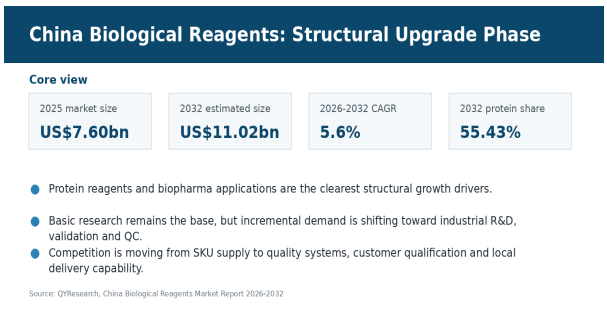
Figure 1. Core view of the China biological reagents market. Source: QYResearch report and analysis.
1.1 Opening view: the market is moving from high volatility to higher-value demand
China's biological reagents market is no longer mainly a high-volatility molecular diagnostics story. After the 2021-2022 demand spike and the 2023 high-base correction, the market has moved into a steadier cycle supported by life science research, upstream IVD raw materials, NGS, biopharma R&D validation, cell and gene therapy, process development and quality control.
According to the report, China's biological reagents market reached US$7.60 billion in 2025 and is expected to reach US$11.02 billion in 2032, representing a 2026-2032 CAGR of about 5.6%. The key message is not a return to a single-product boom, but a gradual reshaping of demand by product mix, customer mix and quality-system requirements.
Basic research remains the industry's stable base, while incremental demand is increasingly coming from pharmaceutical companies, IVD manufacturers, sequencing platforms, cell and gene therapy companies and other industrial R&D customers. For suppliers, the competitive focus is shifting from SKU accumulation and price competition to product performance, batch consistency, documentation, customer qualification and long-term delivery reliability.
Scope note: biological reagents in this article refer to upstream core reagent products used in life science research, IVD, biopharma, high-throughput sequencing and other life-science applications. The scope covers molecular, protein and cell reagents, as well as limited services directly related to reagent R&D, preparation, validation and application. It excludes end-use IVD finished kits, drug-discovery CRO services, preclinical and clinical services, CDMO/CMO production services, instruments, general consumables, ordinary chemical reagents and reagents used in large-scale commercial production.
1.2 Market size: post-correction growth is steadier, not explosive
The market path shows a clear transition. China market revenue rose from US$6.08 billion in 2021 to US$7.57 billion in 2022, then corrected to US$6.85 billion in 2023 as short-cycle demand normalized. It recovered to US$7.60 billion in 2025 and is forecast to increase from US$7.97 billion in 2026 to US$11.02 billion in 2032.
This trajectory indicates that the industry has returned to a multi-application, multi-product and multi-customer growth model. Annual growth rates are unlikely to repeat the extreme slope seen during the pandemic-related period, but biopharma R&D, QC requirements, upgrading of cell-culture systems and China-based second-source qualification programs should continue to support market expansion.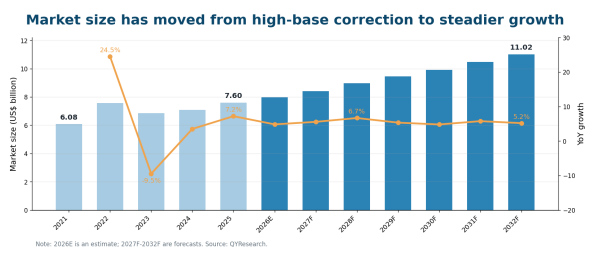
Figure 2. China biological reagents market size and growth, 2021-2032. Source: QYResearch.
1.3 Product structure: protein reagents are the main value center
Protein reagents are already the largest category in the China biological reagents market and are expected to continue increasing their share. The segment reached US$4.02 billion in 2025, or 52.93% of the market, and is forecast to reach US$6.11 billion in 2032, with its share rising to 55.43%.
This growth is not simply a function of adding more generic antibodies or protein SKUs. It reflects the extension of recombinant proteins, antibodies, antigens, functional enzymes, cytokines, growth factors and immunoassay-related reagents into drug R&D validation, upstream IVD materials, cell therapy development and QC applications. In these scenarios, biological activity, specificity, batch consistency, impurity control and documentation often matter more than catalogue breadth alone.
Molecular reagents remain critical tools for basic molecular biology, molecular diagnostics, NGS, synthetic biology, gene editing and nucleic-acid drug R&D. However, after the high-base demand related to molecular testing, their market share is expected to decline from 28.90% in 2025 to 25.98% in 2032. Future growth will depend more on high-performance enzymes, library-preparation systems, magnetic beads, nucleic-acid extraction systems and molecular diagnostics raw materials than on commoditized PCR or cloning reagents.
Cell reagents represent a more quality-grade-driven growth line. The report forecasts the segment to grow from US$1.38 billion in 2025 to US$2.05 billion in 2032, with share moving from 18.17% to 18.60%. Serum-free, animal-origin-free, low-endotoxin, chemically defined, batch-stable and traceable systems will become key requirements for media, cytokines, cryopreservation solutions, transfection reagents and cell-function validation reagents entering pharmaceutical and cell-therapy customer systems.
1.4 Application structure: basic research is the base, biopharma is the structural increment
Basic research remains the largest application field, covering universities, research institutes, hospital research platforms, government laboratories and corporate R&D departments. Its share was 41.28% in 2025 and is forecast to decline to 38.07% in 2032. This does not imply shrinking research demand; rather, it shows that industrial R&D is growing faster and that market weight is migrating toward validation, process development and quality control.
Biopharma is the most structurally supported incremental application. Its share is forecast to increase from 34.46% in 2025 to 37.60% in 2032, approaching the share of basic research. Innovative drugs, biologics, antibody drugs, ADCs, bispecific antibodies, cell therapy, gene therapy, mRNA/vaccines and nucleic-acid drugs will continue to pull demand for recombinant proteins, antibodies, cytokines, media, transfection reagents, plasmid-related products and QC reagents.
The IVD application has moved into a more stable phase after the pandemic-related demand cycle. In this market scope, IVD does not mean finished diagnostic kits sold to end users. It mainly refers to upstream products such as antigens, antibodies, diagnostic enzymes, magnetic beads, primers and probes, nucleic-acid extraction systems, quality-control materials and R&D validation reagents. Because IVD customers face registration, validation, audit and revalidation constraints, supplier switching is slow; once a supplier enters the main-source or second-source system, repeat purchasing is usually more stable.
Figure 3. Product and application structure, 2025 versus 2032 forecast. Source: QYResearch.
1.5 Competition: fragmented market, but high-end customers raise the entry threshold
China's biological reagents market remains fragmented. In 2025, the top five suppliers were Thermo Fisher Scientific, Merck KGaA, Roche, Vazyme and Abcam, with a combined share of about 22.22%. The first, second and third supplier tiers accounted for approximately 16.98%, 13.09% and 69.92% of the market, respectively. The data show that leading suppliers retain strong positions, while long-tail competition and niche-market specialization remain significant.
Multinational platforms still have advantages in high-end reagents, quality systems, global customer qualification, broad catalogues and long-term brand trust. China-based suppliers are improving in molecular reagents, upstream IVD raw materials, recombinant proteins, antibodies, media and customized services, while also benefiting from cost, local response and delivery advantages.
Domestic substitution in the China market should not be interpreted as a simple across-the-board low-price replacement. A more realistic path is domestic second-source qualification: China-based suppliers first enter through backup supply, non-critical processes, project-level trials or new product pipelines, then expand wallet share after technical validation, batch consistency checks and audit documentation are accepted by customers.
Figure 4. Competitive capabilities required for higher-end customers. Source: QYResearch analysis.
1.6 Supply chain: the core capability is shifting from making products to entering customer systems
The biological reagents supply chain covers key raw materials and auxiliaries, core processes, production, testing and certification, quality control, channels and customer service. Upstream inputs include expression-system materials, base media ingredients, serum and substitutes, resins, magnetic beads, nucleic-acid materials, enzyme inputs, antigen and antibody intermediates, packaging materials and cold-chain resources. Midstream suppliers develop, express, purify, formulate, fill, lyophilize, test and deliver molecular, protein and cell reagents.
For academic and basic research customers, availability, price, brand and experimental stability are major purchasing factors. For pharmaceutical, IVD, NGS and cell-therapy customers, suppliers must also provide COA/SDS, traceability, stability data, endotoxin, sterility, mycoplasma, residual DNA, GMP or pre-GMP documentation, audit materials and change-control support. In other words, industrial R&D customers are not buying a single reagent vial; they are qualifying a supply system that can be validated, audited and repurchased over time.
1.7 Opportunities and constraints: premium segments exist, but commoditized reagents remain price-sensitive
Dimension Key content Business implication
Growth opportunities Biopharma R&D validation and QC, upstream IVD materials, NGS library prep, cell therapy and higher-grade culture systems Supports higher shares for protein and cell reagents and pushes quality-grade products into pharmaceutical, diagnostics and cell-therapy customers
Domestic substitution path Domestic second-source qualification, local delivery, focused product breakthroughs and stronger documentation China-based suppliers may enter first as backup suppliers or through new projects, then expand after validation
Main constraints Research-budget cycles, IVD inventory and registration timing, biopharma financing and pipeline progress, long customer qualification cycles Demand direction remains intact, but revenue recognition and ramp-up may lag market interest
Competitive basis Product performance, batch consistency, audit-ready files, cold-chain delivery and technical support Suppliers with quality systems and customer application data are better positioned to escape long-tail price competition
Overall, opportunities in biological reagents are not evenly distributed across all product classes. They are concentrated in segments with higher quality grades, higher switching costs and more complex application validation. Generic research reagents will continue to have stable demand, but channel competition and price sensitivity limit margin expansion. Suppliers seeking higher revenue quality need to combine product performance, quality systems and customer application data.
1.8 Conclusion: high-end product mix, industrial customer access and supply localization will define the next stage
The core variable for China's biological reagents market is no longer total expansion alone. The more important factors are high-end product mix, industrial customer access, quality-system construction and supply localization. Protein reagents and biopharma applications will remain the main structural growth drivers. Cell reagents have room to upgrade in higher-grade culture systems and cell-therapy R&D scenarios. Molecular reagents will move away from pandemic-related volatility and toward more specialized growth in NGS, molecular diagnostics, nucleic-acid drugs and core enzyme systems.
Competition will remain fragmented, but the threshold for entering high-end customer systems will rise. Multinational platforms will continue to benefit from brand, catalogue breadth, quality systems and global validation. The opportunity for China-based suppliers is to turn cost, delivery and local response advantages into validated product performance, batch consistency, audit-ready documentation and repeat purchasing by customers.
For Chinese companies, the most practical breakthrough path is to build verifiable advantages in focused areas such as core molecular enzymes, recombinant proteins, antibodies, cytokines, media, upstream IVD raw materials and QC reagents, then use domestic second-source qualification to expand customer share. Evaluating a biological reagents company therefore requires more than counting SKUs or short-term revenue elasticity. The more important question is whether the supplier can support higher-grade products, documentation, customer validation, cold-chain delivery and the transition from academic customers to industrial R&D customers.
About The Authors
Jiashi Dong
Lead Author
Email: dongjiashi@qyresearch.com
With years of experience in industry research, Jiashi Dong currently serves as the Business Manager of the Nanning division at QYResearch, focusing on three core areas: semiconductor equipment and materials, humanoid robots, and automotive electronics.
He has led and participated in in-depth studies across a broad range of niche markets, including:
Semiconductor equipment and materials: discrete devices, RF power supplies, molding equipment, defect inspection and metrology tools (including bright-field, dark-field, 2D/3D AOI, e-beam, etc.), precursors, electroplating equipment, dry pumps, motors, pressure gauges, air bearing stages, chemical plating fluids, and coating components.
Automotive electronics: LiDAR, diodes, inductors, and other passive and active components.
Humanoid robots: robotic systems, dexterous hands, precision reducers, and core sensors.
Jiashi excels at mapping industry value chains, identifying key technology trends, and analyzing market dynamics from a global perspective. He also has extensive experience in customized research projects and high-level industry interviews.
He has delivered strategic data services and insights to numerous leading companies, including Huawei, Juneway Electronics, SiCarrier, Skyverse, DJEL, Hitachi High-Tech, Towa, Mitsubishi Electric, HORIBA, Schaeffler, among others.
In recent years, he has been deeply involved in the research and analysis of humanoid robots and their key components, working closely with his team to explore product trends in dexterous hands, precision reducers, and sensor systems. He continues to track global and Chinese players' strategic developments and supply chain dynamics, aiming to provide clients with valuable and forward-looking insights to support business decisions.
About QYResearch
QYResearch founded in California, USA in 2007.It is a leading global market research and consulting company. With over 17 years’ experience and professional research team in various cities over the world QY Research focuses on management consulting, database and seminar services, IPO consulting (data is widely cited in prospectuses, annual reports and presentations), industry chain research and customized research to help our clients in providing non-linear revenue model and make them successful. We are globally recognized for our expansive portfolio of services, good corporate citizenship, and our strong commitment to sustainability. Up to now, we have cooperated with more than 60,000 clients across five continents. Let’s work closely with you and build a bold and better future.
QYResearch is a world-renowned large-scale consulting company. The industry covers various high-tech industry chain market segments, spanning the semiconductor industry chain (semiconductor equipment and parts, semiconductor materials, ICs, Foundry, packaging and testing, discrete devices, sensors, optoelectronic devices), photovoltaic industry chain (equipment, cells, modules, auxiliary material brackets, inverters, power station terminals), new energy automobile industry chain (batteries and materials, auto parts, batteries, motors, electronic control, automotive semiconductors, etc.), communication industry chain (communication system equipment, terminal equipment, electronic components, RF front-end, optical modules, 4G/5G/6G, broadband, IoT, digital economy, AI), advanced materials industry Chain (metal materials, polymer materials, ceramic materials, nano materials, etc.), machinery manufacturing industry chain (CNC machine tools, construction machinery, electrical machinery, 3C automation, industrial robots, lasers, industrial control, drones), food, beverages and pharmaceuticals, medical equipment, agriculture, etc.
Global Biological Reagents Market Outlook, In‑Depth Analysis & Forecast to 2032

Published Date: 2026-06-06

Pages: 186

Report ld: 6057411
Price:USD 4900.00
(Single User License)
Global Biological Reagents Sales Market Report, Competitive Analysis and Regional Opportunities 2026-2032
Published Date: 2026-06-06
Pages: 169
Report ld: 6053358
Price:USD 4250.00
(Single User License)
Biological Reagents - Global Market Share and Ranking, Overall Sales and Demand Forecast 2026-2032
Published Date: 2026-06-06
Pages: 180
Report ld: 6016852
Price:USD 3950.00
(Single User License)
Global Biological Reagents Market Research Report 2026
Published Date: 2026-06-06
Pages: 178
Report ld: 6013055
Price:USD 2900.00
(Single User License)
Global Biological Reagents Market Outlook, In‑Depth Analysis & Forecast to 2031
Published Date: 2025-10-23
Pages: 213
Report ld: 5207489
Price:USD 4900.00
(Single User License)
Biological Reagents- Global Market Share and Ranking, Overall Sales and Demand Forecast 2025-2031
Published Date: 2025-02-19
Pages: 197
Report ld: 3993827
Price:USD 3950.00
(Single User License)


Competition
Key players, new entrants,acquisitions, mergers and expansions,development trends and challenges.

Industry Analysis
Rawmaterial, application, product type, demand,supply,downstream, supply chain etc.

Market Size
Capacity, production, sales, revenue, price, cost etc.

Customized Information
We can offer customized survey and information to meet ourclient's need.
