Hospital Nutrition Software Industry Research:projected to reach USD 1.01 billion by 2032


Hospital Nutrition Software Market Summary
Hospital Nutrition Software is a professional digital management system developed for hospital nutrition departments, clinical departments, and catering departments. Its core function is to provide informatized, standardized, and intelligent management of the entire process of patient nutritional diagnosis and treatment, dietary customization, nutritional assessment, and food supply. Based on clinical nutrition guidelines and hospital dietary management standards, and integrating patient electronic medical record data, the software can handle the entire chain of operations, from nutritional screening and risk assessment to personalized diet plan development, meal order placement, ingredient procurement and cost accounting, and nutritional component traceability.
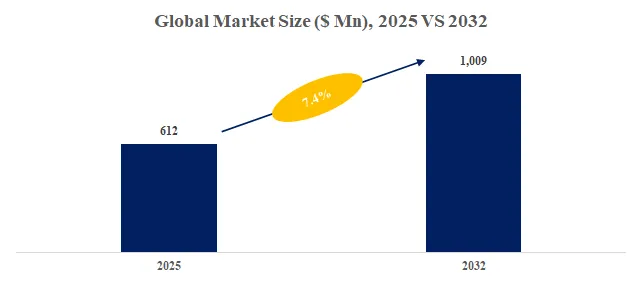
According to the new market research report “Global Hospital Nutrition Software Market Report 2026-2032”, published by QYResearch, the global Hospital Nutrition Software market size is projected to reach USD 1.01 billion by 2032, at a CAGR of 7.4% during the forecast period.
Figure00001. Global Hospital Nutrition Software Market Size (US$ Million), 2025 VS 2032
Above data is based on report from QYResearch: Global Hospital Nutrition Software Market Report 2026-2032 (published in 2026). If you need the latest data, plaese contact QYResearch.
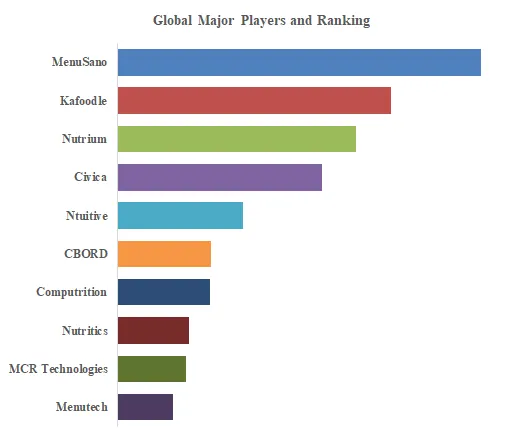
Figure00002. Global Hospital Nutrition Software Top 10 Players Ranking and Market Share (Ranking is based on the revenue of 2025, continually updated)
Above data is based on report from QYResearch: Global Hospital Nutrition Software Market Report 2026-2032 (published in 2026). If you need the latest data, plaese contact QYResearch.
According to QYResearch Top Players Research Center, the global key manufacturers of Hospital Nutrition Software include MenuSano, Kafoodle, Nutrium, Civica, Ntuitive, etc. In 2025, the global top four players had a share approximately 32% in terms of revenue.
Table 1. Hospital Nutrition Software Industry Chain Analysis
|
|
Item |
Description |
|
Upstream |
Technology and data resources |
Servers/storage/networks and in-hospital IT infrastructure (local deployment or private cloud), operating systems and databases, middleware and interface engines (HL7/FHIR, WebService, API gateway, etc.), identity and permissions, log auditing and compliance tools; data elements come from HIS/EMR (diagnosis, medical orders, allergy history), LIS (laboratory indicators such as albumin and electrolytes), PACS/vital signs equipment (weight, height, energy expenditure related data), drug and consumable master data, and nutrition databases (food composition, recipes, energy and macro- and micronutrient algorithms, DRIs/guideline rule bases). Upstream, it also includes the constraints imposed by standards/guidelines and regulatory environments (medical records and medical insurance codes, electronic medical record rating, data security and privacy compliance requirements) on product functional boundaries and available data definitions. |
|
Midstream |
R&D and service providers |
Key participants include professional software developers, healthcare IT companies, and cross-industry technology companies. Product forms cover cloud-based SaaS, on-premises deployments, and lightweight mobile versions. Functionality extends from basic nutritional meal planning and data recording to comprehensive services such as nutritional risk screening, personalized treatment plan development, and multi-system data integration. Service models have evolved from simple software sales to a combination of software deployment, customized development, and ongoing maintenance. Some companies also offer value-added services such as nutritionist training and clinical nutrition application guidance. The core competitive advantage of midstream companies lies in their technological integration capabilities and localized content adaptation abilities. |
|
Downstream |
Medical-related institutions, etc. |
Application scenarios include general hospitals, specialized hospitals, and community health service centers, primarily for clinical nutritional therapy for inpatients, dietary intervention for patients with chronic diseases, and health management. Meanwhile, demand from extended scenarios such as nursing homes, postpartum care centers, and health management companies continues to grow, driving the software's functionality to expand into niche areas such as elderly nutrition and prenatal nutrition. End users encompass hospital nutrition departments, clinical medical staff, patients, and health managers, with demand shifting from "compliant management" to "precise service + efficiency improvement." The professionalization and personalization of downstream demand, in turn, drives midstream companies to iterate their products and innovate technologically, forming a closed loop of collaborative development across the industry chain. |
Source: Secondary Sources, Press Releases, Expert Interviews and QYResearch, 2026
Table 2. Hospital Nutrition Software Industry Policy Analysis
|
|
Policy |
Description |
|
1 |
U.S. policy |
Under the 21st Century Cures Act, the FDA implements "risk-differentiated regulation" for hospital nutrition software. Basic nutrition meal planning and healthy eating advice software are mostly classified as "non-medical device CDS tools," exempt from premarket approval. If the software involves nutritional risk screening, disease-specific dietary interventions (such as dietary plans for diabetes and kidney disease) and is used for clinical decision-making, it is regulated as a medical device (SaMD), requiring the submission of clinical data to prove safety and effectiveness. Some high-risk functions (such as generating nutritional support plans for ICU patients) require approval through the 510(k) or PMA pathway. |
|
2 |
EU policies |
Hospital nutrition software involving clinical nutritional therapy decisions (such as nutritional support for cancer patients and postoperative nutritional plans) is regulated as a medical device (Class IIa/IIb), requiring CE certification and meeting requirements for risk management, technical documentation archiving, and clinical evaluation. The AI Act, which came into effect in 2024, further classifies "personalized nutrition AI systems for patients with chronic diseases" as high-risk AI, requiring manufacturers to establish algorithm transparency mechanisms, provide human oversight pathways, and continuously collect real-world data to verify effectiveness. |
Source: Secondary Sources, Press Releases, Expert Interviews and QYResearch, 2026
Table 3. Hospital Nutrition Software Industry Development Trends
|
|
Development Trends |
Description |
|
1 |
Technological integration and algorithm upgrades have become the core driving force for industry innovation. |
On the one hand, artificial intelligence and big data technologies are deeply embedded in the software kernel. AI algorithms can automatically generate and dynamically optimize personalized nutrition plans based on patients' disease types, physiological indicators, medication history, and dietary preferences. Simultaneously, by learning from massive amounts of clinical nutrition data, the accuracy and safety of these plans are improved. On the other hand, the software accelerates interconnection with IoT devices (such as metabolic monitors and smart dietary scales), hospital information systems (such as electronic medical records, HIS, and LIS), and mobile terminals. This enables automated nutritional risk screening, real-time monitoring of nutritional intervention effects, and digital follow-up of patients' outpatient diets, constructing a closed-loop service system of "in-hospital treatment - out-of-hospital management." Furthermore, the application of natural language processing technology enables the software to support voice input of dietary information and intelligent interpretation of dietary reports, lowering the operational threshold for medical staff and patients. |
|
2 |
Application scenarios are expanding both vertically and horizontally. |
Vertically, the software is expanding from general hospital nutrition departments to primary healthcare institutions, specialized hospitals, and elderly care facilities, adapting to the nutritional management needs of different scenarios, such as precision metabolic support in intensive care units, nutritional intervention for cancer patients in oncology hospitals, and nutritional management of chronic diseases in community hospitals. Horizontally, the software's functions are extending from nutritional therapy for hospitalized patients to nutritional guidance for healthy individuals, dietary management for special populations (such as pregnant women, children, and the elderly), and even connecting with catering companies to create an integrated supply chain of "hospital nutrition prescription - meal preparation - patient consumption." Meanwhile, policy guidance regarding the inclusion of clinical nutrition in treatment guidelines and the linking of nutritional management to medical insurance reimbursement further encourages hospitals to use nutrition software as a core tool to improve medical quality and reduce complication rates. Software products with clinical value verification capabilities and data interoperability will occupy a dominant competitive position. |
Source: Secondary Sources, Press Releases, Expert Interviews and QYResearch, 2026
Table 4. Hospital Nutrition Software Industry Development Opportunities
|
|
Development Opportunities |
Description |
|
1 |
The deep application of AI and big data technologies is driving software to leap from "auxiliary recording" to "intelligent decision-making." |
AI algorithms empower personalized treatment plan generation, automatically generating and dynamically optimizing nutritional plans based on patient disease type, physiological indicators, medication history, and dietary preferences. Simultaneously, it improves the accuracy of plans by learning from massive amounts of clinical data. The Internet of Things (IoT) enables interconnection with multiple systems, connecting the software with metabolic monitors, smart dietary scales, electronic medical records (EMR), and HIS/LIS systems to automate nutritional risk screening, monitor intervention effects in real time, and digitize outpatient follow-up, constructing a closed-loop "in-hospital-outpatient" system. Thirdly, Natural Language Processing (NLP) lowers the operational threshold, supporting voice input of dietary information and intelligent interpretation of dietary reports, improving the efficiency for both medical staff and patients. The implementation path can focus on the integrated development of "AI modules + device integration + system interfaces," prioritizing adaptation to clinical scenarios requiring precise nutritional intervention, such as critical care, oncology, and kidney disease. |
|
2 |
Global policies promoting the standardization of clinical nutrition provide a "must-have" entry window for software. |
In Europe and the US, FDA risk-based regulations and the EU's MDR/AI regulations require software to enhance clinical value and data compliance. Meanwhile, health insurance reimbursement includes nutritional interventions, forcing hospitals to procure compliant software. Domestically, tertiary hospital accreditation includes clinical nutrition in its assessments, and the DRGs payment system encourages reducing complication rates and shortening hospital stays through nutritional management, pushing software from "optional" to "mandatory." Companies can adapt to policies through "risk positioning and segmentation + clinical data accumulation + data security enhancement": designing basic functions as non-medical CDS tools reduces regulatory costs, while clinical decision-making functions are pre-planned for real-world research, simultaneously meeting data compliance requirements such as HIPAA and GDPR, accelerating market access and health insurance integration. |
Source: Secondary Sources, Press Releases, Expert Interviews and QYResearch, 2026
The report provides a detailed analysis of the market size, growth potential, and key trends for each segment. Through detailed analysis, industry players can identify profit opportunities, develop strategies for specific customer segments, and allocate resources effectively.
The Hospital Nutrition Software market is segmented as below:
By Company
MenuSano
Kafoodle
Nutrium
Civica
Ntuitive
CBORD
Computrition
Nutritics
MCR Technologies
Menutech
MenuCalc
MenuLogistics
Sodexo
MenuMax
Banquet Health
NutriAdmin
Delegate Group
SONIFI Health
DietMaster
Better Clinics
ESHA
Nutrition Maker
Practice Better
B. Braun
Abbott
Carepatron
IndiCater
Segment by Type
On-premises
Cloud Based
Segment by Application
Hospital
Clinic
Nursing Home
Each chapter of the report provides detailed information for readers to further understand the Hospital Nutrition Software market:
Chapter 1: Introduces the report scope of the Hospital Nutrition Software report, global total market size (valve, volume and price). This chapter also provides the market dynamics, latest developments of the market, the driving factors and restrictive factors of the market, the challenges and risks faced by manufacturers in the industry, and the analysis of relevant policies in the industry. (2021-2032)
Chapter 2: Detailed analysis of Hospital Nutrition Software manufacturers competitive landscape, price, sales and revenue market share, latest development plan, merger, and acquisition information, etc. (2021-2026)
Chapter 3: Provides the analysis of various Hospital Nutrition Software market segments by Type, covering the market size and development potential of each market segment, to help readers find the blue ocean market in different market segments. (2021-2032)
Chapter 4: Provides the analysis of various market segments by Application, covering the market size and development potential of each market segment, to help readers find the blue ocean market in different downstream markets.(2021-2032)
Chapter 5: Sales, revenue of Hospital Nutrition Software in regional level. It provides a quantitative analysis of the market size and development potential of each region and introduces the market development, future development prospects, market space, and market size of each country in the world..(2021-2032)
Chapter 6: Sales, revenue of Hospital Nutrition Software in country level. It provides sigmate data by Type, and by Application for each country/region.(2021-2032)
Chapter 7: Provides profiles of key players, introducing the basic situation of the main companies in the market in detail, including product sales, revenue, price, gross margin, product introduction, recent development, etc. (2021-2026)
Chapter 8: Analysis of industrial chain, including the upstream and downstream of the industry.
Chapter 9: Conclusion.
Other relevant reports of QYResearch:
Global Hospital Nutrition Software Market Research Report 2026
Global Hospital Nutrition Software Sales Market Report, Competitive Analysis and Regional Opportunities 2026-2032
Global Hospital Nutrition Software Market Outlook, In‑Depth Analysis & Forecast to 2032
Benefits of purchasing QYResearch report:
Competitive Analysis: QYResearch provides in-depth Hospital Nutrition Software competitive analysis, including information on key company profiles, new entrants, acquisitions, mergers, large market shear, opportunities, and challenges. These analyses provide clients with a comprehensive understanding of market conditions and competitive dynamics, enabling them to develop effective market strategies and maintain their competitive edge.
Industry Analysis: QYResearch provides Hospital Nutrition Software comprehensive industry data and trend analysis, including raw material analysis, market application analysis, product type analysis, market demand analysis, market supply analysis, downstream market analysis, and supply chain analysis.
and trend analysis. These analyses help clients understand the direction of industry development and make informed business decisions.
Market Size: QYResearch provides Hospital Nutrition Software market size analysis, including capacity, production, sales, production value, price, cost, and profit analysis. This data helps clients understand market size and development potential, and is an important reference for business development.

Hospital Nutrition Software - Global Market Share and Ranking, Overall Sales and Demand Forecast 2026-2032

Published Date: 2026-01-14

Pages: 173

Report ld: 5651039
Price:USD 3950.00
(Single User License)
Global Hospital Nutrition Software Market Research Report 2026
Published Date: 2026-01-14
Pages: 172
Report ld: 5651037
Price:USD 2900.00
(Single User License)
Global Hospital Nutrition Software Sales Market Report, Competitive Analysis and Regional Opportunities 2026-2032
Published Date: 2026-01-14
Pages: 122
Report ld: 5651032
Price:USD 4250.00
(Single User License)
Global Hospital Nutrition Software Market Outlook, In‑Depth Analysis & Forecast to 2032
Published Date: 2026-01-14
Pages: 187
Report ld: 5615217
Price:USD 4900.00
(Single User License)
Global Hospital Nutrition Software Sales Market Report, Competitive Analysis and Regional Opportunities 2025-2031
Published Date: 2025-11-16
Pages: 122
Report ld: 5466511
Price:USD 4250.00
(Single User License)
Global Hospital Nutrition Software Market Outlook, In‑Depth Analysis & Forecast to 2031
Published Date: 2025-11-16
Pages: 186
Report ld: 5460010
Price:USD 4900.00
(Single User License)


Competition
Key players, new entrants,acquisitions, mergers and expansions,development trends and challenges.

Industry Analysis
Rawmaterial, application, product type, demand,supply,downstream, supply chain etc.

Market Size
Capacity, production, sales, revenue, price, cost etc.

Customized Information
We can offer customized survey and information to meet ourclient's need.
