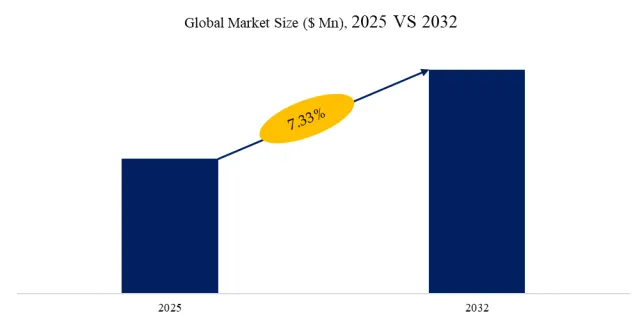
Nanoliter Liquid Handling Workstation Industry Research:the revenue CAGR is 7.33% for 2026–2032


Nanoliter Liquid Handling Workstation Market Summary
A nanoliter liquid handling workstation refers to an automated liquid handling system designed for high-throughput workflows such as microplate-based experiments. Its core capability is to deliver stable and repeatable nanoliter-scale (nL) dispensing/transfer to support high-density screening, micro-volume reaction setup, and sample preparation. In the market, nanoliter performance is most commonly achieved via non-contact dispensing, which can be broadly grouped into two mainstream technology routes: Ultrasonic Technology (acoustic/ultrasonic droplet transfer) and Inkjet Technology (jetting / inkjet-like dispensing). Representative products include Beckman Coulter Echo (Ultrasonic) and Dispendix I.DOT and Revvity FlexDrop™ Plus (Inkjet).
Beyond non-contact routes, a limited number of systems can also achieve nanoliter performance through contact pipetting (tip/needle-based), though these are less common. For example, SPT Labtech mosquito LV genomics can reach a minimum aspirate volume of 25 nL and is therefore included in this study’s definition of nanoliter liquid handling workstations. To ensure comparability and reflect genuine nanoliter capability, this study typically uses a minimum achievable volume of ≤50 nL as the benchmark threshold. Some products only specify a minimum volume in the range of 100–500 nL (i.e., 0.1–0.5 µL); these systems are closer to micro-volume, microliter-level performance and, based on interview feedback, are generally not benchmarked alongside typical nanoliter workstations. In practice, some suppliers only disclose the lower limit in microliters (e.g., 0.2 µL, 0.35 µL) rather than explicitly stating nL; such systems are treated as microliter-level. In addition, some manufacturers may show several-hundred-nanoliter specifications on certain product pages, yet still position these systems as microliter-level in interviews; for example, Agilent has products with minimum volumes in the several-hundred-nanoliter range, but interview feedback indicates the company categorizes its offering as microliter-class rather than nanoliter-class.
Market Overview
From a global market perspective, nanoliter liquid handling workstations generated revenue of USD 86.78 million in 2025 and are projected to reach USD 144.48 million by 2032. The revenue CAGR is 7.33% for 2026–2032 and 10.03% for 2021–2025. In unit terms, shipments increase from 366 units in 2025 to 673 units in 2032, indicating that the segment remains in an expansion phase driven by broader adoption of miniaturized workflows; as the installed base grows, the growth rate transitions from the faster 2021–2025 period to a more steady trajectory in 2026–2032. Key demand drivers include continued miniaturization in drug discovery and screening, genomics sample preparation and reaction setup, and the wider penetration of laboratory automation and standardization across pharmaceutical and research platforms. In parallel, rising expectations for reproducibility and traceability are accelerating product upgrades in droplet verification, process monitoring, and data logging.
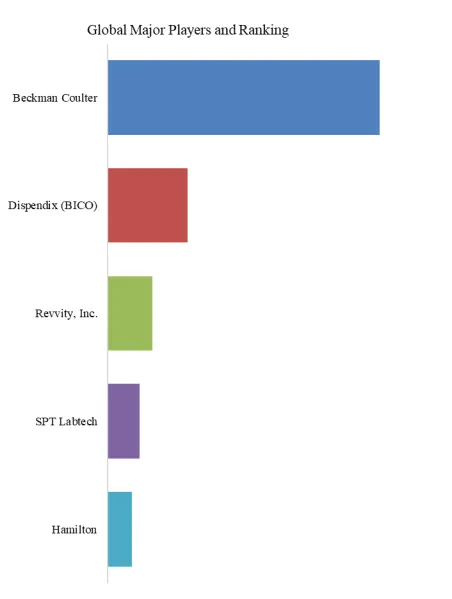
The competitive structure is highly concentrated and characterized by a limited number of commercially proven suppliers, supported by long customer validation cycles and high switching costs. In 2025, the global top three manufacturers account for 84.07% of total sales, reflecting strong barriers built on proprietary dispensing technologies, application know-how, installed base depth, and global channel plus service coverage. Market share movements are typically driven by workflow penetration and platform upgrades rather than price-led competition. As a result, competition is better described as workflow and validation capability competition, including method transfer efficiency, cross-site consistency, completeness of quality and metrology documentation, and compatibility with robotic lines and end-to-end automation.
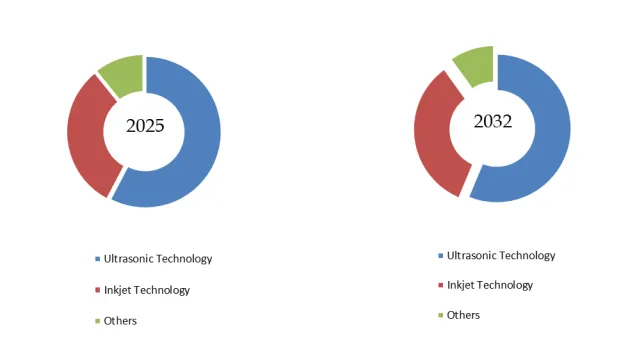
By technology type (revenue basis), ultrasonic technology contributes USD 50.07 million in 2025, representing 57.70% of the market; inkjet technology contributes USD 27.38 million, or 31.55%; and other technologies contribute USD 9.33 million, or 10.75%. In terms of growth, inkjet technology posts a 2026–2032 revenue CAGR of 8.73%, above ultrasonic technology at 6.82% and other technologies at 5.82%, suggesting stronger expansion elasticity for non-contact high-speed dispensing across a wider set of use cases. Ultrasonic platforms remain dominant in core scenarios that require extremely low volumes and high repeatability. Overall, product evolution is shifting from simply achieving smaller volumes toward engineering performance that emphasizes lower dead volume, stronger in-process verification and traceability, easier integration, and lower deployment barriers.
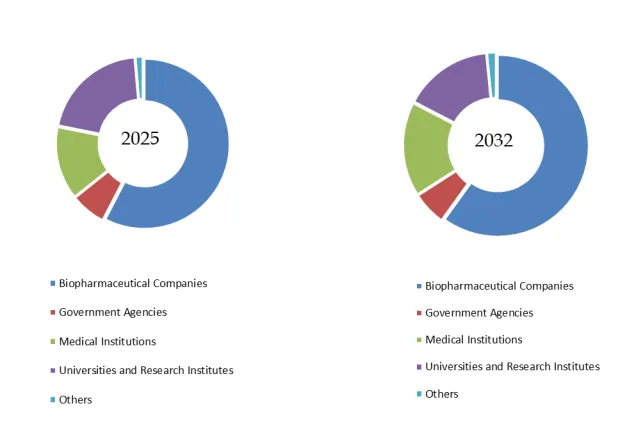
By application (revenue basis), biopharmaceutical companies are the largest demand source in 2025 with USD 50.00 million, accounting for 57.62% of total revenue. Universities and research institutes contribute USD 17.78 million (20.49%), medical institutions USD 12.03 million (13.86%), government agencies USD 5.79 million (6.67%), and others USD 1.18 million (1.36%). For 2026–2032, medical institutions show the highest revenue CAGR at 10.07%, followed by biopharmaceutical companies at 8.08%, while universities and research institutes grow at 3.17%. This indicates that incremental demand is increasingly driven by more translational and clinically adjacent workflows and industrialized R&D settings, while academia expands more steadily.
By region (revenue basis), the Americas account for USD 39.61 million in 2025 (45.64%), Europe USD 28.44 million (32.77%), APAC USD 15.05 million (17.34%), and the Middle East & Africa USD 3.68 million (4.24%). In growth terms, APAC records a 2026–2032 revenue CAGR of 9.17%, consistent with accelerating R&D investment and lab automation build-out. The Middle East & Africa shows a 9.53% CAGR largely due to a small base, reflecting project-driven ramp-up from a low starting point rather than a large absolute scale approaching mature markets. The Americas (7.33%) and Europe (5.96%) reflect continued upgrades and expansion within established installed bases, with demand skewing toward higher-end configurations, system integration, and long-term service support.
Overall, the segment is expected to follow a path of high concentration, application expansion, and engineering-driven upgrades through 2026–2032. Leading suppliers are positioned to capture most of the incremental growth, with market shares changing only modestly. Innovation will continue to center on lower dead volume, verification and traceability, automation compatibility, and simplified deployment. In summary, this is a high-barrier niche within life science automation, with growth underpinned by the structural trend toward miniaturized workflows and deeper laboratory automation adoption.
Figure00002. Global Nanoliter Liquid Handling Workstation Market Size (US$ Million), 2025 vs 2032
Above data is based on report from QYResearch: Global Nanoliter Liquid Handling Workstation Market Report 2026-2032 (published in 2026). If you need the latest data, plaese contact QYResearch.
Figure00003. Global Nanoliter Liquid Handling Workstation Top 5 Players Ranking and Market Share (Ranking is based on the revenue of 2025, continually updated)
Above data is based on report from QYResearch: Global Nanoliter Liquid Handling Workstation Market Report 2026-2032 (published in 2026). If you need the latest data, plaese contact QYResearch.
According to QYResearch Top Players Research Center, the global key manufacturers of Nanoliter Liquid Handling Workstation include Beckman Coulter, Dispendix (BICO), etc. In 2025, the global top three players had a share approximately 84.0% in terms of revenue.
Figure00004. Nanoliter Liquid Handling Workstation, Global Market Size, Split by Product Segment
Based on or includes research from QYResearch: Global Nanoliter Liquid Handling Workstation Market Report 2026-2032.
In terms of product type, currently Ultrasonic Technology is the largest segment, hold a share of 57.70%.
Figure00005. Nanoliter Liquid Handling Workstation, Global Market Size, Split by Applications Segment
Based on or includes research from QYResearch: Global Nanoliter Liquid Handling Workstation Market Report 2026-2032.
In terms of product application, currently Biopharmaceutical Companies is the largest segment, hold a share of 57.62%.
Figure00006. Nanoliter Liquid Handling Workstation, Global Market Size, Split by Region
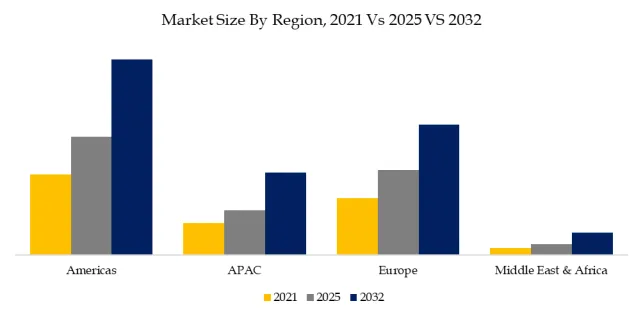
Based on or includes research from QYResearch: Global Nanoliter Liquid Handling Workstation Market Report 2026-2032.
The report provides a detailed analysis of the market size, growth potential, and key trends for each segment. Through detailed analysis, industry players can identify profit opportunities, develop strategies for specific customer segments, and allocate resources effectively.
The Nanoliter Liquid Handling Workstation market is segmented as below:
By Company
Beckman Coulter
Dispendix (BICO)
Revvity, Inc.
SPT Labtech
Hamilton
Segment by Type
Acoustic Droplet Ejection
Jetting/Inkjet-like Dispensing
Others
Segment by Application
Biopharmaceutical Companies
Government Agencies
Medical Institutions
Universities and Research Institutes
Others
Each chapter of the report provides detailed information for readers to further understand the Nanoliter Liquid Handling Workstation market:
Chapter 1: Introduces the report scope of the Nanoliter Liquid Handling Workstation report, global total market size (valve, volume and price). This chapter also provides the market dynamics, latest developments of the market, the driving factors and restrictive factors of the market, the challenges and risks faced by manufacturers in the industry, and the analysis of relevant policies in the industry. (2021-2032)
Chapter 2: Detailed analysis of Nanoliter Liquid Handling Workstation manufacturers competitive landscape, price, sales and revenue market share, latest development plan, merger, and acquisition information, etc. (2021-2026)
Chapter 3: Provides the analysis of various Nanoliter Liquid Handling Workstation market segments by Type, covering the market size and development potential of each market segment, to help readers find the blue ocean market in different market segments. (2021-2032)
Chapter 4: Provides the analysis of various market segments by Application, covering the market size and development potential of each market segment, to help readers find the blue ocean market in different downstream markets.(2021-2032)
Chapter 5: Sales, revenue of Nanoliter Liquid Handling Workstation in regional level. It provides a quantitative analysis of the market size and development potential of each region and introduces the market development, future development prospects, market space, and market size of each country in the world..(2021-2032)
Chapter 6: Sales, revenue of Nanoliter Liquid Handling Workstation in country level. It provides sigmate data by Type, and by Application for each country/region.(2021-2032)
Chapter 7: Provides profiles of key players, introducing the basic situation of the main companies in the market in detail, including product sales, revenue, price, gross margin, product introduction, recent development, etc. (2021-2026)
Chapter 8: Analysis of industrial chain, including the upstream and downstream of the industry.
Chapter 9: Conclusion.
Other relevant reports of QYResearch:
Global Nanoliter Liquid Handling Workstation Market Outlook, In‑Depth Analysis & Forecast to 2032
Global Nanoliter Liquid Handling Workstation Sales Market Report, Competitive Analysis and Regional Opportunities 2026-2032
Global Nanoliter Liquid Handling Workstation Market Research Report 2026
Global Non-Contact Nanoliter Liquid Handling Workstations Market Outlook, In‑Depth Analysis & Forecast to 2032
Non-Contact Nanoliter Liquid Handling Workstations- Global Market Share and Ranking, Overall Sales and Demand Forecast 2026-2032
Global Non-Contact Nanoliter Liquid Handling Workstations Market Research Report 2026
Global Non-Contact Nanoliter Liquid Handling Workstations Sales Market Report, Competitive Analysis and Regional Opportunities 2026-2032
Global High-throughput Nanoliter Liquid Handling Workstation Market Outlook, In‑Depth Analysis & Forecast to 2032
High-throughput Nanoliter Liquid Handling Workstation- Global Market Share and Ranking, Overall Sales and Demand Forecast 2026-2032
Global High-throughput Nanoliter Liquid Handling Workstation Market Research Report 2026
Global Fully Automated Nanoliter Liquid Handling Workstation Market Outlook, In‑Depth Analysis & Forecast to 2032
Global High-throughput Nanoliter Liquid Handling Workstation Sales Market Report, Competitive Analysis and Regional Opportunities 2026-2032
Global Fully Automated Nanoliter Liquid Handling Workstation Market Research Report 2026
Fully Automated Nanoliter Liquid Handling Workstation- Global Market Share and Ranking, Overall Sales and Demand Forecast 2026-2032
Global Fully Automated Nanoliter Liquid Handling Workstation Sales Market Report, Competitive Analysis and Regional Opportunities 2026-2032
Benefits of purchasing QYResearch report:
Competitive Analysis: QYResearch provides in-depth Nanoliter Liquid Handling Workstation competitive analysis, including information on key company profiles, new entrants, acquisitions, mergers, large market shear, opportunities, and challenges. These analyses provide clients with a comprehensive understanding of market conditions and competitive dynamics, enabling them to develop effective market strategies and maintain their competitive edge.
Industry Analysis: QYResearch provides Nanoliter Liquid Handling Workstation comprehensive industry data and trend analysis, including raw material analysis, market application analysis, product type analysis, market demand analysis, market supply analysis, downstream market analysis, and supply chain analysis.
and trend analysis. These analyses help clients understand the direction of industry development and make informed business decisions.
Market Size: QYResearch provides Nanoliter Liquid Handling Workstation market size analysis, including capacity, production, sales, production value, price, cost, and profit analysis. This data helps clients understand market size and development potential, and is an important reference for business development.

Global Nanoliter Liquid Handling Workstation Market Outlook, In‑Depth Analysis & Forecast to 2032

Published Date: 2026-01-17

Pages: 128

Report ld: 5707153
Price:USD 4900.00
(Single User License)
Global Nanoliter Liquid Handling Workstation Sales Market Report, Competitive Analysis and Regional Opportunities 2026-2032
Published Date: 2026-01-17
Pages: 65
Report ld: 5707148
Price:USD 4250.00
(Single User License)
Nanoliter Liquid Handling Workstation- Global Market Share and Ranking, Overall Sales and Demand Forecast 2026-2032
Published Date: 2026-01-17
Pages: 83
Report ld: 5610417
Price:USD 3950.00
(Single User License)
Global Nanoliter Liquid Handling Workstation Market Research Report 2026
Published Date: 2026-01-17
Pages: 116
Report ld: 5603839
Price:USD 2900.00
(Single User License)
Global Nanoliter Liquid Handling Workstation Market Outlook, In‑Depth Analysis & Forecast to 2031
Published Date: 2025-08-05
Pages: 147
Report ld: 4851618
Price:USD 4900.00
(Single User License)
Global Nanoliter Liquid Handling Workstation Sales Market Report, Competitive Analysis and Regional Opportunities 2025-2031
Published Date: 2025-03-10
Pages: 77
Report ld: 4593727
Price:USD 4250.00
(Single User License)


Competition
Key players, new entrants,acquisitions, mergers and expansions,development trends and challenges.

Industry Analysis
Rawmaterial, application, product type, demand,supply,downstream, supply chain etc.

Market Size
Capacity, production, sales, revenue, price, cost etc.

Customized Information
We can offer customized survey and information to meet ourclient's need.
